
The sums are familiar to any grower: pumping water is expensive. Where the electricity grid reaches, the pump's bill weighs heavily; where it does not, the diesel engine consumes fuel and maintenance non-stop. That is the cost the solar pump cuts, and whoever really profits from it is not only the person irrigating: it is the agricultural supplies retailer who discovered that the product explains itself, and the importer who realised that China makes pumps and panels better and cheaper than anyone.
What the solar irrigation pump is
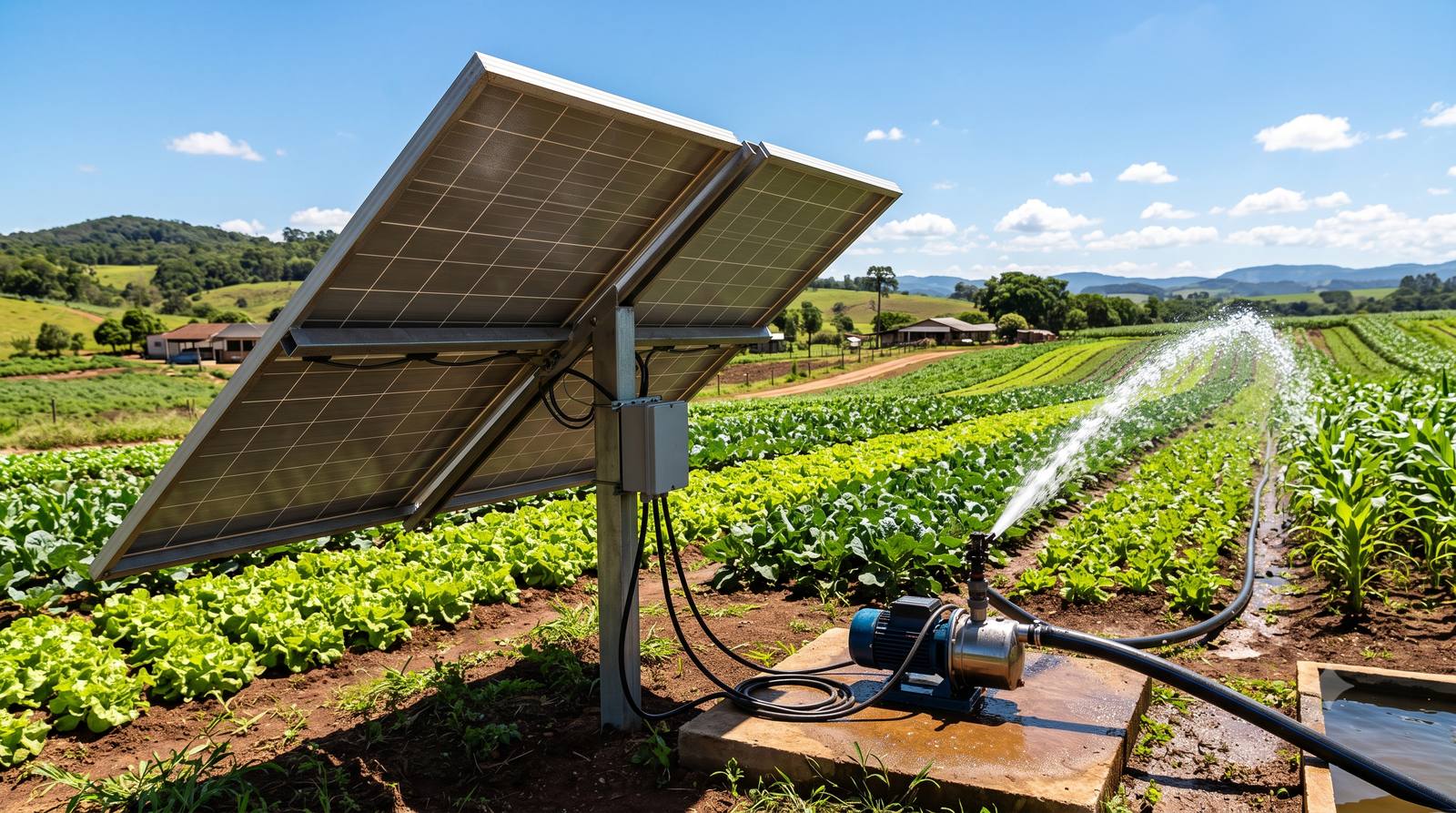
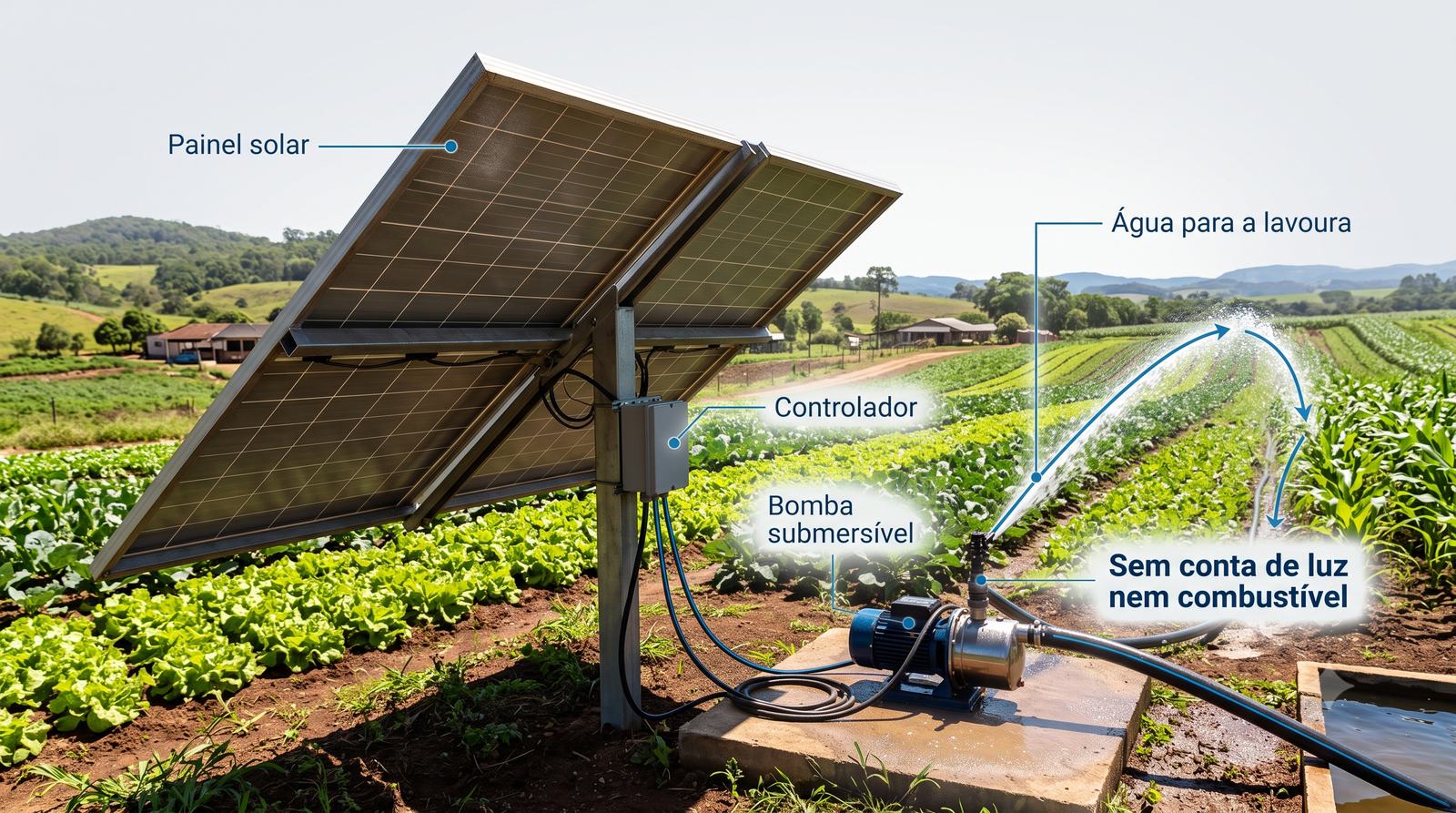
It is a system that uses photovoltaic panels to drive a water pump, without depending on the electricity grid or on fuel. A controller adjusts the operation according to the sunlight, and the pump, submersible in the well or on the surface beside the river or reservoir, takes the water to the crop field, the livestock trough or the tank. The systems range from small kits, for a vegetable plot and livestock, to larger sets, for irrigating an area.
On the shelf, it sells on the bill it saves: anyone who pays for electricity or diesel to pump understands the gain in seconds. It has a high perceived value, sustainability appeal and the repeat purchase of panels and parts that keeps the customer coming back. It is solid turnover in inland retail.
Why this is an opportunity for Brazil
Brazil is an agricultural country with abundant sun and an enormous base of small and medium farms that still pump water at a high cost. That is exactly the gap the solar pump fills, and the opportunity serves the agricultural supplies retailer, the distributor and the grower buying for their own land.
- Obvious value for the countryside: it cuts the electricity bill and the diesel cost of pumping, with a quick return for the grower, which makes the sale easier over the counter.
- Low cost at source, good resale: China dominates the manufacturing of pumps and panels, and the cost at volume opens up a full margin, with repeat purchase of panels, controllers and parts.
- Sun and demand all year round: irrigation, livestock and water supply have no season, and the clean energy appeal reinforces the sale.
- Import timing: equipment is not an impulse purchase at the factory. Between the order, sea freight and release, counting on 60 to 120 days means closing now to have stock in season.
Before importing: there may be a certification requirement (INMETRO) for the electrical and photovoltaic components, so confirm before closing the order. It is worth arranging the quality inspection before shipment to test the flow rate, the delivery head and the real performance of the batch's panel.
Customise the specification (OEM)
Importing a solar pump is not taking the catalogue model and hoping for the best. The factory sizes the system to your audience and puts your brand on it, and that is where having a partner at source separates whoever resells a commodity from whoever builds their own line with a margin.
- The right flow rate, head and panel: the pump (submersible or surface), the flow rate in cubic metres per hour, the delivery head and the panel output sized for your customer's use.
- After-sales and parts agreed at the purchase: panels, controller, impeller and seals, as well as the service support, which on a piece of field equipment is what keeps the resale alive.
- Your brand on the product and on the packaging (private label / OEM) and a manual in Portuguese, ready for agricultural supplies retail.
That calls for direct negotiation with the factory and sample validation before the batch. BCVN finds the right manufacturer, closes the specification, tests the system and guarantees the after-sales genuinely exists, and not only in the quotation.
Where to buy solar irrigation pumps in China
The solar pump appears both at the big general and energy fairs and at the dedicated agricultural fair:
- Canton Fair, Phase 1 (Machinery, Energy and Equipment): the biggest starting point, with manufacturers of pumps, panels and agricultural equipment side by side.
- CIAME (agricultural machinery fair): the sector fair of agriculture, where solar irrigation appears alongside the rest of the machinery.
- Yiwu Trade Fair: strong in entry-level kits and in replacement accessories for volume.
Next edition, October 2026: the Canton Fair Phase 1 takes place from 15 to 19 October, in Guangzhou, and CIAME right afterwards, from 26 to 28 October, in Tianjin. You can combine the two in a single trip and see the system up close before deciding.
Read the complete guide to the Canton Fair 2026
The solar irrigation pump is one of those easy-to-sell finds: the pain of the pumping cost is universal in the countryside, and the product delivers a saving that explains itself. For the importer, the question is not whether the grower wants it, it is bringing in the right system, from the right manufacturer, with your brand and the after-sales of panels and parts that sustains the resale harvest after harvest.
Frequently asked questions about importing solar irrigation pumps
Is it worth importing solar irrigation pumps from China?
China concentrates the world's manufacturing of solar pumps and photovoltaic panels, with a cost at source far below that of the product already nationalised. It is an item of clear value for the countryside (it pumps water with no electricity bill and no fuel), with a good resale margin and repeat purchase of panels and parts, which makes it a good agricultural find to import at volume.
Can I import just one solar pump?
BCVN works with importing for resale and for companies, not with the sale of a single loose unit. Chinese manufacturers operate by minimum order quantity (MOQ) and freight and customs clearance are only diluted at volume, so bringing in a single piece comes out more expensive than buying at Brazilian retail. For one unit, buy from a reseller in Brazil; to bring in quantity and resell, that is where BCVN comes in.
Does a solar pump imported from China need INMETRO?
There may be a certification requirement for the electrical and photovoltaic components (panel, controller). The requirement varies according to the system and the output, so the right thing is to confirm before closing the order. BCVN validates the manufacturer and the technical documentation.
Where to find solar pump suppliers in China?
At the Canton Fair Phase 1 (machinery, energy and equipment), at the CIAME agricultural fair and in the houseware aisles of the Yiwu Trade Fair, above all for the entry-level models. BCVN identifies the right manufacturer, separates the factory from the trading company and negotiates the specification, the panel and the after-sales.