
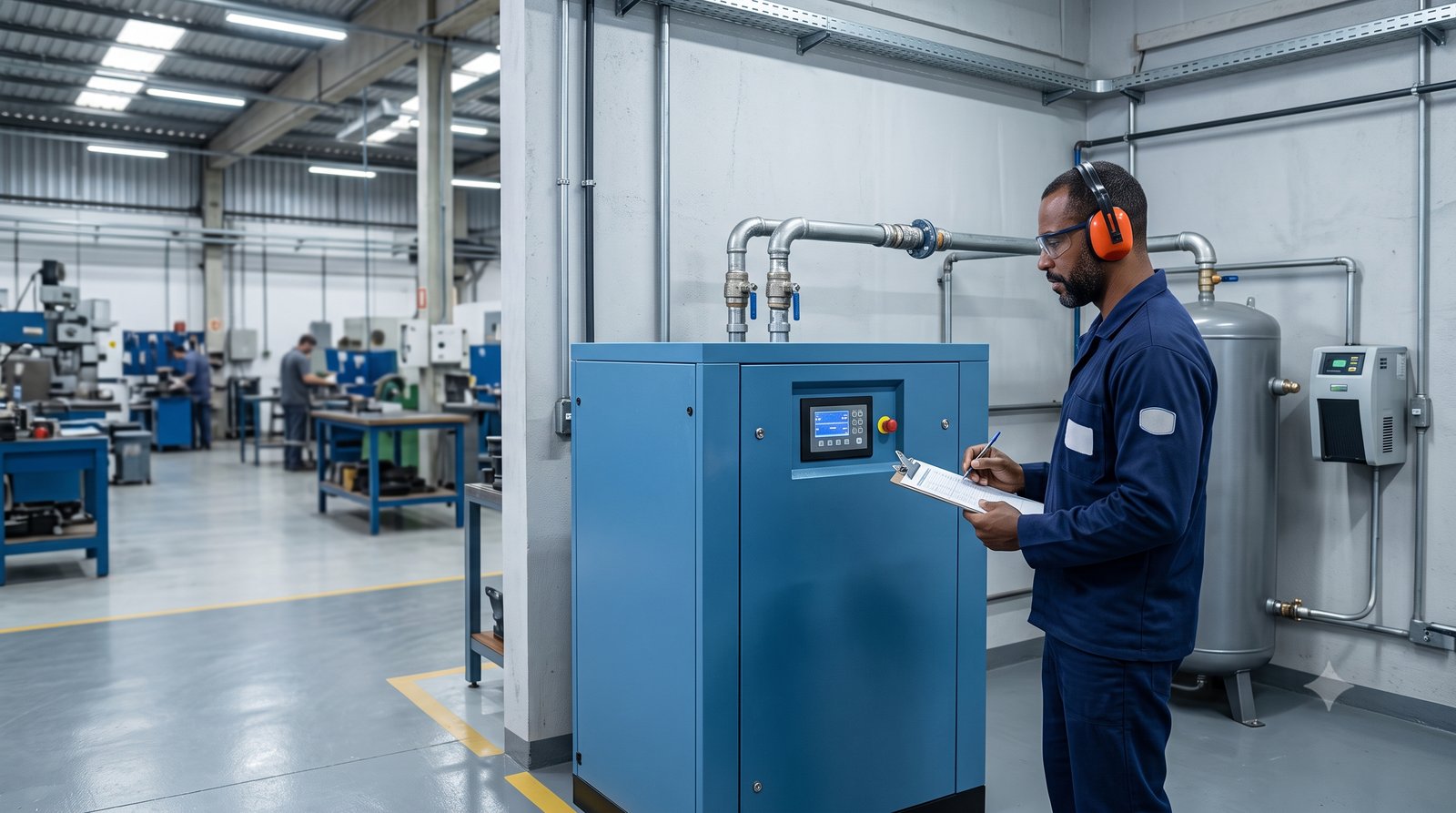
The calculation is simple and almost never done. A machine that works eight, ten or twelve hours a day, every working day of the year, for ten years, consumes far more money in electricity than it cost to buy. In the compressor's case the gap is not small: in most workshops and small factories it is the single largest consumer of electricity in the building. Anyone selling compressors on the price tag alone is competing over the smallest part of the customer's cost and ignoring the largest.
What a screw air compressor is
It is the machine that turns electricity into compressed air, the input that drives spray guns, sanders, impact wrenches, presses, workshop lifts, packaging machines and much of pneumatic automation. In the piston model, a piston compresses the air in cycles: the machine fills the receiver, rests and starts again, in a regime built for intermittent use. In the screw model, two helical rotors mesh as they turn and compress the air continuously, with controlled temperature, less noise and steady pressure, designed to work a full shift without stopping.
The difference that matters to the reseller is not that one, it is the one that comes next: the screw compressor can come with a variable frequency drive, which adjusts rotation to real demand instead of always running at full load and venting the excess. In an operation whose demand swings over the course of the day, and most do, that is where the machine starts giving money back every month.
Models and variations
“Compressor” covers an entire trade fair hall, with machines serving very different realities. Knowing which one the customer needs is half the sale:
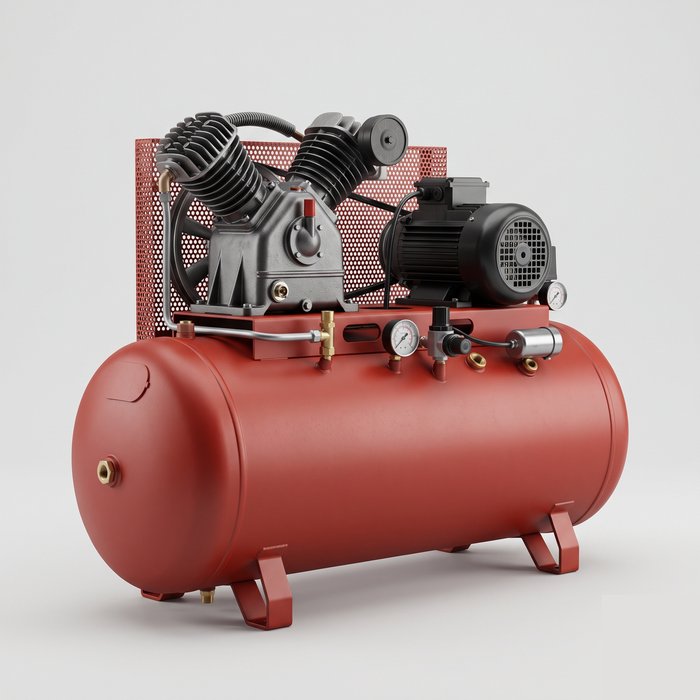
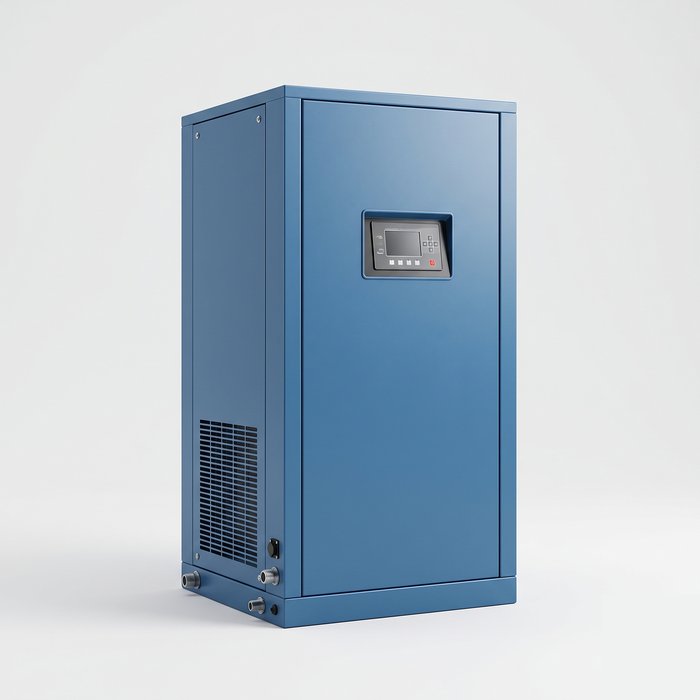
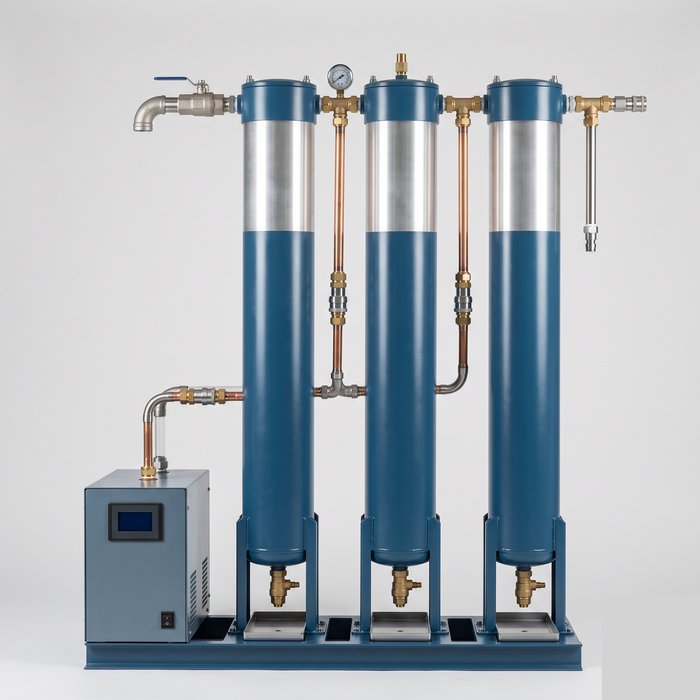
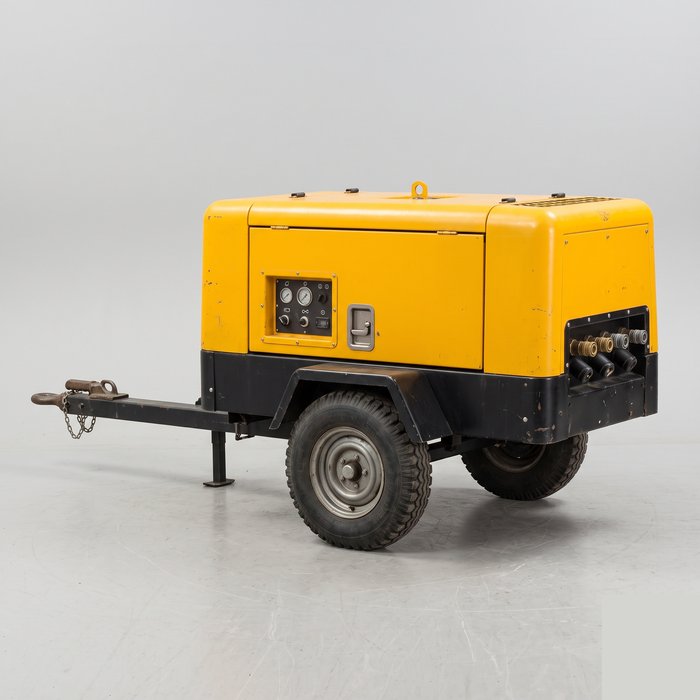
The piston serves the small workshop and occasional use, and it is where the customer starts. The screw is the purchase of someone who can no longer afford to stop, and it is the one that moves the energy bill onto a better level. Air treatment, with a dryer and filters, is the most overlooked item and the one that generates the most complaints later, because damp, oily air ruins pneumatic tools, spoils paintwork and contaminates processes. And the towable portable opens a separate market, that of construction sites, hire fleets and field service, with a buyer who compares diesel, autonomy and ruggedness instead of electricity bills.
Why this is an opportunity for Brazil
Compressed air is infrastructure, not fashion. There is a mechanical workshop, a body shop, a metalwork shop, a joinery, a printing shop and an assembly line in every medium-sized town in the country, and all of them depend on air. It is a market that buys all year round, out of concrete necessity.
- The selling argument is numerical, not emotional: you can show the customer, with their own bill on the table, why the more expensive machine works out cheaper. Few industrial categories allow such an objective conversation.
- Buying in sequence: whoever buys the compressor comes back for the dryer, the filter, the extra receiver and the distribution line. The first order is rarely the last.
- Genuine recurring business: separator elements, filters and oil have scheduled replacement. It is revenue that continues years after the machine was delivered.
- A technical defence against the price seller: it is a sale that requires talking about real flow rate, working pressure and consumption profile. Whoever only sends a table by message loses to whoever knows how to size the machine.
- Timing: the typical lead time is 60 to 120 days. Whoever closes during the October trade fair season delivers in the first half of the following year, when industry resumes investment.
Before importing: compressors are measured by two rulers at once. The air receiver is a pressure vessel, which brings NR-13 into the conversation, with an identification plate, a safety valve, a record book and inspection. And general purpose compressors are among the families with compulsory INMETRO certification, whose classification must be confirmed for the exact model before the order: it is worth seeing the list of products that require INMETRO. Add the moving parts, which answer to NR-12, and the voltage (220V or 380V three-phase, at 60 Hz). It is worth inspecting before shipment with the machine under load, measuring flow rate and temperature, and not merely switched on.
Customise the specification (OEM)
A compressor is not chosen by catalogue power, it is sized by the air the customer's operation actually consumes. This is where having someone at source separates whoever delivers a solution from whoever delivers a machine that works at its limit from day one:
- Real flow rate and pressure: defined by the sum of the customer's pneumatic equipment and by peak use, not by the biggest number in the brochure. Undersizing means selling a machine that will never rest.
- Fixed speed or variable drive: the choice depends on the consumption profile. It is the decision that most affects the electricity bill and the one that most justifies the higher-ticket machine.
- Air treatment sized alongside it: dryer and filtration according to the application, because paintwork, food and ordinary tools require different air qualities.
- Receiver and NR-13 documentation: plate, valve and record book settled at source, since regularising that in Brazil is expensive and slow.
- Voltage, noise and control panel: 220V or 380V three-phase at 60 Hz, a noise level compatible with the installation site, panel and manual in Portuguese.
- Wear parts kit: separator element, filters and oil negotiated within the order, and not discovered at the first service.
This calls for direct negotiation with the manufacturer and validation before production. BCVN finds the right factory, sizes the equipment for the end customer's real consumption, handles compliance and validates technical support.
Where to buy air compressors in China
The category appears at the universal trade fair and, with far more technical depth, at the fair dedicated to industry:
- Canton Fair, Phase 1 (Machinery and Equipment): from 15 to 19 October, where the manufacturers of piston compressors, screw compressors and air treatment are, in the same hall as the rest of the machinery.
- CIIF (industrial automation and robotics, Shanghai): from 12 to 16 October, where the conversation moves up a level to energy efficiency, variable drives and integration with the pneumatic line.
- Guide to industrial equipment: where machinery investment goes astray, and what has to be settled before shipment.
The itinerary the season sets out: CIIF (12 to 16 October, Shanghai) and Canton Phase 1 (15 to 19 October, Guangzhou) overlap across two different cities. Without an itinerary planned in advance, one of the two is lost, and they complement each other: CIIF shows the technology and the efficiency, Canton shows the range of manufacturers. See the full 2026 trade fair calendar.
It is also worth looking at the inverter welding machine and the press brake and guillotine shear, which share the same buyer, and the inverter generator, which solves power when it fails.
Nobody walks into a workshop to admire the compressor. It sits in a corner, makes a noise and is only remembered when it fails or when the electricity bill arrives. That is exactly why the sale is a good one: the reseller who turns up with the calculation done, showing how much the right machine gives back each month, stops competing on price and starts competing on argument. Buying at source is what makes it possible to offer the efficient machine at the price the Brazilian customer will accept.
Frequently asked questions about importing air compressors
What is the difference between a piston compressor and a screw compressor?
The piston type compresses in cycles, runs hotter and was designed for intermittent use: it starts, fills the receiver and rests. The screw type compresses continuously, with two rotors meshing as they turn, and was built to work a full shift without stopping, with steadier air and less noise. For low, occasional demand the piston does the job. From the moment production depends on constant air, the piston works at its limit, overheats and fails, and the screw stops being a luxury and becomes a necessity.
Does an air compressor imported from China need INMETRO and NR-13?
General purpose compressors are among the families with compulsory INMETRO certification, and the classification of the exact model needs to be confirmed before the order. On top of that the air receiver is a pressure vessel, which brings NR-13 into the conversation, with an identification plate, a safety valve, a record book and inspection. The moving parts also answer to NR-12. Whoever answers for all of this before the authorities is the Brazilian importer, not the Chinese factory.
Is a compressor with a variable frequency drive worth it?
It depends on the end customer's consumption profile. A fixed speed compressor runs at full load and unloads when it does not need to deliver, burning energy even while producing no air. A variable speed one modulates its rotation according to demand. In an operation whose consumption swings over the course of the day, the difference shows up on the electricity bill month after month, and it is that difference which justifies selling the more expensive machine. In an operation with constant, full demand, the advantage shrinks. That is why the sale starts by measuring consumption, not by looking at a catalogue.
Why does importing air compressors from China pay off?
Because compressed air is basic infrastructure in any workshop, metalwork shop, joinery, body shop, printing shop or assembly line, and the Brazilian market buys it all year round, out of necessity rather than trend. The price at source is a fraction of what is charged here, the customer comes back for the dryer, the filter and the distribution line, and there is also recurring business in separator elements, filters and oil. It is a technical sale with a medium to high ticket, with a defence that the price seller cannot mount.
Can I import just one compressor for my workshop?
BCVN is an import consultancy for companies and resellers, not a retail shop, and does not sell single units. Import maths only works on volume: freight and paperwork are diluted across the batch, and every factory works to a minimum order quantity (MOQ). Anyone who needs a single machine should buy from a distributor in Brazil; anyone who is going to resell, represent the brand or equip several sites imports at source, and that is where the savings really show up.