
Anyone who has walked into a builders' merchant looking for a cordless driver knows the scene. The salesperson shows three models and, at some point, asks the question that decides everything: do you already have a battery from any brand? From there on the conversation is no longer about the tool.
That is the product of the week, and the interesting part is not the tool. It is the commercial design around it, which almost no Brazilian importer is exploring on purpose.
What a 20V platform cordless power tool is
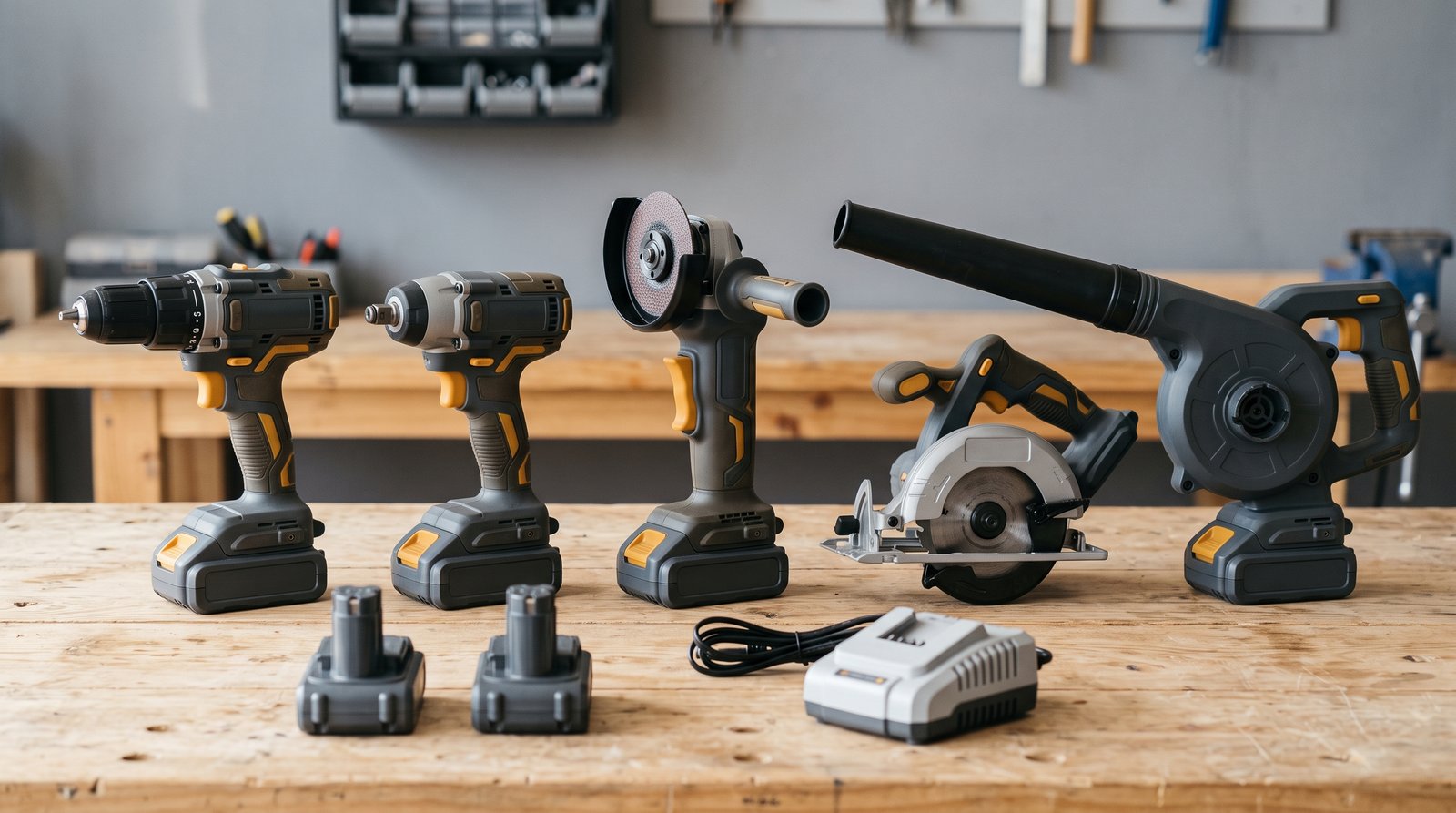
A platform is not a tool, it is a mount. One and the same pack of lithium cells, with the same contact rail, serves the drill, the impact wrench, the angle grinder, the saw, the leaf blower and the branch pruner of the same range. The battery is bought once and it runs the whole family.
One catalogue confusion is worth clearing up straight away, because it gets in the way of the negotiation: 20V and 18V are the same battery. The number 20 is the peak voltage, measured with no load, and it became a marketing standard across the Americas; 18 is the nominal voltage, used in Europe. The same factory ships the same product with one sticker or the other, and anyone who does not know that ends up comparing two identical quotations thinking one is superior.
From the seller's point of view, what matters is what happens after the first purchase. The first sale carries tool, battery and charger, and it is the most expensive one. The second, the third and the eighth can carry only the bare tool, with no battery and no charger, because the customer already has them. It is cheaper for him, he buys more often because of that, and the shop's margin on the bare tool is usually better than on the full kit.
The difference that has to be clear: this is not the compulsory refill of a water purifier or a printer, where the customer buys again because he has no choice. Here he does have a choice, and he chooses to come back, because switching platform would mean throwing away the batteries he already owns. It is repeat buying out of convenience, not out of dependence, and it lasts as long as the mount does not change.
Models and variations
A platform sells as a family, and that is what you see in the aisle at the fair: the same shade of colour repeated across twenty different boxes, all with the same compartment underneath.
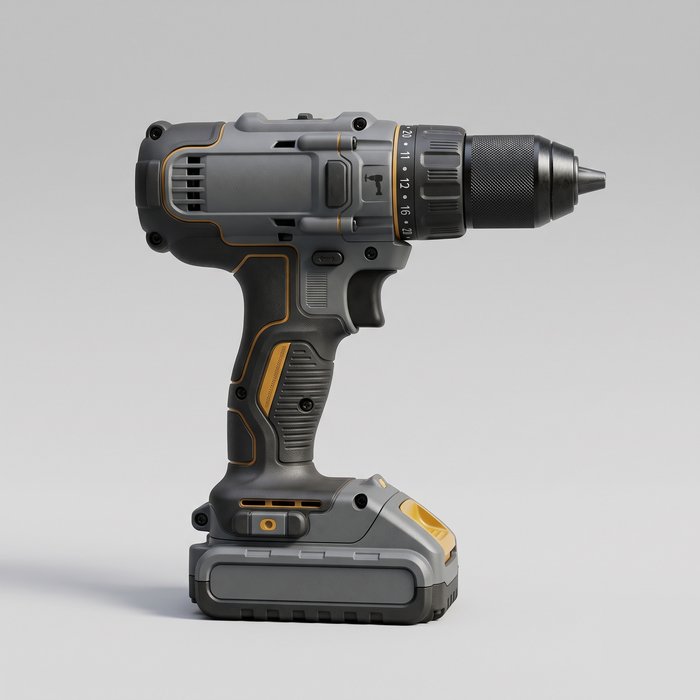
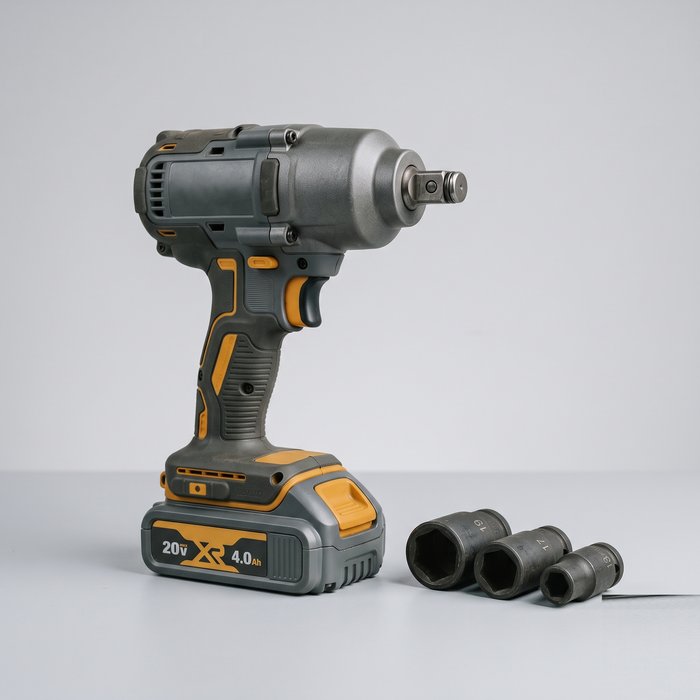
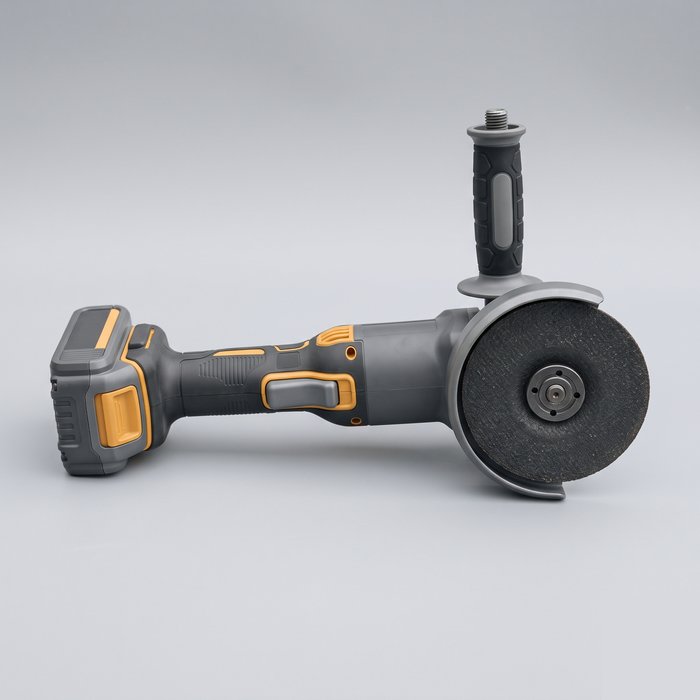
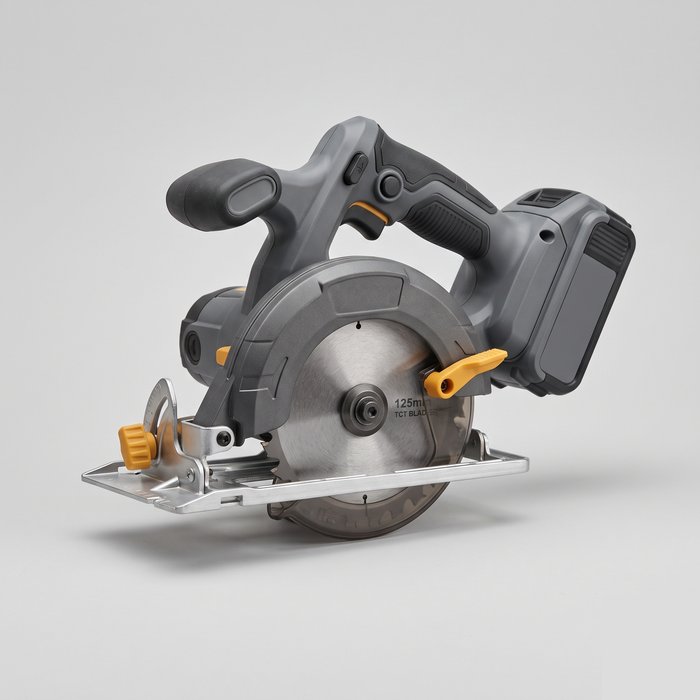
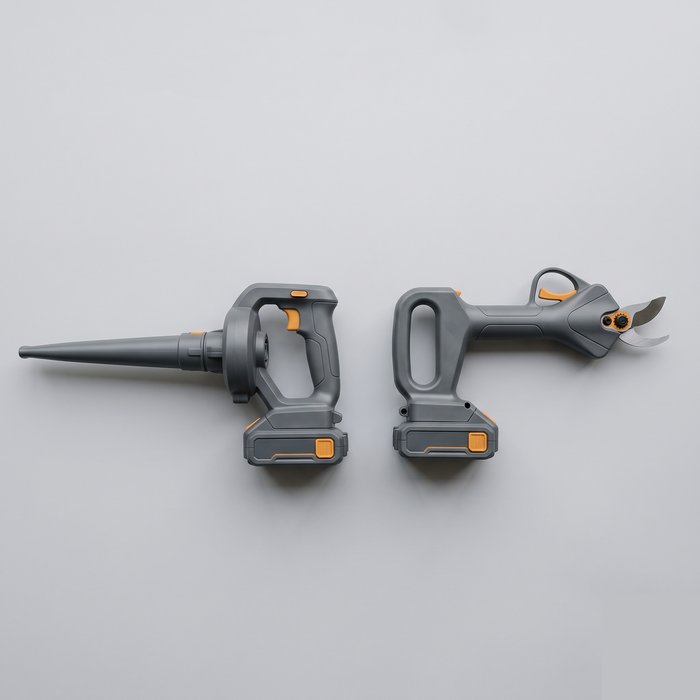
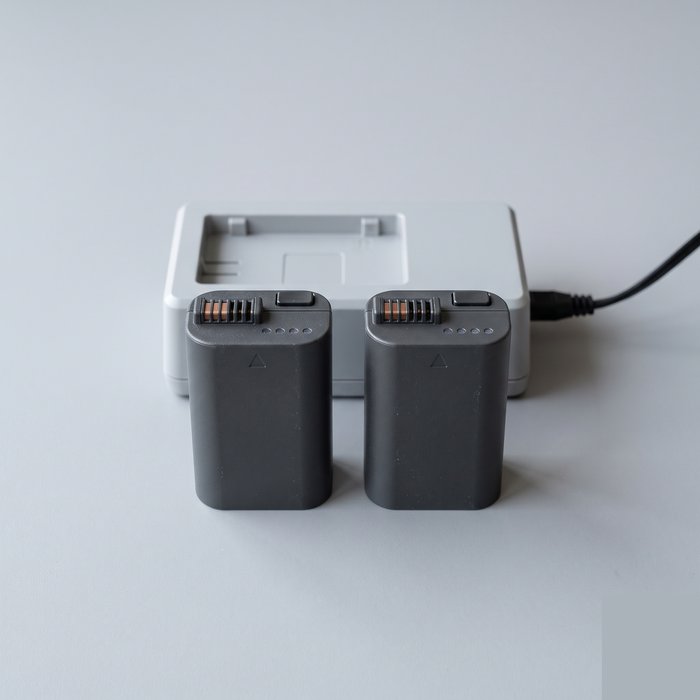
Beyond the family, there are two technical choices that change the price and the sales pitch. The first is the motor: brushed is cheaper and runs hotter, brushless lasts longer, heats less and does more work per charge, and it is the argument that holds up the premium line. The second is battery capacity, measured in amp-hours, which decides how long the tool works before stopping. A complete range usually needs both ends.
Why this is an opportunity for Brazil
The country went through a decade of growth in do-it-yourself and in renovation done bit by bit, and it created a buyer who did not exist before: the homeowner who has a workbench, is not a professional, and still wants a good tool. That buyer is exactly the audience for a platform, because he buys slowly, one piece at a time, over years.
- The second sale costs almost nothing. A customer who already has the battery does not need to be sold on the brand again, and the bare tool is the easiest purchase in a whole catalogue. It is the opposite of the find that sells once and disappears.
- There is room between the cheap range and the expensive import. In Brazil the category is dominated, on one side, by bazaar tools with no spare parts and, on the other, by global brands at global brand prices. The middle, which is a serious tool at an accessible price with after-sales, is poorly occupied.
- It sells all year, with two peaks. A tool is a Father's Day and a Christmas present, and it is a renovation purchase all year round. With a lead time of 60 to 120 days, anyone who wants to catch the end of the year has to close the order well in advance.
- The accessory becomes a range of its own. Drill bits, discs, sockets, screwdriver bits, cases and spare batteries are fast-moving, low-value items that the same customer buys without thinking twice.
Before importing: here is the point that almost every importer reads backwards, and it is worth the whole find. Portaria Inmetro 148/2022, which regulates household appliances and similar equipment, has a table of exclusions, and there in plain words sits the portable motor-operated power tool covered by standard IEC 60745, and also the semi-stationary one covered by IEC 61029. The drill, the driver and the angle grinder are therefore outside the scope. Except that in the table of what is inside sits the electric battery charger for household and similar use, and the text says expressly that chargers used in garages, in shops, in light industry and on farms are also in scope. The only exclusion foreseen for a charger is the one that is part of an appliance whose battery is not accessible to the user, which is exactly the opposite of a platform, where the battery comes out of the tool. Put plainly: the tool travels without a mark and the charger in the same box does not. Ask for the framing in writing from an accredited certification body, with the datasheet of the exact model, before closing the order. Add to that the battery, which is class 9 dangerous goods and calls for a UN 38.3 test report and a safety data sheet, the charger voltage, because Brazil lives with both 127 and 220 volts, and ANATEL approval if the model has Bluetooth or an app, which the newer ranges already do.
Put your own brand on it
This is one of the categories where an own brand makes the most difference, and for a specific reason: whoever chooses a platform is choosing who to come back to, and nobody comes back to a product with no name.
- Your brand on the product and on the packaging (private label / OEM): the logo on the housing, on the battery, on the charger and on the case.
- Colour, finish and the make-up of the kit as you choose, including putting together combinations the factory does not sell ready-made, such as an entry kit with two tools and a single battery.
- Manual and packaging in Portuguese, with the spare parts list, which is what makes after-sales exist for real.
Customisation usually calls for a slightly larger minimum order, and BCVN finds the right factory, negotiates the customisation, validates the sample and makes sure the product arrives exactly as you asked for it.
It is worth understanding how this works in practice before requesting the first sample: the guide on own brand in China: private label, OEM and ODM explains the difference between the three models and what each one changes in the minimum order and the lead time.
Where to buy cordless power tools in China
Power tools are not spread across China: they concentrate in a few hubs, and knowing which ones saves half the trip. The map of the industrial clusters shows why the right city changes the price, the minimum order and the lead time.
- Canton Fair, Phase 1 (electronics, machinery and tools): it is the right aisle, and the only place where you can see ten competing platforms side by side on the same day, with the battery in your hand to compare mount, weight and finish.
- Yiwu Fair: it serves the accessories around the tool, from drill bits and discs to cases and organisers, with a low minimum order. For the tool itself the factory price is not at the stall, and what exists outside the market explains why.
Next edition, Canton Fair 2026 (140th): Phase 1 runs from 15 to 19 October 2026, in Guangzhou, and it is the phase that matters to this product. The Yiwu Fair opens from 21 to 24 October, so the two fit into the same trip.
Read the complete guide to the Canton Fair 2026
This is a category in which the most expensive decision is not which tool to buy, it is which mount to adopt, because that choice is worth the next few years of sales. Changing platform on the second order orphans the customer base built on the first, and it is the quietest mistake made here. That is why the choice is made by looking at the factory, at the volume it turns over and at its commitment to the range, and not at a price list.
Frequently asked questions about importing cordless power tools
Do cordless power tools need INMETRO certification?
The answer surprises anyone who has never read the rule, and it is the opposite of what almost everyone assumes. Portaria Inmetro 148/2022, which regulates household appliances and similar equipment, has a table of exclusions, and there in plain words sits the portable motor-operated power tool covered by standard IEC 60745, and also the semi-stationary one covered by IEC 61029. In other words, the drill, the driver and the angle grinder are outside the scope. Except that in the table of what is inside sits the electric battery charger for household and similar use, and the text says expressly that chargers used in garages, in shops, in light industry and on farms are also in scope. And the only exclusion foreseen for a charger is the charger that is part of an appliance whose battery is not accessible to the user, which is precisely the opposite of a 20V platform, where the battery comes out of the tool. In practice: the tool travels without a mark and the charger in the same box does not. Ask for the framing in writing from an accredited certification body, with the datasheet of the exact model, before closing the order, because compliance rules change by ordinance.
What is a 20V platform and why does it decide the resale?
A platform is the battery mount, not the tool. One and the same cell pack serves the drill, the impact wrench, the angle grinder, the saw, the blower and the pruner of the same range, because they all use the same contact rail. It is worth knowing that 20V and 18V are the same battery: 20V is the peak no-load voltage, used in marketing across the Americas, and 18V is the nominal voltage, used in Europe. For a reseller the consequence is direct: the first sale carries tool, battery and charger, and the following ones can carry only the bare tool, cheaper for the customer and more frequent for the shop. The risk is the same size: changing supplier the following year, with a different mount, orphans the customer base and burns the very argument that held the range together.
Does the lithium battery change anything at shipment?
It does, and it is the item that usually delays the first order of anyone who has never imported this category. A lithium-ion battery is class 9 dangerous goods and has paperwork of its own: the UN 38.3 test report, the safety data sheet, correct packaging and marking. A battery packed with the equipment has one UN number and a loose battery has another, and the loose one is precisely the one that matters here, because it is the one the customer buys again. Air freight is far more restrictive than sea, including on state of charge, and some shipping lines refuse it or charge more. None of that stops the business, but all of it has to be settled before the factory produces, not afterwards.