
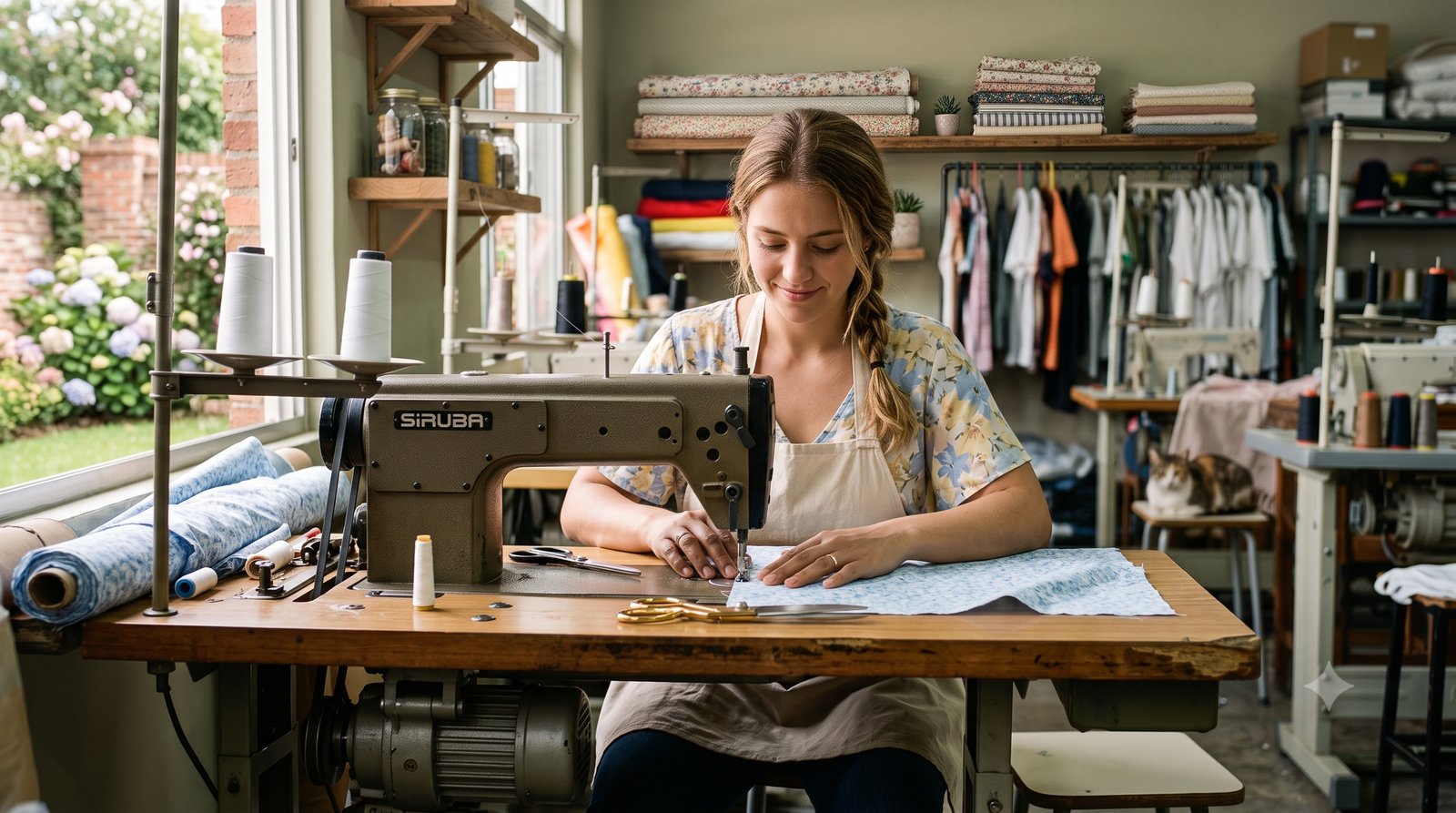
Every Brazilian clothing factory starts the same way: one machine, one person and plenty of orders. And every clothing factory that grew went through the same squeeze, that of discovering that producing at scale is not sewing faster, it is having the right machine for each stage. That is where the decision comes in that the studio owner, the machinery distributor and the service workshop face differently from the consumer: where to buy that park without paying three times over for the road it has already travelled.
What an industrial sewing machine is
The industrial sewing machine is not a reinforced domestic one. It is another category: a separate motor (today almost always a direct drive servo, quieter and more economical), an iron frame on a table, far higher speed and, above all, specialisation. Each machine does one job and does it well: the lockstitch sews, the overlocker finishes and closes the seam, the coverstitch does the hem on knitwear. The domestic one tries to do everything in a single machine and cannot cope with production.
That is why a clothing factory does not buy a machine, it buys a machine park. And that is why the decision to import changes the scale of the business: the cost of assembling the line at source is a fraction of what it costs to assemble it buying at Brazilian retail, machine by machine.
Models and variations
"Industrial sewing machine" is not one single product. In the machinery aisles of the Chinese trade fairs it is a whole line, and each type opens up a different stage of your production:
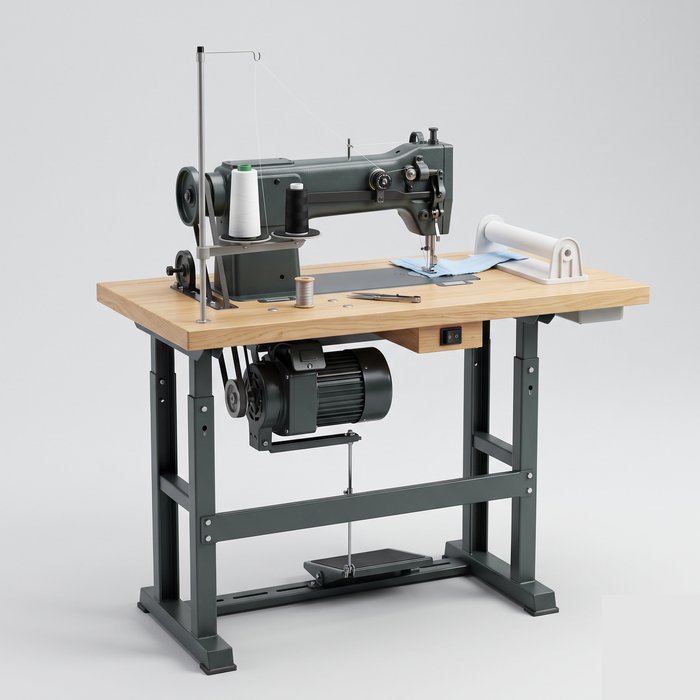
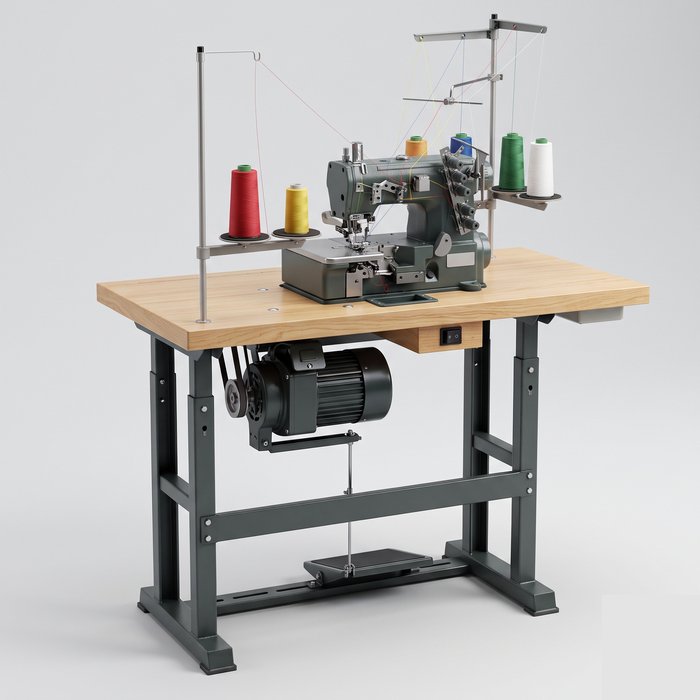
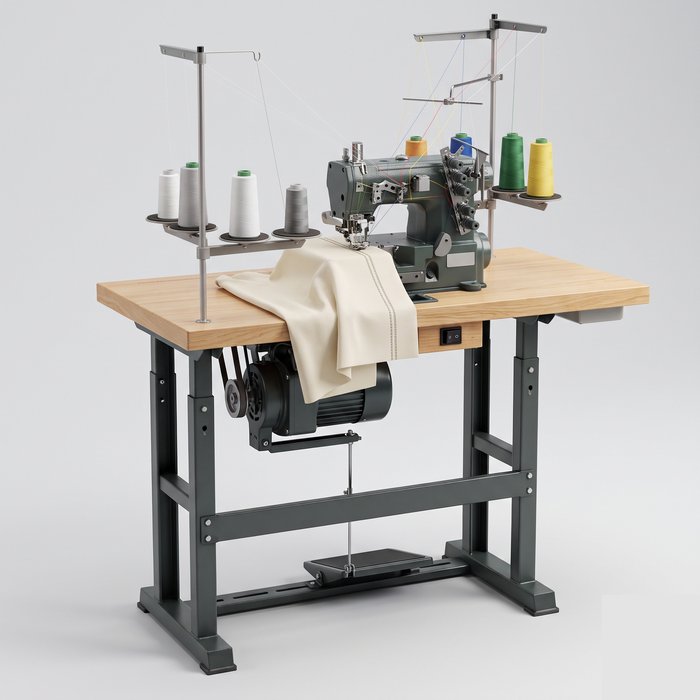
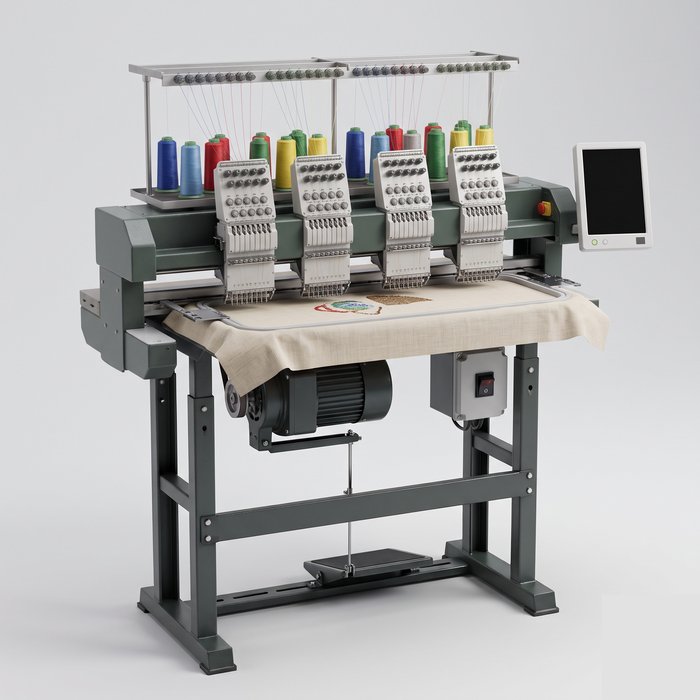
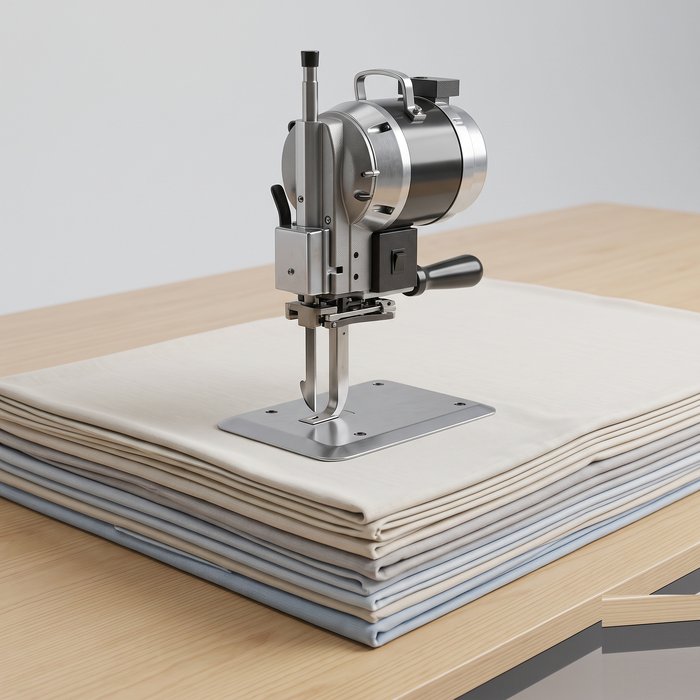
It is this set that makes the trip worthwhile. Seeing the lockstitch and the coverstitch running side by side, comparing the servo motor from three manufacturers and feeling the finish of the stitch on knitwear is the kind of comparison no catalogue delivers, and the one that decides where your money goes.
Why this is an opportunity for Brazil
Brazil has one of the largest garment manufacturing bases in the world and a fashion chain that employs people everywhere, from the Santa Catarina cluster to the Agreste of Pernambuco. Except that the machinery holding up that base is almost all imported, and every middleman along the way takes their cut before it reaches your bench.
- An ROI you work out on a spreadsheet: this is not an impulse product. The machine pays for itself in production, and the factory owner knows exactly in how many pieces. It is the kind of purchase decided with numbers, not with desire.
- Low purchase at source, high value in Brazil: China concentrates the world's sewing machine manufacturing. The cost at source is a fraction of the shelf price here, and the difference grows when you import the whole line, not a single piece.
- Two customers in the same product: it serves the clothing factory assembling its own park and the distributor or service workshop that wants the complete line, with the recurring sale of spare parts and needles behind it.
- Timing: between deciding, negotiating, inspecting, shipping and clearing customs, the typical lead time is 60 to 120 days. Whoever closes at the October fair assembles the line to produce the following year.
Before importing: a machine is work equipment and falls under NR-12, the safety standard for machinery, which requires guards, an emergency stop and a manual in Portuguese. Confirm the voltage (110V, 220V single-phase or 380V three-phase), the INMETRO certification of the electrical part where applicable and, above all, the supply of spare parts: an idle machine without a replacement part is a daily loss. This is a case in which inspecting before shipment is not optional. See also how to import industrial equipment from China.
Customise the specification (OEM)
Importing a machine from China is not choosing the model from the catalogue and hoping for the best. The specification is negotiated, and it is there that money is won or lost later on:
- Voltage and motor: 220V single-phase or 380V three-phase according to your installation, with a direct drive servo motor and the right power for the fabric you work with.
- Set-up by fabric: the needle, the feed and the stitch change depending on whether you sew knitwear, heavy denim or woven fabric. The wrong machine for your article produces rejects, not garments.
- Parts, manual and after-sales: a package of spare parts along with the batch, a manual in Portuguese and a commitment to continued supply. That is what holds the operation up in the second year.
- Private label: for the distributor, it is possible to close the line with your brand on the machine and on the packaging, creating a machinery brand instead of reselling everybody else's.
That calls for direct negotiation with the factory and a validated sample before the batch. BCVN finds the right manufacturer, closes the specification, tests the machine and guarantees it arrives within the standard.
Where to buy an industrial sewing machine in China
Here an honest warning about the 2026 calendar is due, because the fair dedicated to the sector does not take place this year:
- Canton Fair, Phase 1 (machinery): it is the anchor of 2026. The machinery and equipment aisle brings together sewing machine manufacturers within the whole industrial universe, and it takes place from 15 to 19 October, in Guangzhou.
- CISMA (the dedicated fair, Shanghai): the largest sewing equipment fair in the world, but it is biennial. There is no edition in 2026: the next one takes place from 16 to 19 September 2027, at the Shanghai New International Expo Centre. Anyone who can wait has the sector's maximum depth there.
- Intertextile Shanghai (the fabric): from 25 to 27 August, in Shanghai, this is where you buy the raw material the machine will sew. It does not exhibit machinery, but it closes the other side of your production.
The itinerary the dates draw: in 2026 the fabric is in Shanghai, in August, and the machinery is in Guangzhou, in October. That is two trips, or a choice. BCVN helps decide which of the two solves more for your moment, and builds the agenda from there. See the complete calendar of Chinese trade fairs 2026.
It is also worth looking at the DTF printer for garment printing, which closes the line for whoever produces their own collection and wants to print their own garments.
An industrial sewing machine is not a shop-window find, it is a business decision. It does not sell on impulse, it sells on sums done, and that is exactly why it is the kind of import that most rewards whoever goes to the source: here you are not buying a photo, you are buying equipment that will run eight hours a day for years and that needs parts, standards and a manufacturer who answers the phone next year. For whoever produces fashion in Brazil, crossing that bridge is what separates the studio from the clothing factory.
Frequently asked questions about importing an industrial sewing machine
What is the difference between an industrial and a domestic sewing machine?
The industrial one is built to work all day, with a separate motor, an iron frame and much higher speed, and each machine does one specific job: the lockstitch sews, the overlocker finishes the seam, the coverstitch does the hem on knitwear. The domestic one tries to do everything in a single machine and cannot cope with production. A clothing factory does not use one machine, it uses a park of machines that complete one another.
Does an industrial sewing machine imported from China need certification?
A machine is work equipment and falls under NR-12, the safety standard for machinery and equipment, which requires guards, an emergency stop and a manual in Portuguese. Also confirm the voltage (110V, 220V single-phase or 380V three-phase) and the INMETRO certification of the electrical part where applicable. Buying a machine outside the standard creates labour liability and problems with the insurance, and that is why the specification is defined before the order, not after.
Can I import just one industrial sewing machine?
It does not pay off. BCVN is an import consultancy for clothing factories and companies, and freight and customs clearance only add up in a batch that fills volume. A single unit comes out more expensive imported than bought from a distributor in Brazil. It makes sense for whoever is setting up or expanding a machine park, for the distributor and for the service workshop that also wants the spare parts line.
Where to buy an industrial sewing machine in China in 2026?
At the Canton Fair, Phase 1, from 15 to 19 October 2026, which has the machinery aisle and is the anchor of the year. The fair dedicated to the sector, CISMA, is biennial and the next edition only takes place from 16 to 19 September 2027, in Shanghai. Anyone who wants the fabric in the same season will find it at Intertextile, from 25 to 27 August, in Shanghai. BCVN validates the manufacturer, the voltage, NR-12 and the supply of spare parts.