Why China dominates fashion, and why that misleads
China accounts for more than a third of all clothing exported in the world. That dominance is not only about price: over decades the country built entire production clusters, cities dedicated to a single segment, with suppliers of fabric, trims, labels and packaging within a few kilometres of the factory. For the Brazilian retailer, that means price, variety and a real chance to sell under a private label.
What misleads is that fashion is the category where buying looks easiest. Minimum orders are low, the catalogue is endless and the photo is always flattering. But clothing cannot be judged from a photo: it has fit, measurements, shrinkage, colour fastness and compulsory labelling. And a mistake in fashion does not ruin one garment, it ruins the whole collection, because everything was produced the same way. If you are looking for a script on finding a supplier and closing the order, this is not it: fashion is not about where to buy, it is about what has to be approved before production begins.
The textile yardstick: where fashion stops being easy
Clothing looks like the least regulated category, and that is precisely where the first-time importer stumbles. There are three requirements, and all three fall on the importer, never on the Chinese factory.
Outside ordinary clothing the yardstick gets tighter still: children's sleepwear has flame retardancy requirements, children's footwear has its own certification and protective workwear counts as personal protective equipment, with a specific approval. To see which families fall under compulsory certification, the guide to products that require INMETRO.
The question that decides the order: before discussing price, the question is "is this a children's garment?". If it is, the certification has to be under way before production starts, not after. It is the only item on this list with no remedy: children's cargo without a certificate is not fined, it is turned away.
Who can import, and why clothing tax changes the calculation
Importing fashion to resell is not a scaled-up personal purchase. It is a company operation and requires a CNPJ with a compatible business activity and clearance in RADAR Siscomex. Buying parcel by parcel does not sustain a shop, does not give scale and does not answer for the garments' compliance.
With the question of who imports settled, in comes what surprises newcomers from other categories most: clothing carries one of the heaviest import tax burdens in the Brazilian system. A garment that looks unbeatable at source arrives in the stockroom at a very different figure after tax, freight and insurance, and anyone setting the retail price from the factory price finds out too late that the margin never existed. The correct NCM classification is what defines that calculation, and it is where mistakes cost dearly: see the guide to NCM and tax classification and the one on how much it costs to import from China.
Fashion has one more characteristic of its own: it is high-volume, low-weight cargo, which changes the logic of transport and how much freight weighs in the final calculation. The guide to freight from China to Brazil explains how that is calculated.
Size grading: where the entire collection gets lost
This is the risk that sets fashion apart from any other category, and the one that creates the most dead stock. The sizing standard used by Chinese garment factories was built on a different body type from the Brazilian one: narrower shoulders, shorter torso, smaller hips. A garment labelled XL on the Chinese label reaches the shop fitting like a Brazilian M.
And here is the part almost nobody tells you: there is no reliable conversion table. Every garment factory has its own grading, the same size label varies between two factories in the same city, and the pattern changes from one season to the next. Any published equivalence table is an average that does not represent the supplier you are talking to.
That is why size grading is the perfect example of what cannot be solved from a distance. No document, certificate or chat on an app replaces someone with a tape measure in hand, inside the factory, before the container is sealed.
The mistakes that turn a collection into dead stock
Fashion is produced in uniform batches: when a mistake shows up, it shows up in every garment at once. These are the costliest:
1. Approving the collection from photos
Colour on a monitor is not real colour, fabric has no texture in an image and fit cannot be seen in a catalogue. The garment arrives different from what was imagined, and there is no defect to claim: what was ordered is what was delivered.
2. Trusting the size on the label
Chinese grading is not Brazilian grading and it varies between factories. Without physical measurements checked during production, the risk is importing an entire collection that does not fit the customer, and clothing that does not fit gets no second chance at a sale.
3. Leaving childrenswear certification for later
A children's garment without certification is not released. Since the process takes months, anyone who discovers the requirement with production already finished loses the whole season, which in fashion is the whole product.
4. Ignoring the compulsory label in Portuguese
Composition and care instructions in Portuguese are not a finishing detail, they are a legal requirement. Relabelling an entire batch in Brazil is a cost per garment, plus the time the goods spend sitting still instead of selling.
5. Underestimating the volume a minimum order generates
In apparel, the minimum applies per combination of style, colour and size. A few styles in a few colours turn into far more garments than planned, and the capital ends up locked in stock that takes seasons to move.
6. Setting the retail price from the factory price
Clothing carries one of the heaviest import tax burdens there is. Anyone calculating the margin before closing the real cost finds out at the end that the collection was sold at no profit.
All six are solved before production, at source, and none is fixed once the cargo is on its way. For the full picture of what holds goods up at customs, see the mistakes that make the Receita hold your shipment.
What cannot be sorted out from afar
There is plenty of content teaching you to import clothing on your own, and it almost always stops exactly where the business really begins. Because what decides the outcome of a collection is not done in front of a computer:
- Measure the garment, do not read the sheet. A tape measure at the critical points, on the production garment and not only on the sample. It is the only way to know whether the grading that will arrive is the grading that fits your customer.
- Feel the fabric. Weight, handle, transparency, behaviour in the wash. All of it is invisible in an image and all of it is what brings the customer back to the shop, or not.
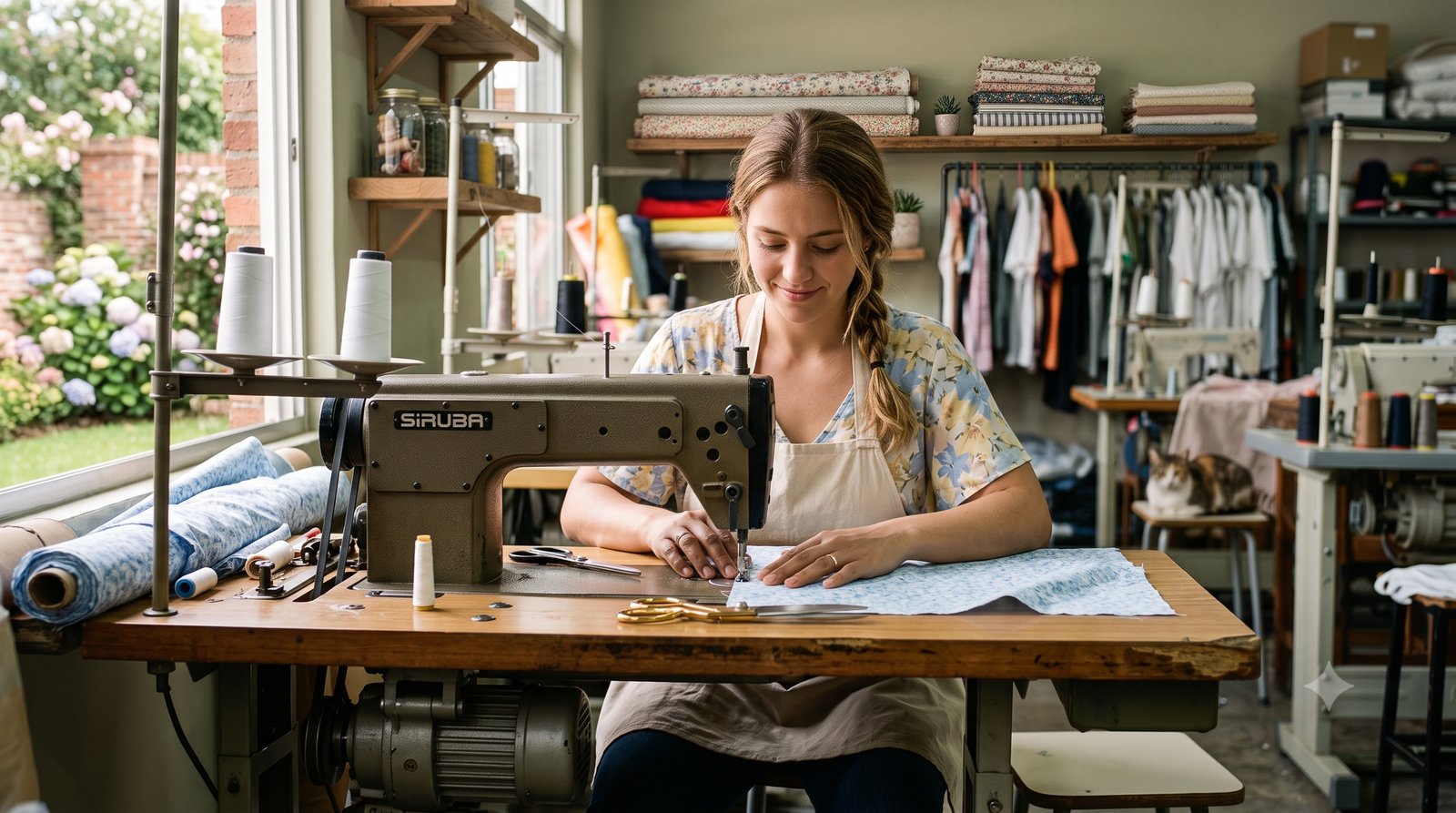
- Know whether the garment factory is a garment factory. Many fashion suppliers are wholesalers reselling from third parties. Who actually sews, with what quality control and with what capacity in peak season, is fieldwork information.
- Validate labelling and certification before production. Composition in Portuguese, care symbols, childrenswear certification under way. Fixing it later means reworking garment by garment.
- Inspect the packed batch. Stitching, print alignment, colour fastness and consistency between garments from the same batch, with production finished and still inside the factory, with time to correct.
None of those stages fits into a tutorial, because none of them is done from a distance. This is where a partner at source stops being a luxury and becomes what separates a collection that sells from one that sits. A single pre-shipment quality inspection pays for that care many times over on its own.
The sum that rarely shows up: the cheapness of importing on your own ignores the cost of the mistake. A collection with the wrong grading is not a discount, it is a full loss on top of capital tied up in garments that will not move and a season that has gone. The partner does not make the operation more expensive, it removes the risk that breaks the first-time retailer.
Where to see the garment in China before buying
China does not have one fashion hub, it has dozens, each strong in a segment. Knowing where to go is what separates a productive trip from a wasted week, and it is where the garment finally leaves the photo and reaches your hand:
Being at the fair lets you touch the fabric, measure the garment, compare garment factories in hours and tell who sews from who merely resells, all before committing a single cent. It is also where you negotiate the garment under your own brand, from the fabric to the packaging: see the guide to private label, own brand and OEM. To fit the dates together, the calendar of China trade fairs 2026 is worth a look.
Frequently asked questions about importing fashion from China
Are Chinese clothing measurements different from Brazilian ones?
Yes, and the problem is bigger than it looks. The standard used by Chinese garment factories was built on a narrower body type with a shorter torso than the Brazilian one, so a garment labelled XL can fit like an M here. Worse: there is no reliable conversion table, because every factory has its own grading and the pattern changes each season. The only way to know is to measure the production garment in centimetres, inside the factory, before shipping.
Do I need INMETRO certification to import clothing from China?
Adult clothing generally does not require certification, but childrenswear from 0 to 14 years carries compulsory certification, with laboratory testing. Without the certificate the cargo does not enter Brazil, and there is no way to regularise it after shipping. On top of that, every garment needs a label in Portuguese with the fabric composition and care symbols. Children's sleepwear, children's footwear and protective workwear have their own, stricter requirements.
Can anyone import clothing from China to resell?
To import regularly and in volume you need a CNPJ with a compatible business activity and RADAR Siscomex clearance. Buying parcel by parcel does not sustain a shop: beyond the limits and the tax, there is no structure to answer for the garments' compliance, which in clothing includes compulsory labelling and, for childrenswear, certification. That is why BCVN serves retailers, distributors and brands, not the purchase of a few units.
Why does importing fashion from China cost more than it seems?
Because the factory price is the smallest part of the calculation. Clothing carries one of the heaviest import tax burdens in the Brazilian system, calculated on the customs value according to the garment's NCM code, and then come freight, insurance and the cost of any adjustment required at destination, such as relabelling. Anyone setting the retail price from the source price usually finds out at the end of the operation that the collection was sold with no margin.
How do I import fashion from China without the collection becoming dead stock?
By settling at source what has no remedy at destination: measuring the production garment instead of trusting the size on the label, checking fabric and finishing with the garment in hand, validating the Portuguese label and the childrenswear certification before production starts, and inspecting the packed batch while it is still inside the factory. That is exactly the part that cannot be done from afar, through photos and catalogues. BCVN validates the garment factory, follows the production, inspects and runs the import in compliance.
Trade fair products in the China Showcase
Real finds from the fairs this guide covers, each with its cost and resale logic. See more in the China Showcase.