
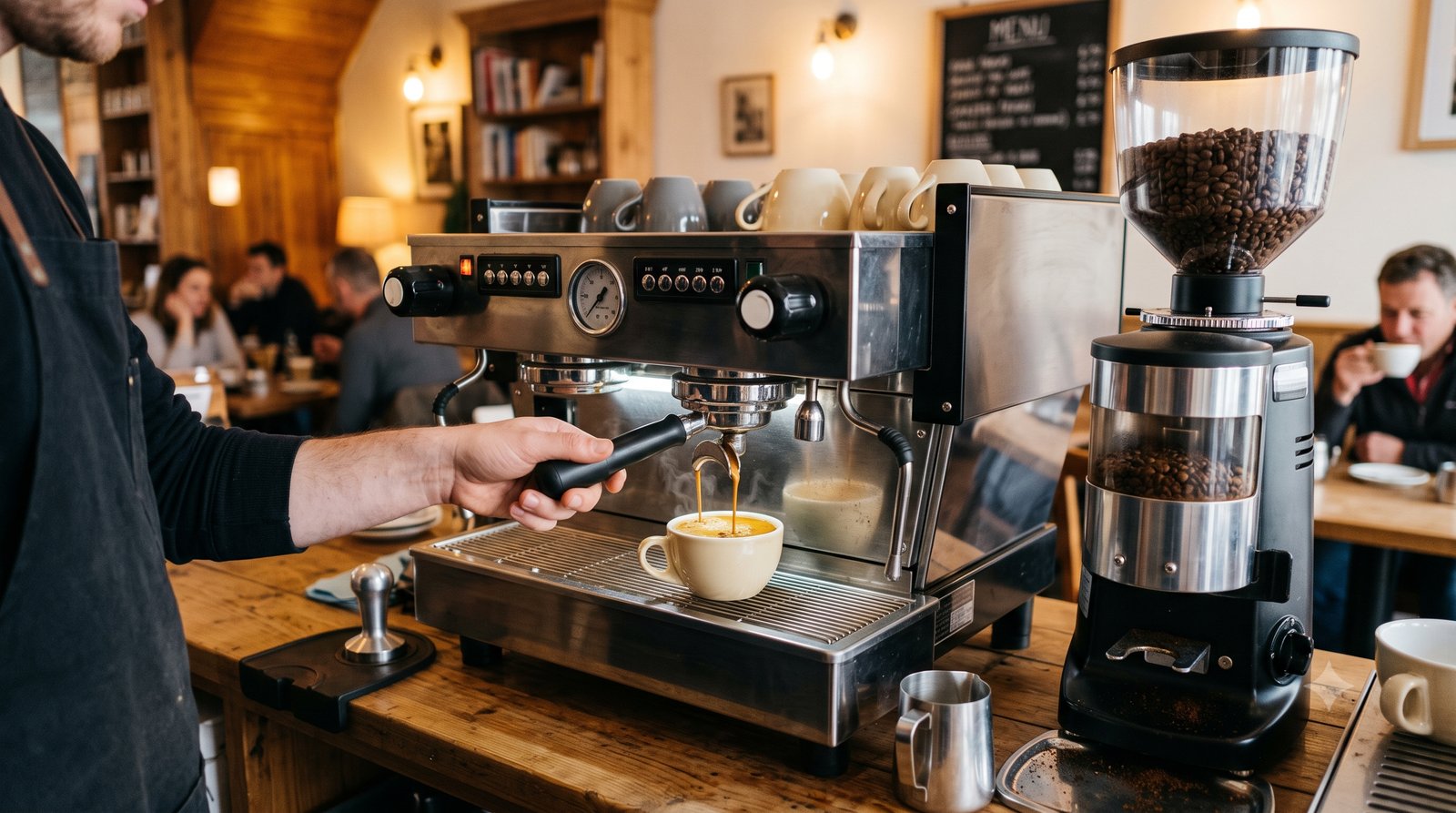
Few markets have grown as fast as speciality coffee in Brazil. What used to be a smart coffee shop habit became a neighbourhood routine, and with it came a legion of small businesses (the coffee shop, the coworking space, the bakery with a coffee corner) and a consumer willing to build an espresso corner at home. The one who sees the opportunity is not the barista but the reseller who realised that each of those points needs a machine and a grinder, and that this equipment leaves China with room to resell comfortably.
What a professional coffee machine is
The name coffee machine covers a family that runs from the counter to the kitchen. The espresso machine extracts the coffee under pressure; the grinder mills the beans on the spot, which is half of what ends up in the cup; the filter brewer prepares in volume; the bean-to-cup automatic does everything at the touch of a button. China manufactures the whole range, from the professional two-group machine to the compact domestic one, at an origin price that opens up a good margin in Brazil and follows the speciality coffee boom.
Models and variations
"Coffee machine" is not a single product. In the aisles of the Chinese home appliance fair it is a whole range, and each model serves a different audience and a different price:
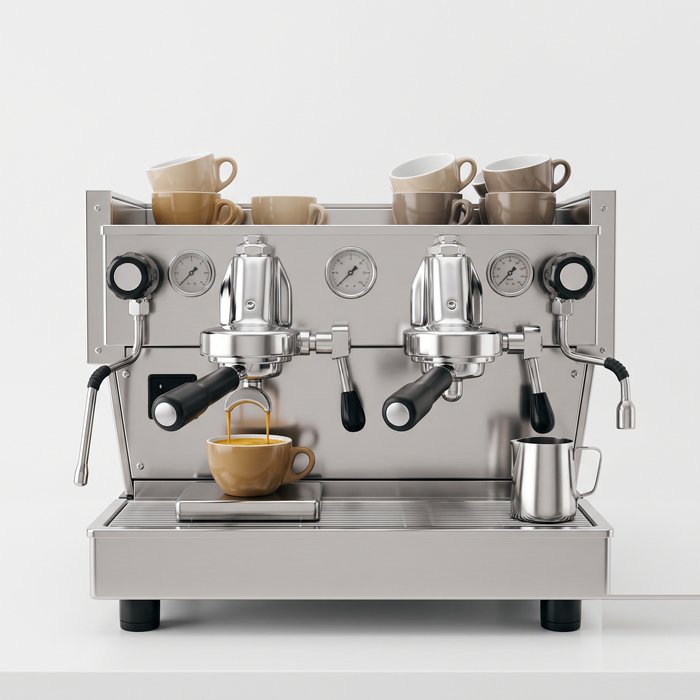
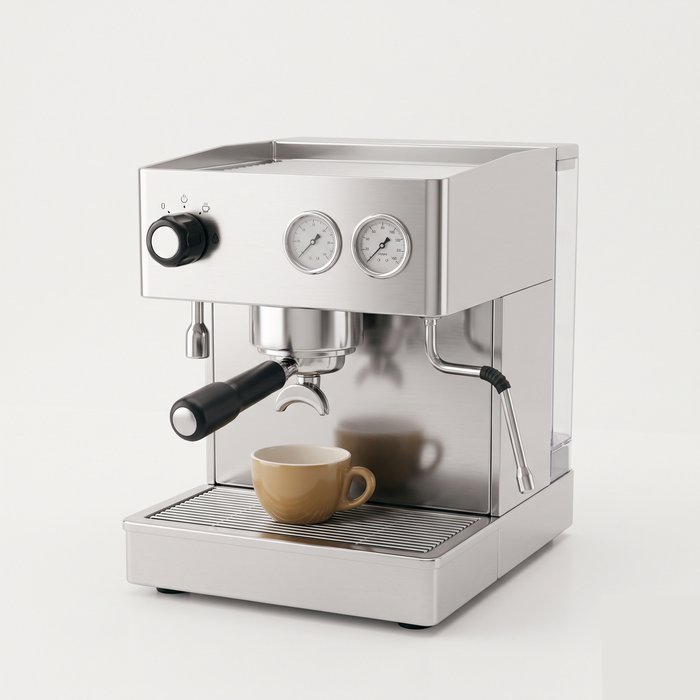
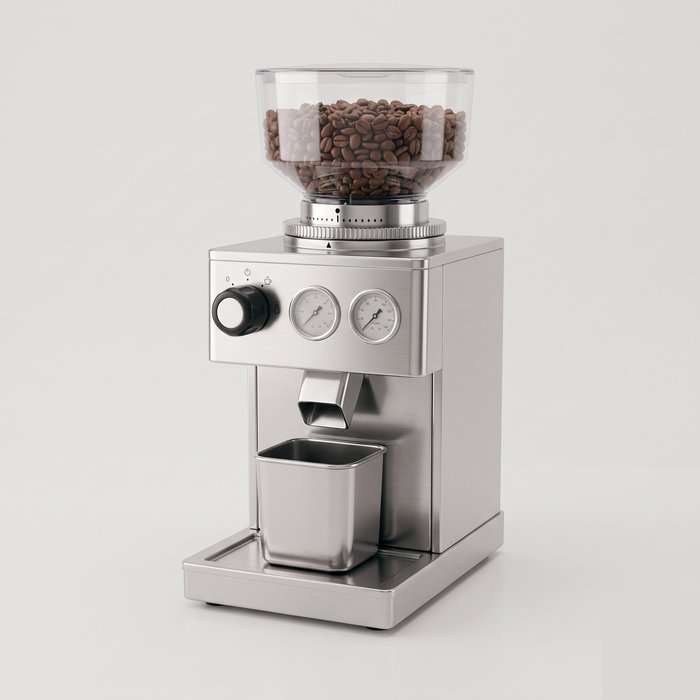
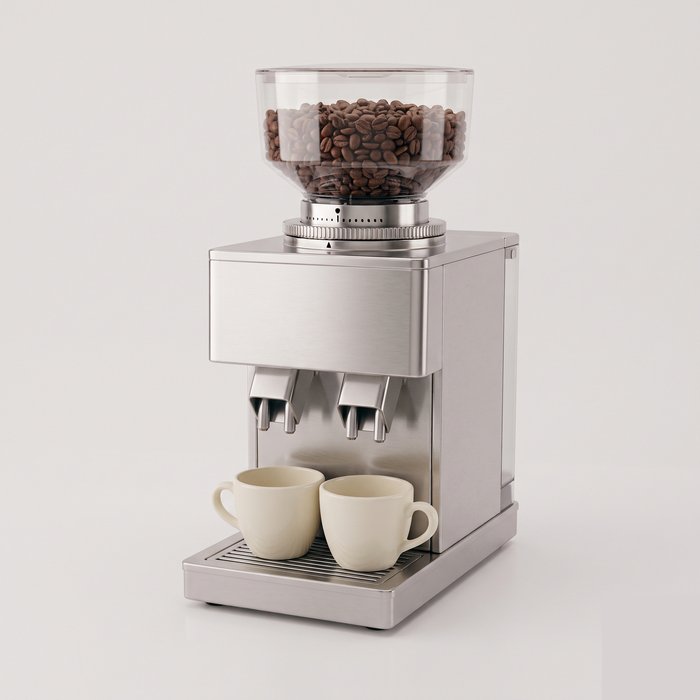
It is this variety that fills a shop range. The professional machine is the flagship, the highest ticket for the business; the domestic one is the turnover item for the consumer; the grinder sells alongside almost everything; the bean-to-cup automatic catches whoever wants convenience. A display with all four covers everything from the coffee shop counter to the kitchen worktop.
Why this is an opportunity for Brazil
Speciality coffee consumption keeps growing with no sign of slowing down, and with it the willingness to invest in good equipment, whether by the business or by the consumer. It is a market that used to be dominated by a handful of expensive brands and that is now opening up to whoever brings a good product at an accessible price.
- Buy cheap, resell well: the coffee machine has a low cost at source and high perceived value (coffee is aspirational). Negotiated properly in China, it resells in Brazil with a full margin.
- Repeat sales on consumables: beans, capsules, filters and cleaning products are always being used up. Whoever imports the machine opens the door to supplying the consumables, which is the revenue that comes back month after month.
- Two audiences in one product: the same range serves the business (coffee shop, bakery, coworking space) and the consumer (home, gift, home office), which widens the market.
- Content ready to go: an espresso being pulled, the crema, the latte art: these are among the images that get the most engagement in video and on the shop feed, ideal for whoever also resells online.
- Timing: the typical lead time is 60 to 120 days. Whoever closes at the autumn fair arrives with stock for the following year's peak.
Before importing: coffee machines and grinders are electrical products and may require INMETRO certification; the smart models, with Wi-Fi or an app, also require ANATEL. Because they prepare a drink, the parts in contact with the water and the coffee must meet the rules for food contact material. Confirm the category and the voltage (110V or 220V) before ordering. See how quality inspection in China before shipment works and the list of products that require INMETRO.
Put your own brand on it
The coffee machine is a perfect category for own branding (private label/OEM): the consumer compares design, the result in the cup and the price, not the factory name. You can put your brand on the machine and on the box, choose the colour and the finish (stainless steel and retro sell very well), define the packaging and a manual in Portuguese, and adjust details such as the pressure, the steam wand and the display. BCVN negotiates the customisation directly with the factory and validates the sample before production, so the product arrives with your identity and the coffee standard you want to deliver.
It is worth understanding how this works in practice before requesting the first sample: the guide on own brand in China: private label, OEM and ODM explains the difference between the three models and what each one changes in the minimum order and the lead time.
Where to buy coffee machines in China
Coffee machines are concentrated in the home appliance and food service fairs, and in the volume markets:
- Canton Fair, Phase 1 (home appliances and electronics): from 15 to 19 October, with the coffee machine manufacturers and the widest choice of models and price brackets.
- Hong Kong Electronics Fair: from 13 to 16 October, strong on connected and automatic models, in the same week as the Canton Fair.
- Yiwu Trade Fair: the compact models and impulse coffee accessories, to buy in volume at wholesale prices.
The bridge to the professional range: anyone focused on coffee shops and food service will find the professional coffee machine range at FHC China (10 to 12 November, Shanghai), the dedicated food service fair. See the full 2026 trade fair calendar to plan the autumn itinerary.
It is also worth looking at the açaí and soft serve machine and the premium insulated tumbler, which round off the coffee-to-go range.
Coffee has stopped being a commodity and become an experience, and the machine that delivers that experience has followed the wave. For the importer, it is one of the few small appliances that combine high perceived value, two audiences in a single product and guaranteed repeat sales on beans and consumables. You do not buy one piece, you build a range with your own brand and after-sales support behind it. For whoever resells in Brazil, this is the category that only gets hotter.
Frequently asked questions about importing professional coffee machines and grinders
Why do coffee machines sell well in Brazil?
Because the speciality coffee market has exploded. Neighbourhood coffee shops, coworking spaces, bakeries, restaurants and even the home office have all become espresso buyers, and every one of those points needs a machine and a grinder. It is a category with high perceived value, strong visual appeal for the shop window and social media, and demand that grows all year round, which means full margin for the reseller and constant turnover for e-commerce.
Do coffee machines and grinders imported from China need certification?
Yes. Coffee machines and grinders are electrical products and may require INMETRO certification, and the smart models, with Wi-Fi or an app, also require ANATEL approval. Because they prepare a drink, the parts in contact with the water and the coffee must meet the rules for food contact material. Confirm the requirement and the voltage (110V or 220V) of each model before placing the order.
Domestic or professional machine: which one should you import?
It depends on the audience. The semi-automatic espresso machine and the bean-to-cup automatic serve the consumer and the home office, with a mid-range price and high turnover. The professional one-group or two-group machine and the countertop grinder serve the coffee shop, the bakery and the restaurant, with a high price and lower volume. A well-built range covers both audiences, from the consumer to the business.
Can I import just one coffee machine to test?
BCVN is an import consultancy for retailers and companies, not a retail shop, and it does not sell single units. Importing only makes sense in volume: freight and paperwork are diluted across the batch, and every factory works to a minimum order quantity (MOQ). Anyone who wants a single piece should buy from a reseller in Brazil; anyone who wants to resell, build their own range or fit out a chain of coffee shops imports from source, and that is where the sums add up.
Where can I buy coffee machines in China?
At the Canton Fair, Phase 1 (home appliances and electronics), from 15 to 19 October 2026, and at the Hong Kong Electronics Fair (13 to 16 October), which bring together the coffee machine manufacturers. FHC China (10 to 12 November, Shanghai) carries the professional food service range, and the Yiwu Trade Fair completes the picture with the compact volume models. BCVN validates the manufacturer, the INMETRO side and the branding customisation.