
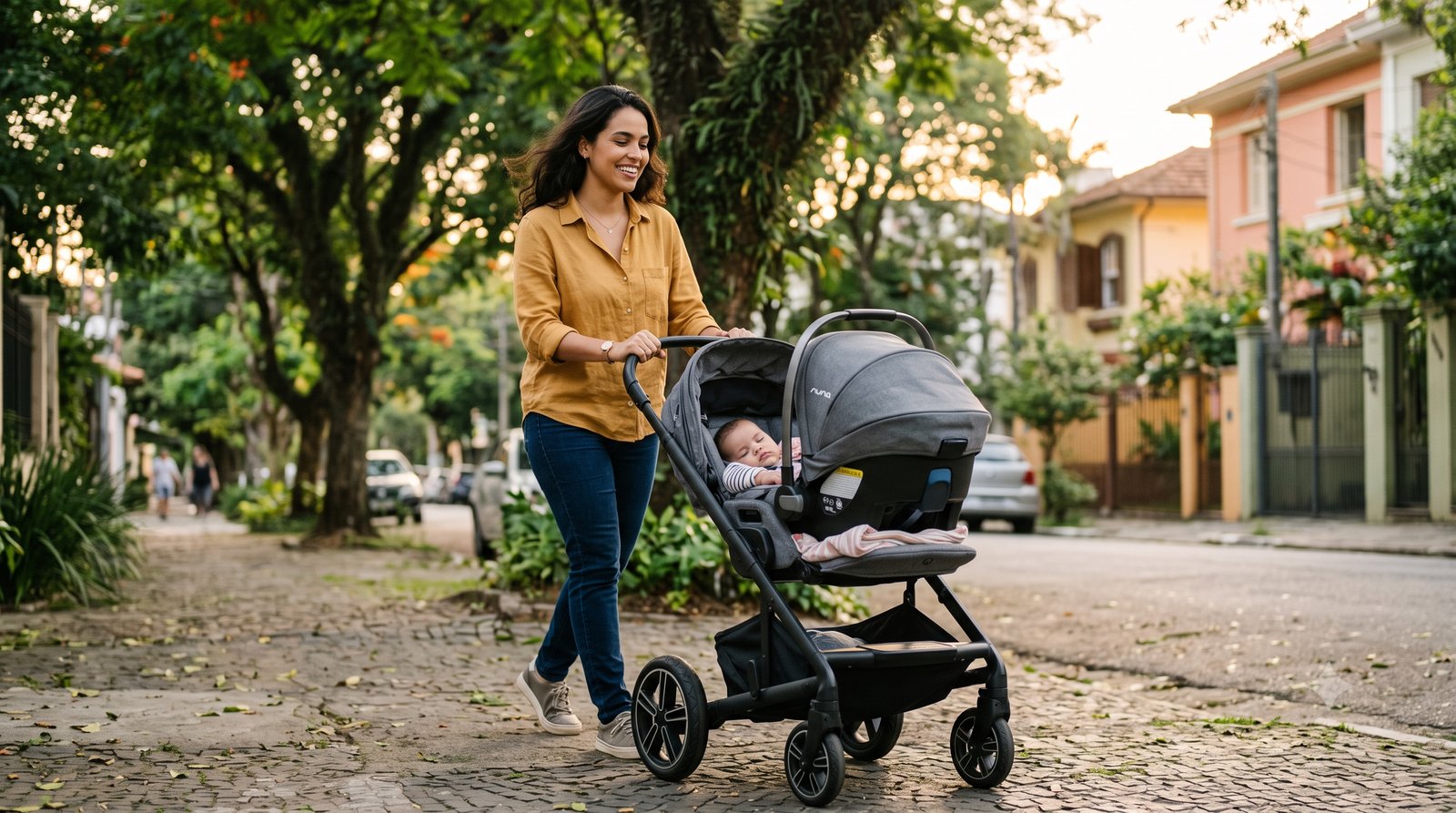
There is a shelf in Brazilian retail where the customer simply does not haggle, and it is the one that carries their child. The first-time parent researches for weeks, reads reviews, asks in the group chat, and in the end chooses what conveys safety, not what is cheapest. For the retailer, that alone would be good. For the importer it is better still: this is one of the few categories where compulsory certification keeps the amateur competitor out of the game.
What the pushchair and car seat world is
It is the line of equipment that carries and seats the child in the first years: the pushchair in its various forms, the infant carrier and the child car seat the law requires, the high chair and the travel cot. In the trade this set is called the baby travel range, and it is usually bought almost all at once, before the baby is born. Whoever buys one item on the list tends to buy the others, which makes the category a natural bundled sale for the retailer.
Models and variations
A “pushchair” is not one single product. In the trade fair hall it is a universe with very different price bands, and it is that variety which makes it possible to build a line rather than sell a single item:
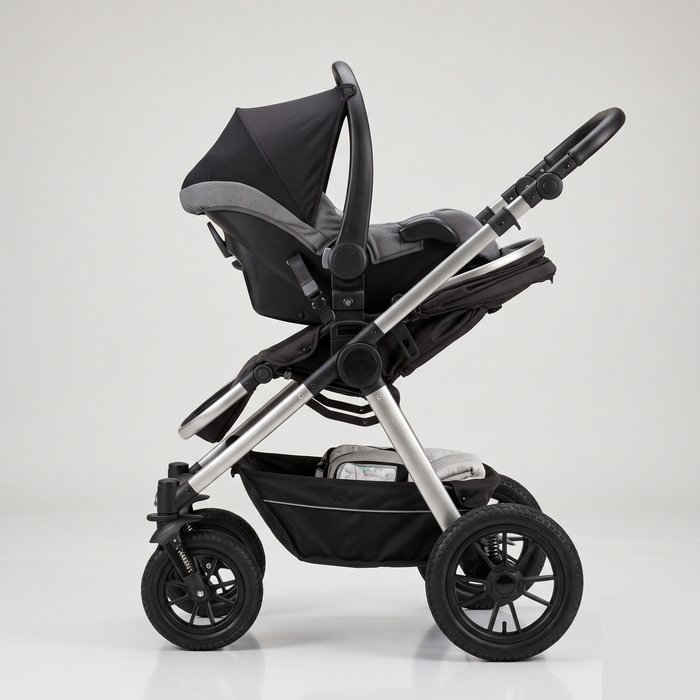
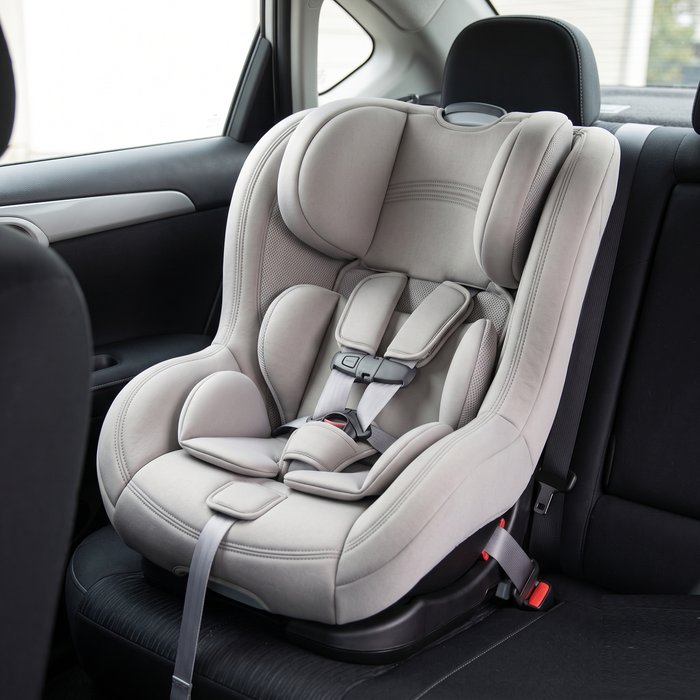
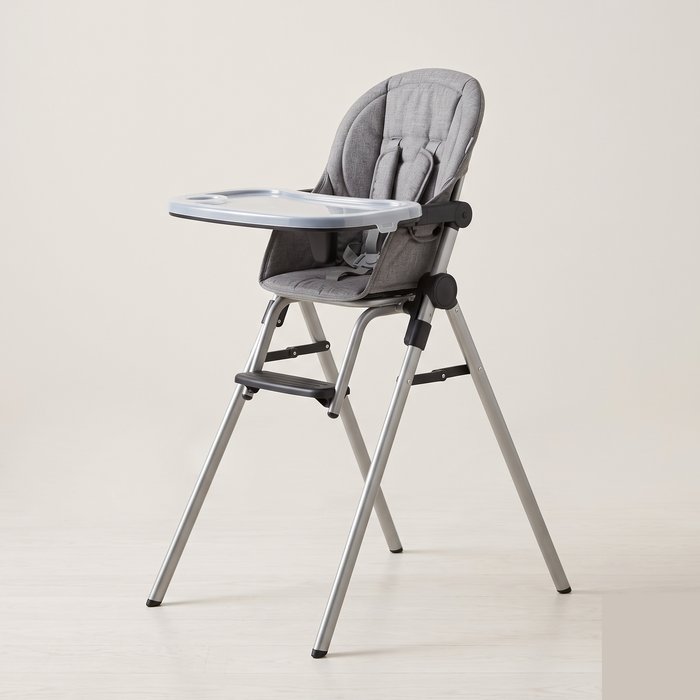
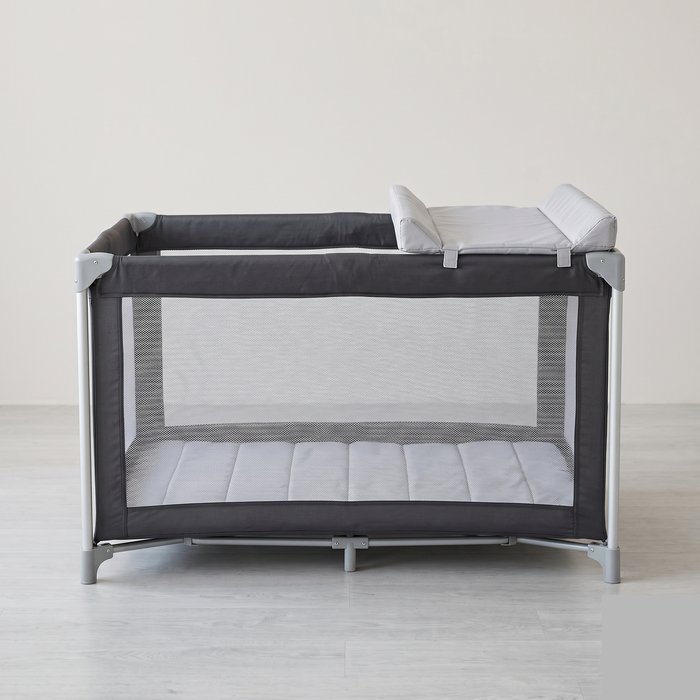
Each one solves a stage and a price point. The compact cabin pushchair serves those who travel; the travel system is the highest-ticket bundle; the car seat has guaranteed demand because it is a legal requirement for travelling by car; the high chair and the travel cot complete the baby kit list. Seeing the variety at source, and choosing the combination of tickets that covers your shop window, is what separates whoever builds a line from whoever imports a single model.
Why this is an opportunity for Brazil
It is a category that combines two things that rarely go together: high perceived value and a real barrier to entry. Whoever cannot certify does not sell, and that protects whoever does it properly.
- The customer does not buy on the lowest price: their child's safety is the argument that beats a discount. That sustains the margin in a way few categories allow.
- Certification is your moat: pushchairs and car seats carry compulsory certification in Brazil. The improvising importer does not get past that stage, and the market goes to whoever structured the operation.
- Demand that does not depend on the economy: babies are born in a recession too, and the car seat is required by law to carry a child in a car.
- A natural bundled sale: whoever buys the pushchair takes the infant carrier, then the high chair. One customer, several tickets across two years.
- Christmas timing: the typical lead time is 60 to 120 days. Whoever closes at the October fair arrives with the container in the year-end season, when baby kit and baby shower gifts heat up.
Before importing: the rules here are strict, and rightly so. Pushchairs and child car seats carry compulsory INMETRO certification, with testing in an accredited laboratory, and the car seat also answers to CONTRAN traffic regulations on carrying children. It is not a label: it is impact, stability and component testing. Certification takes time and money, so it enters your planning before the order, not after the cargo arrives. It is worth understanding which products require INMETRO and inspecting the batch before shipment.
Put your own brand on it
It is one of the categories where own branding pays off most, because the customer is buying trust and trust is built on a name:
- Brand and packaging: your logo on the product, on the box and on the manual in Portuguese, which here is no detail: the manual is part of compliance.
- Colour and fabric: the palette and the upholstery defined by you, which is how the line stands apart on a shelf full of similar models.
- The mix of the line: choosing which models and price bands make up your brand, from the entry-level compact to the travel system.
- A validated sample: BCVN negotiates the customisation and validates the sample before production, which in a certified category is indispensable.
It is worth understanding how this works in practice before requesting the first sample: the guide on own brand in China: private label, OEM and ODM explains the difference between the three models and what each one changes in the minimum order and the lead time.
Where to buy pushchairs and child car seats in China
The children's sector is concentrated in the consumer phase of the universal trade fair and in the world's largest wholesale market:
- Canton Fair, Phase 3 (Textiles, Toys and Children's): from 31 October to 4 November, this is where the children's products and nursery hall is, with the manufacturers of pushchairs and car seats.
- Yiwu Trade Fair: from 21 to 24 October, good for accessories and fast-turnover baby kit items, with a smaller minimum order.
- Guide to importing children's products: the toys guide covers the same compulsory INMETRO logic that governs this category.
Also worth mentioning is CBME in Shanghai, the fair dedicated to the mother and baby world, useful for anyone wanting to go deeper into this sector alone. Confirm the date of the next edition before planning the trip.
The itinerary the season sets out: the Yiwu Trade Fair (21 to 24 October) and Canton Phase 3 (31 October to 4 November) fall within the same trip, a week apart. You can see the accessories and the fast movers in Yiwu and settle the pushchair and the car seat with the manufacturer at Canton. See the full 2026 trade fair calendar.
It is also worth looking at the children's ceiling projector and the interactive plush toy, which serve the same customer in an impulse price band.
Pushchairs and car seats are not the easiest import in the Showcase, and that is precisely where the appeal lies. The certification that frightens the weekend importer is what guarantees margin for whoever structures the operation properly. You do not buy a pretty pushchair, you buy a model that passes the test, from a manufacturer who has certified before and with the documentation INMETRO will ask for. For anyone wanting to enter Brazilian children's retail with an own brand, buying at source is the difference between reselling what everybody resells and having a line that is yours.
Frequently asked questions about importing pushchairs and child car seats
Do pushchairs and child car seats imported from China need certification?
Yes, and it is the most important point in the category. Both carry compulsory INMETRO certification, with testing in an accredited laboratory, and the child car seat also answers to CONTRAN regulations on carrying children in vehicles. This is not a label: they are impact, stability and component strength tests, plus the manual in Portuguese. Certification takes time and money, so it has to enter the planning before the order, not after the cargo reaches the port.
What is the difference between an infant carrier, a car seat and a booster seat?
The infant carrier is for the newborn, installed rear-facing, and it usually clips onto the pushchair to form the travel system. The convertible car seat serves the older child and can be used facing either way according to age and weight. The booster seat is for the child who has already grown and simply needs extra height for the car's belt to work properly. Each stage has its own equipment, which generates repeat purchases from the same customer.
Why does importing pushchairs and child car seats from China pay off?
Because it is a category with high perceived value where the consumer does not buy on the lowest price, and at the same time it has a real barrier to entry because of the compulsory certification. China concentrates the world's manufacturing for the sector and the price at source opens room for an own brand with margin. Since the customer buys several items over two years, from the pushchair to the high chair, one buyer becomes several tickets.
Can I import just one pushchair to resell?
BCVN is an import consultancy for companies and resellers, not a retail shop, and does not sell single units. Import maths only works on volume: freight and paperwork are diluted across the batch, and every factory works to a minimum order quantity (MOQ). In this category that weighs even more heavily, because the cost of compulsory certification is only diluted across a batch of reasonable size. Anyone who wants a single item should buy from a retailer in Brazil; anyone building a line imports at source.
Where can I buy pushchairs and child car seats in China?
At the Canton Fair, Phase 3 (31 October to 4 November), where the children's products and nursery hall is, with the manufacturers of pushchairs and car seats, and at the Yiwu Trade Fair (21 to 24 October) for accessories and fast-turnover baby kit items. There is also CBME in Shanghai, dedicated to the mother and baby world. BCVN validates the manufacturer, confirms their experience with certification, negotiates own branding and follows the testing and the inspection.