
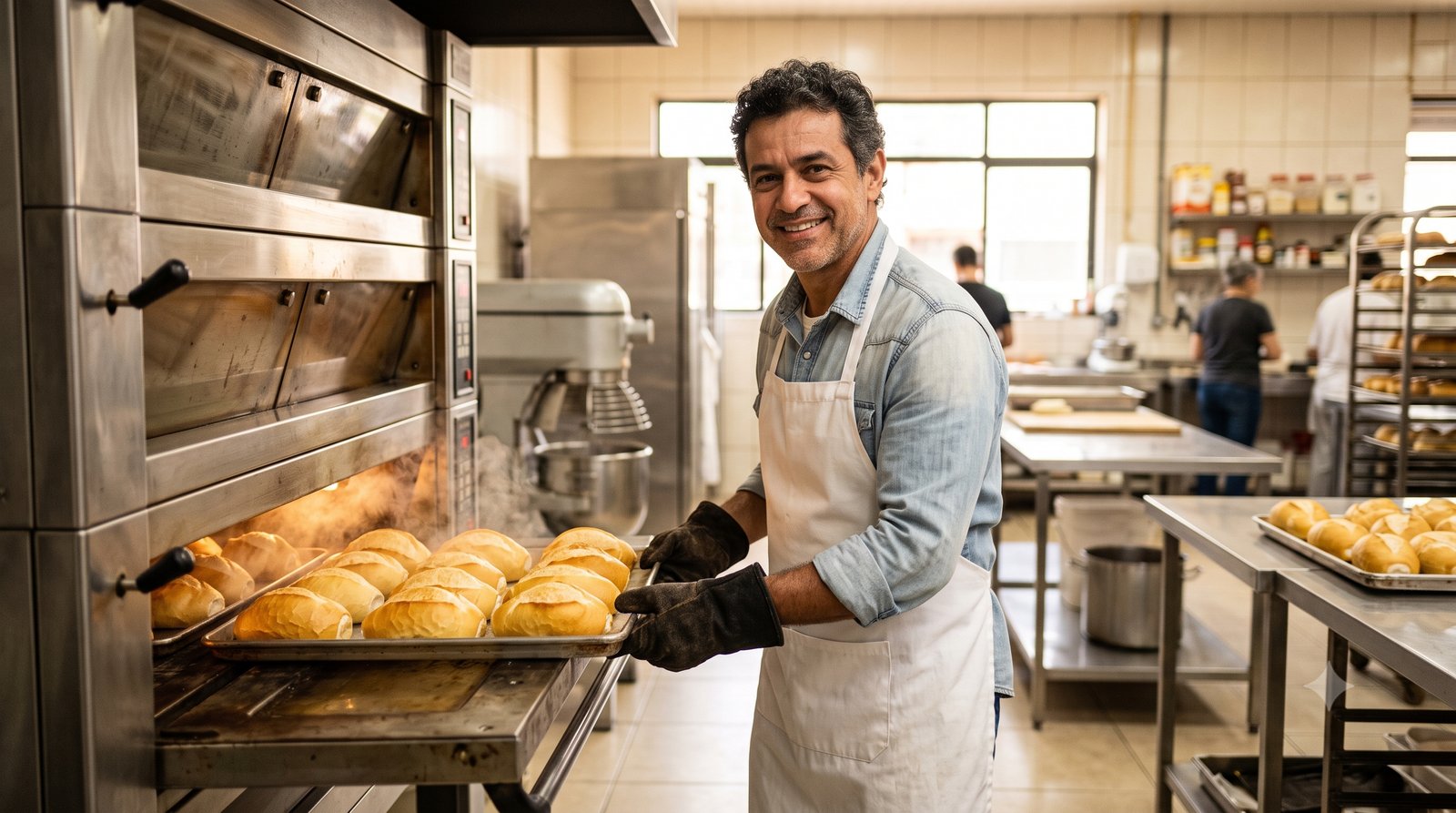
A bakery is not one machine, it is a set of them working in sequence. The dough is kneaded in the mixer, rests, goes through the moulder or the sheeter, rises in the proofer and bakes in the oven. Every stage has its equipment, and a bottleneck in any one of them jams the whole production. That is why people who know the business do not buy loose machines: they buy the matched line. And it is precisely that line China makes at scale, at a price that changes the sums for anyone opening or re-equipping a bakery in Brazil.
What the industrial bakery line is
The industrial bakery line is the set of machines that takes flour through to finished bread: oven, spiral mixer, moulder, sheeter, divider and proofer. It serves the neighbourhood bakery, the patisserie, the supermarket kitchen, the savoury snack producer and the frozen goods maker. China is today one of the largest manufacturers of this machinery, from the benchtop model for the small business to high output lines, and that is what makes it possible to set up a professional operation without the cost of ready-made branded imported equipment.
Models and variations
"Bakery machine" is not one single product. In the aisles of the fair it is a whole universe, and it is that variety that makes the trip worthwhile, because each machine solves one stage:
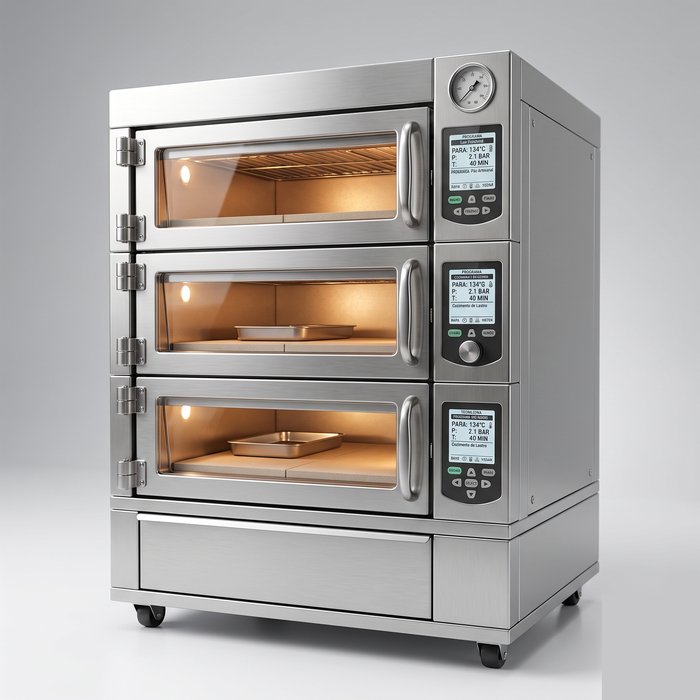
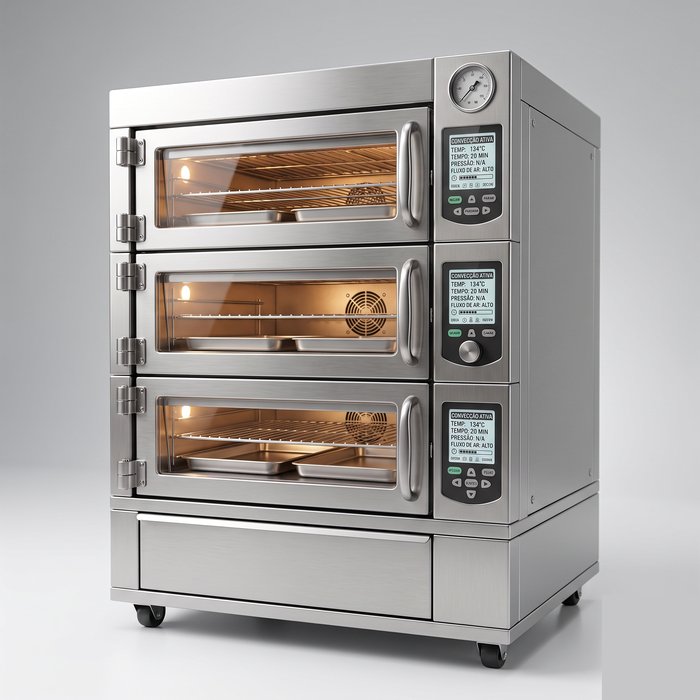
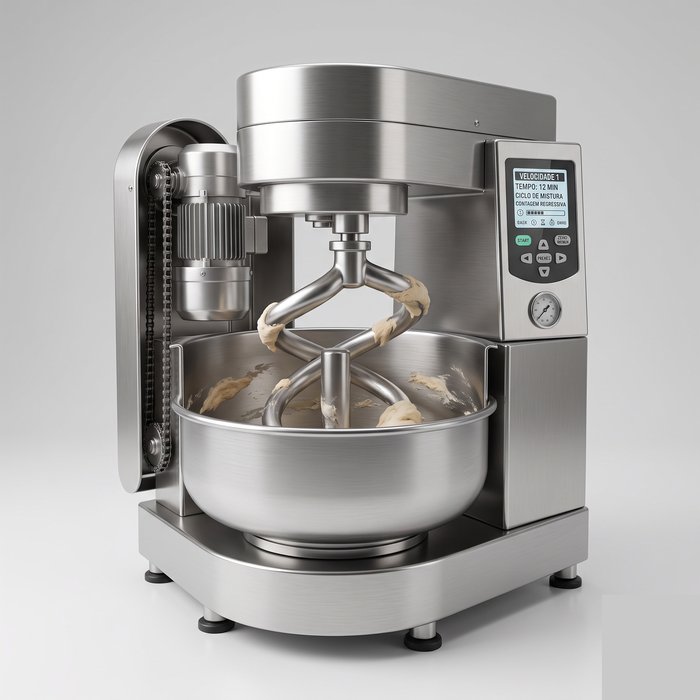
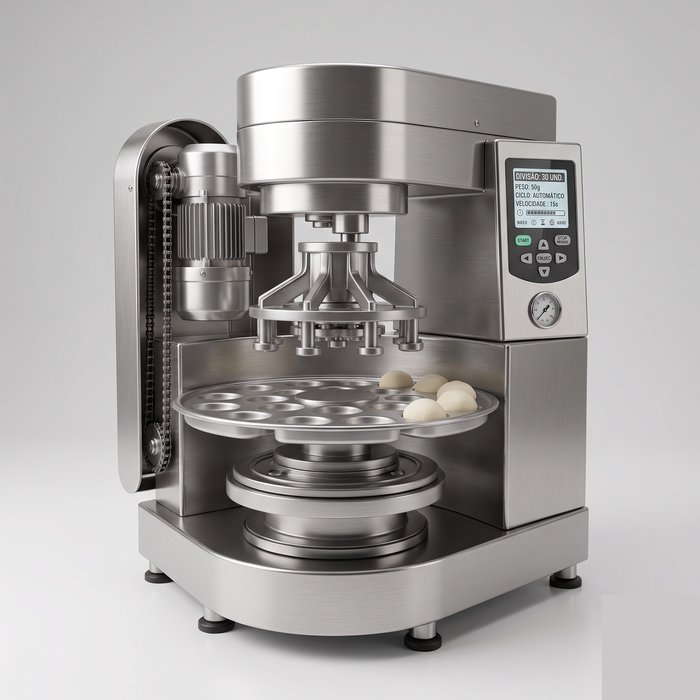
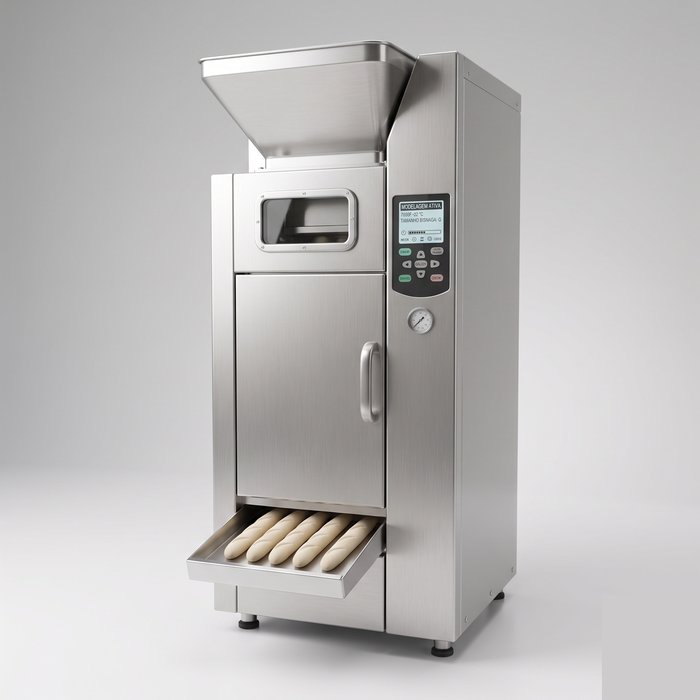
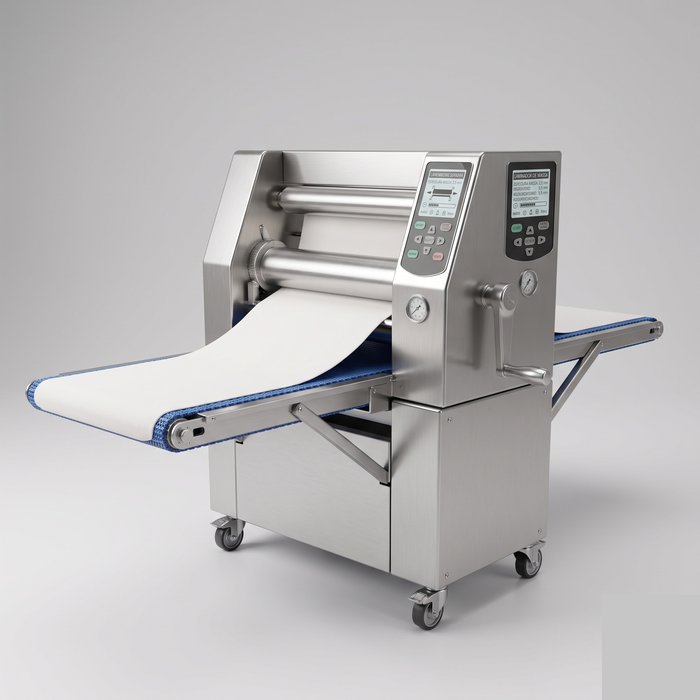
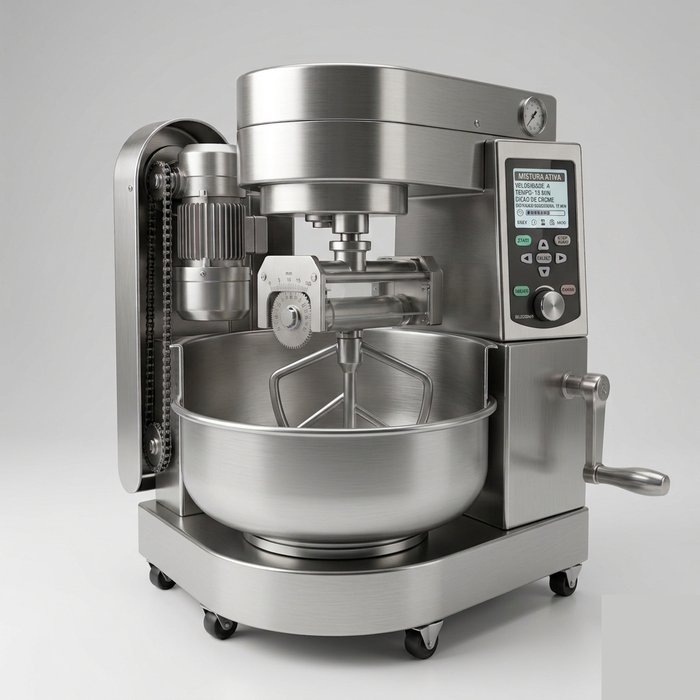
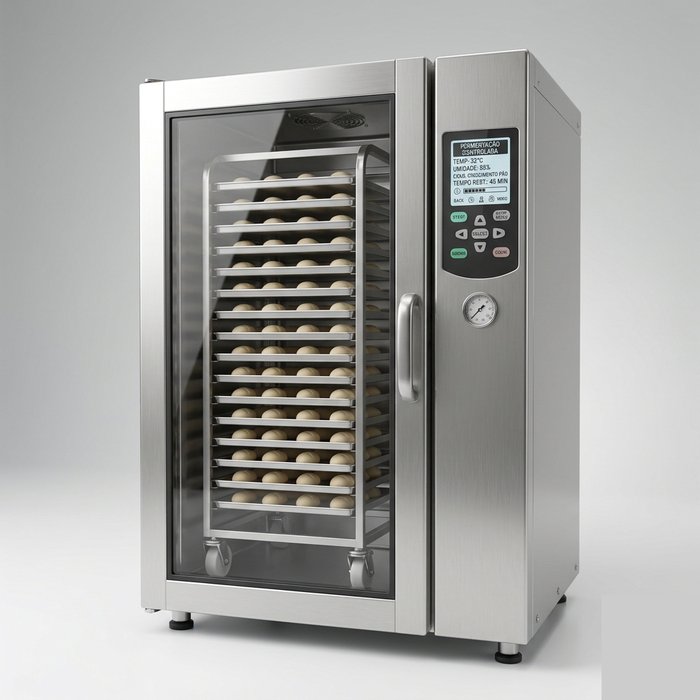
It is this set that decides the result. The deck oven gives the crusty roll; the convection oven pulls the volume; the spiral mixer, the divider and the sheeter define the portion and the texture; the planetary mixer opens up patisserie; the proofer controls the rise. Seeing the machines running side by side, at source, is what shows which combination suits your production, and it is what a catalogue photo never reveals.
Why this is an opportunity for Brazil
Brazilians eat bread every day, and baking remains one of the biggest employers and earners in food retail. At the same time, the cost of setting up a bakery with branded equipment keeps a lot of people out of the business. Chinese machinery reopens that door.
- ROI you can calculate: this is not an impulse product. The buyer knows the daily output the line delivers and how long it takes to pay for itself. It is the most rational purchase there is, decided on numbers.
- The price gap builds the operation: the saving between branded equipment and direct imports can be what is left over to add another front to the bakery, from the patisserie counter to the coffee bar.
- Two buyers: it serves the entrepreneur opening or re-equipping their own bakery and the distributor who wants to represent the line and supply the sector in Brazil.
- Parts and servicing that repeat: heating elements, belts, bearings and maintenance become recurring supply for whoever imports the machine, revenue that carries on after the sale.
- Timing: the typical lead time for machinery is 60 to 120 days. Whoever closes at the October and November fairs has the line running in the first half of the year.
Before importing: it is electrical equipment and may require INMETRO. Machines with moving parts, such as the mixer, the sheeter and the moulder, have to meet NR-12 (guards and emergency stop), or the labour inspectorate may shut them down. The surfaces that touch the dough follow the standards for food contact materials. Confirm the voltage (220V or 380V three-phase) and whether the oven is electric or gas fired. This is a case where inspecting before shipment confirms the motor, the welds and the guards. See also how to import industrial equipment from China.
Customise the specification (OEM)
Importing a bakery line from China is not a matter of picking the catalogue model and plugging it in. The machinery has to be specified, and that is how you guarantee it produces what the operation needs:
- Capacity and compatibility: the size of the oven, the capacity of the mixer in kilos of dough and the pace of the moulder have to match your production and work together. Getting the sizing wrong means a bottleneck or money standing idle.
- Voltage, gas and standards: 220V, 380V three-phase or a gas oven, Brazilian plug and connection, with NR-12 and the manual in Portuguese settled before the batch.
- Parts and servicing: the supply agreement for spare parts and the technical support, which is what keeps the machine running for years.
- Own brand: where it fits, the distributor can put their own brand (private label/OEM) on the equipment, with BCVN negotiating the customisation and validating the sample.
That calls for direct negotiation with the factory and a sample validated before production. BCVN finds the right manufacturer, specifies the line, guarantees compliance and validates the support.
Where to buy bakery machinery in China
Baking machinery is concentrated at the food service fair and in the machinery hall of the universal fair:
- FHC China (food service and hospitality, Shanghai): from 10 to 12 November, the dedicated fair, with its bakery and patisserie hall and the manufacturers of ovens, mixers and moulders. It is the ideal fair for anyone kitting out a kitchen. In the same city, Bakery China is the fair exclusively for baking.
- Canton Fair, Phase 1 (machinery): from 15 to 19 October, with food machinery within the industrial section. Good for anyone combining the bakery with other purchases.
- Guide to industrial equipment: the step by step of importing machinery from China, from the project to customs clearance.
The itinerary the season sets out: Canton Phase 1 (15 to 19 October, Guangzhou) and FHC (10 to 12 November, Shanghai) fall in the same autumn season, a short flight from one another. You can see the bakery machinery among the machines at Canton and the depth of food service at FHC. See the full 2026 trade fair calendar.
It is also worth looking at the vacuum sealer and packing machine and the professional coffee machine and grinder, which complete the bakery counter.
The bakery line is not the lightest import in the Showcase, and that is precisely why it rewards whoever goes to source. You do not buy just any machine, you buy the right capacity, the right voltage, the NR-12 guards and a manufacturer who will guarantee the part next year. For anyone about to sell bread in Brazil, it is the difference between setting up a bakery and setting up a bakery whose numbers add up.
Frequently asked questions about importing bakery machinery
Which machines make up an industrial bakery line?
The core is the oven (a deck oven, for crusty bread rolls and artisan loaves, or a convection oven, for volume and patisserie), the spiral mixer that kneads the dough, the moulder that shapes the bread, the sheeter that rolls out laminated dough, the divider that portions and the proofer that controls the rise. Buying the line as a matched set, rather than loose pieces, is what guarantees the machines talk to each other and deliver the right output.
Does bakery machinery imported from China need certification?
Yes. It is electrical equipment and may require INMETRO certification. Machines with moving parts, such as the mixer, the sheeter and the moulder, have to meet NR-12, with guards and an emergency stop, or the labour inspectorate may shut the equipment down. The surfaces that touch the dough follow the standards for food contact materials. Also confirm the voltage (220V or 380V three-phase) and whether the oven is electric or gas fired before importing.
What is the difference between a deck oven and a convection oven?
The deck oven bakes by contact with the heated stone, it gives the crust and crumb of proper bakery bread rolls and artisan loaves, and it works chamber by chamber. The convection oven circulates hot air, bakes many trays at once and is the standard for volume, savouries and patisserie. Most bakeries use both. Choosing the right combination depends on what you are going to produce and in what quantity.
Can I import just one bakery machine to test?
BCVN is an import consultancy for companies and resellers, not a retail shop, and does not sell single units. Import maths only works on volume: freight for the machinery and paperwork are diluted across the batch, and every factory works to a minimum order quantity (MOQ). Anyone who wants a single unit should buy from a distributor in Brazil; anyone who is going to set up a bakery, equip a chain, resell or represent the brand imports at source, and that is where the savings really show up.
Where do you buy bakery machinery in China?
At FHC China, in Shanghai, from 10 to 12 November 2026, the food service and hospitality fair with its bakery and patisserie hall, as well as Bakery China, the dedicated baking fair. The Canton Fair, Phase 1 (15 to 19 October), brings food machinery together within the industrial section. BCVN validates the manufacturer, the voltage, INMETRO, NR-12 and the compatibility of the line.