
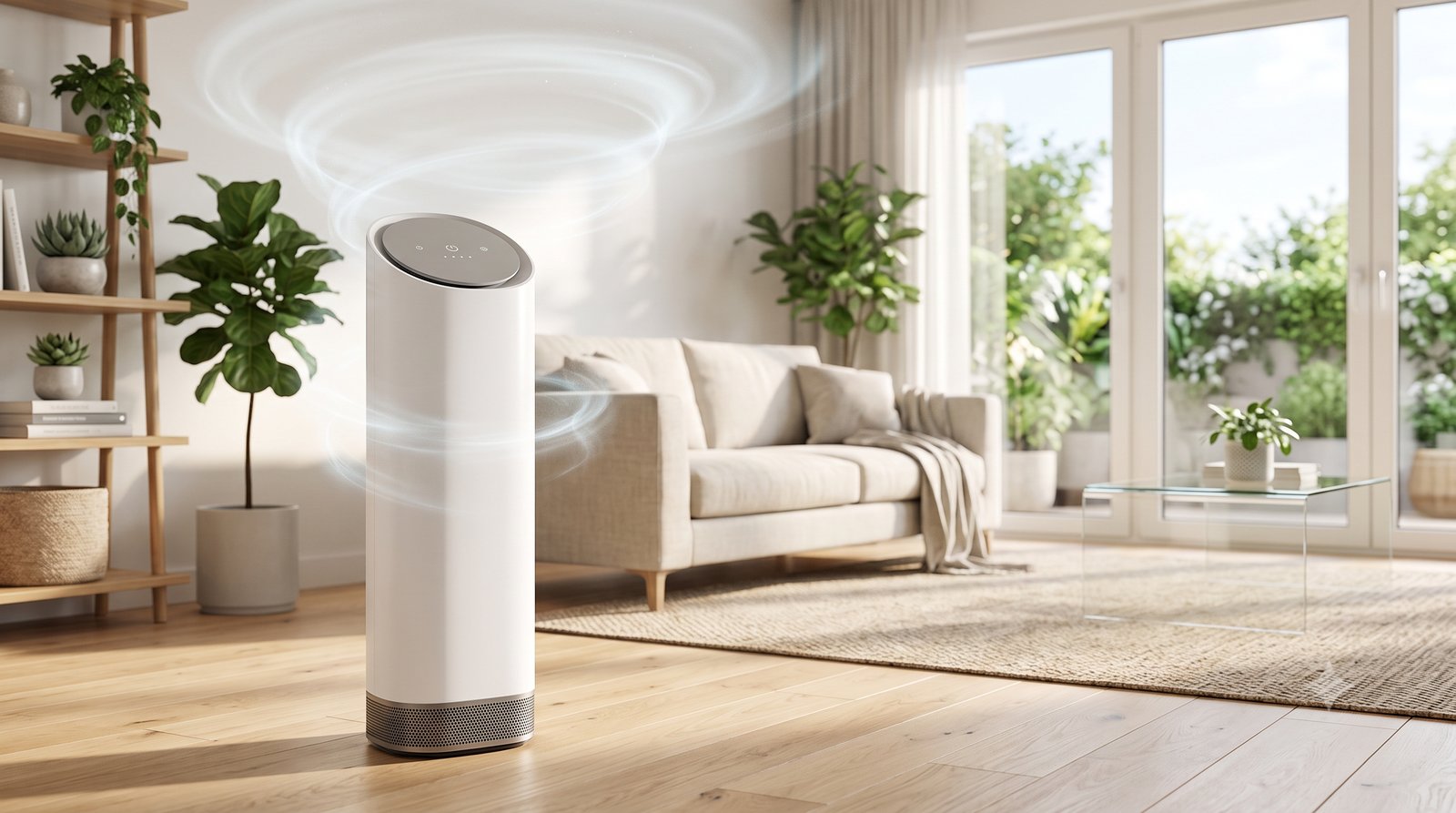
There is a product category that sells itself whenever the air gets worse, and it gets worse more and more often: the wildfire season covers whole cities in smoke, urban pollution gives no respite, and indoors the dust, the damp and the pet hair complete the picture. The consumer who used to live with all that now looks for a solution, and the solution comes in the shape of an appliance. The one who sees the business is not that consumer but the retailer who realised this appliance costs little at source and resells comfortably.
What an air purifier is
The air purifier is a small appliance that draws in the room air, passes it through a HEPA filter (which traps fine dust, pollen, mites and smoke particles) and sometimes through an activated carbon filter (which removes odours), and gives the air back clean. It runs from the tower model for the living room to the compact one for the bedroom and the office, taking in the in-car version along the way. The same family of "cleaning the air at home" includes the portable cooker hood, or extractor, which captures the smoke and the smell in the kitchen. China is the great manufacturer of all of them, at an origin price that opens up a margin in Brazil.
Models and variations
"Air purifier" is not a single product. In the aisles of the Chinese home appliance fair it is a whole range, and each model serves a different room and a different price:
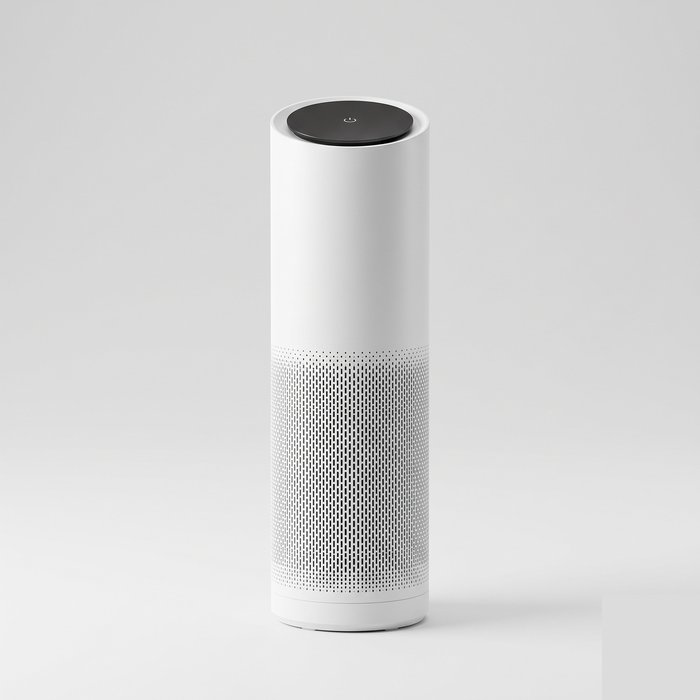
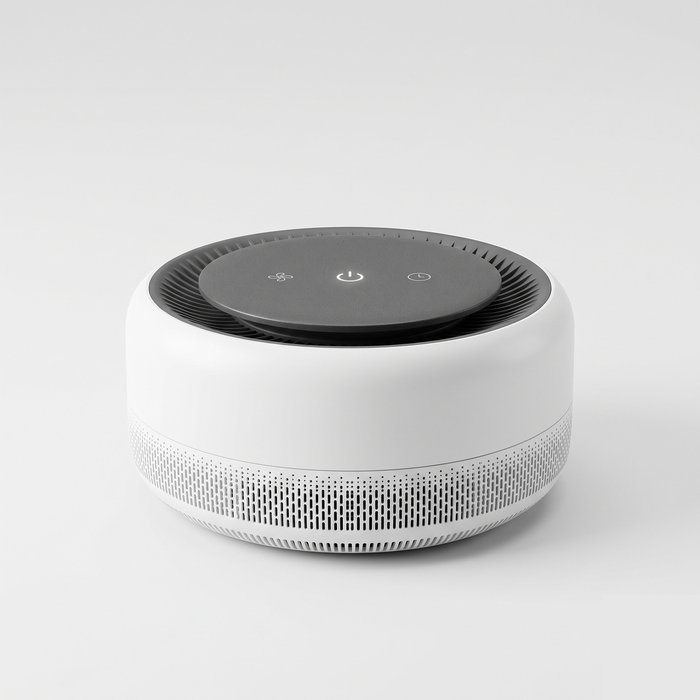
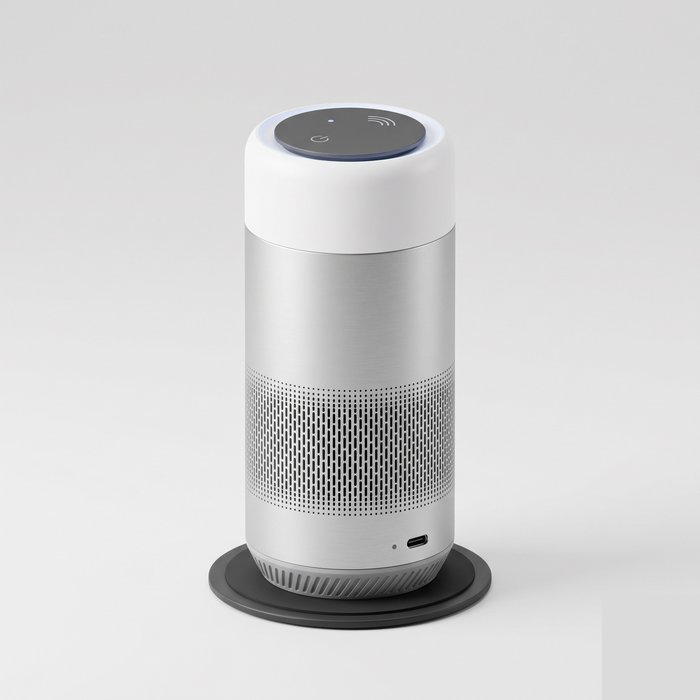
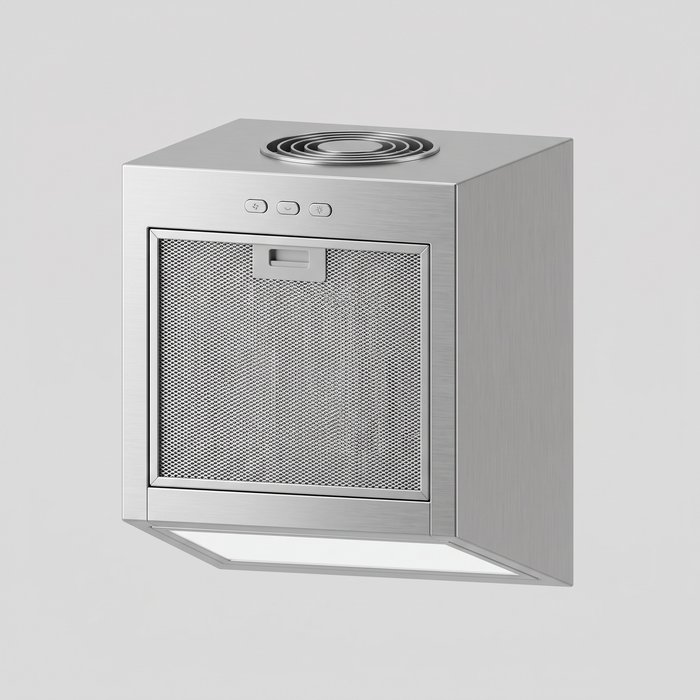
It is this variety that fills a shop range. The tower is the flagship with the highest ticket; the compact one is the impulse item for the bedroom and the home office; the in-car unit catches the motoring crowd; the portable cooker hood opens up the kitchen front. A display with all four covers several price points and several reasons to buy.
Why this is an opportunity for Brazil
Awareness of air quality has grown, and with it the willingness to spend in order to breathe better at home. It is a market that used to be restricted to a handful of expensive brands and that is now opening up to whoever brings a good product at an accessible price.
- Buy cheap, resell well: the purification appliance has a low cost at source and high perceived value (health and wellbeing). Negotiated properly in China, it resells in Brazil with a full margin.
- Repeat sales in the filter: the HEPA filter has to be replaced periodically. Whoever imports the appliance with a stock of filters builds customer loyalty and creates revenue that repeats, which almost no other small appliance offers.
- A wide audience, all year round: the allergy sufferer, the pet owner, the big-city dweller, the office, the mother of a baby. Demand does not depend on the season and peaks during the smoke season.
- Content ready to go: clean air, a healthy home and the before and after make for videos and shop posts that get engagement, ideal for whoever also resells online.
- Timing: the typical lead time is 60 to 120 days. Whoever closes at the October fair arrives with stock for the following year's peak.
Before importing: air purifiers and cooker hoods are electrical products and may require INMETRO certification. The smart models, with Wi-Fi, an app or Bluetooth, also require ANATEL approval. Confirm the category before closing the order, and validate the filter: performance depends on a genuine HEPA, and the variation between factories is wide. See how quality inspection in China before shipment works and the list of products that require INMETRO.
Put your own brand on it
The air purifier is a perfect category for own branding (private label/OEM): the consumer compares design and performance, not the factory name. You can put your brand on the appliance and on the box, choose the colour and the finish, define the packaging and a manual in Portuguese, and adjust details such as the control panel, the night mode and the air quality sensor. BCVN negotiates the customisation directly with the factory and validates the sample before production, so the product arrives with your identity and the right filter.
It is worth understanding how this works in practice before requesting the first sample: the guide on own brand in China: private label, OEM and ODM explains the difference between the three models and what each one changes in the minimum order and the lead time.
Where to buy air purifiers in China
Air appliances are concentrated in the home appliance and electronics fairs, and in the volume markets:
- Canton Fair, Phase 1 (home appliances and electronics): from 15 to 19 October, with the small appliance manufacturers and the widest choice of models and price brackets.
- Hong Kong Electronics Fair: from 13 to 16 October, strong on smart and connected models, in the same week as the Canton Fair.
- Yiwu Trade Fair: the compact and in-car impulse models, to buy in volume at wholesale prices.
The bridge to air itself: anyone who takes air quality seriously will also find the professional air quality measurement and analysis equipment at analytica China (16 to 18 November, Shanghai). See the full 2026 trade fair calendar to plan the autumn itinerary.
It is also worth looking at the humidifier and aroma diffuser and the portable air cooler, which round off the indoor comfort range.
Clean air has become a consumer item, and the purifier is the appliance that delivers on that promise at a price that fits an impulse purchase. For the importer, it is one of the few small appliances that combine a full margin on the appliance itself with guaranteed repeat sales on the filter, and an audience that only grows. You do not buy one piece, you build a range with your own brand and a replacement stock behind it. For whoever resells in Brazil, it is the category that breathes on its own.
Frequently asked questions about importing air purifiers from China
Why do air purifiers sell well in Brazil?
Because demand has stopped being seasonal. Respiratory allergies, dust, urban pollution, the wildfire smoke season, pet hair and cooking smells have become reasons to buy all year round, at home and in the office. The air purifier is a small appliance with a low cost at source, high perceived value and strong visual appeal, which means a full margin for the retailer and constant turnover for e-commerce.
Does an air purifier imported from China need certification?
Yes. Air purifiers and cooker hoods are electrical products and may require INMETRO certification. The smart models, with Wi-Fi, an app or Bluetooth, also require ANATEL approval. Selling without the required compliance risks seizure and fines. BCVN confirms the requirement for each model before the order and handles the approval process.
Where is the profit: in the appliance or in the filter?
In both, and that is what makes the category interesting. The appliance gives you the first sale, at a good margin; the replacement HEPA filter gives you the repeat sale, because it has to be changed periodically and it ties the customer to your brand. Whoever imports the purifier together with a stock of filters builds a recurring sales model, not a one-off sale.
Can I import just one air purifier to test?
BCVN is an import consultancy for retailers and companies, not a retail shop, and it does not sell single units. Importing only makes sense in volume: freight and paperwork are diluted across the batch, and every factory works to a minimum order quantity (MOQ). Anyone who wants a single piece should buy from a reseller in Brazil; anyone who wants to resell, build their own range or stock a shop imports at source, and that is where the sums add up.
Where can I buy air purifiers in China?
At the Canton Fair, Phase 1 (home appliances and electronics), from 15 to 19 October 2026, and at the Hong Kong Electronics Fair (13 to 16 October), which bring together the small appliance manufacturers. The Yiwu Trade Fair completes the picture with the compact impulse and volume models. BCVN validates the manufacturer, the filter, the INMETRO side and the branding customisation.