
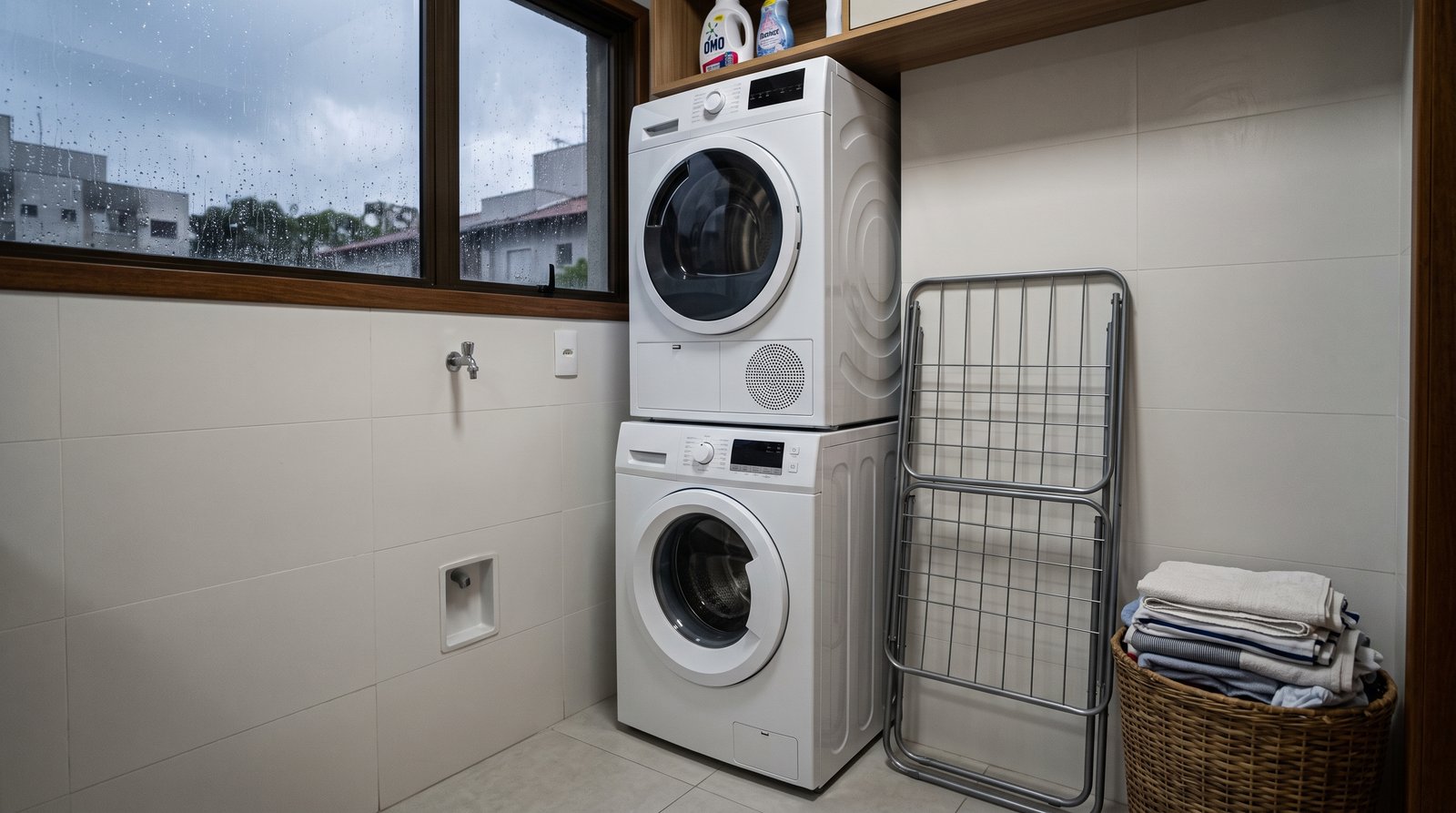
The usual explanation for the tumble dryer never catching on in Brazil is that the country is hot and sunny. The explanation has aged. Anyone living in a small flat rarely has a utility room with sun reaching it, and several months of the year are rainy in precisely the most populated regions. The result is the scene everyone knows: laundry drying indoors, taking over the living space, with that smell of fabric that stayed damp for too long.
For anyone selling appliances, this is a category with extremely low penetration and a widely complained about pain, which is a rare combination. The demand does not have to be created, it has to be served with the right product, in the right size and at the right price. And that is where the source makes the difference, because the version that solves this problem is not the large dryer Brazilian retail knows.
What a compact tumble dryer is
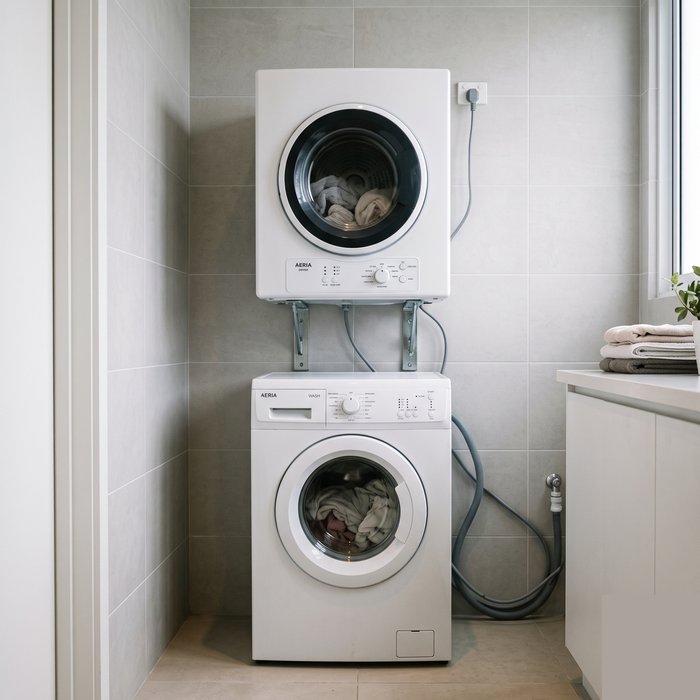
It is a small dryer built to fit on top of the washing machine, inside a cupboard or fixed to the wall. The difference that matters is not the size, it is what it does with the moisture. The old dryer pushed the hot damp air outside through a duct, and that required a hole in the wall or a window nearby, which in practice means building work and, in a rented property, means not buying.
The condenser and heat pump models push nothing outside. They pull the water out of the laundry, condense that moisture and keep it in a tank that gets emptied after the cycle. They need a socket and a level surface, and nothing else. That turns a product which demanded construction planning into a product that comes out of the box and works the same day, which completely changes who can buy it and, for whoever resells it, changes the most common objection at the counter.
Models and variations
It is not a single product. At the Chinese trade fairs the category shows up as a whole price ladder, and each rung serves a different buyer:
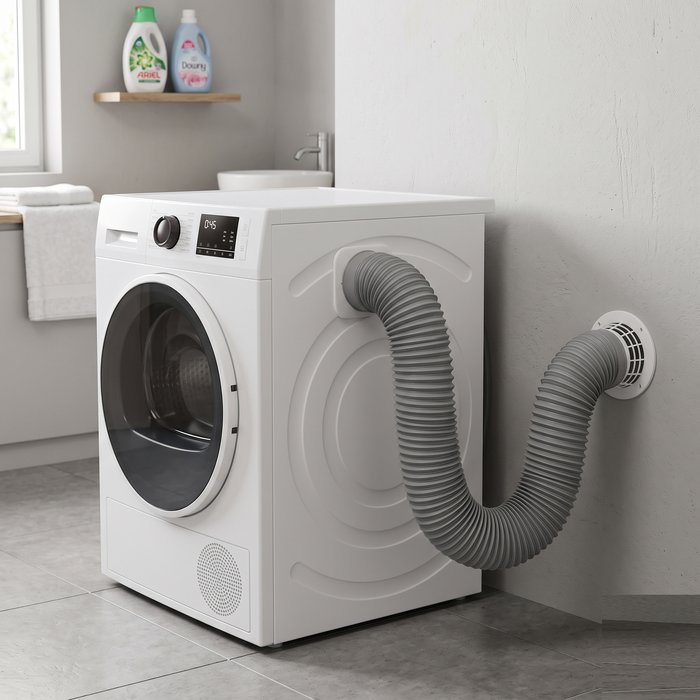
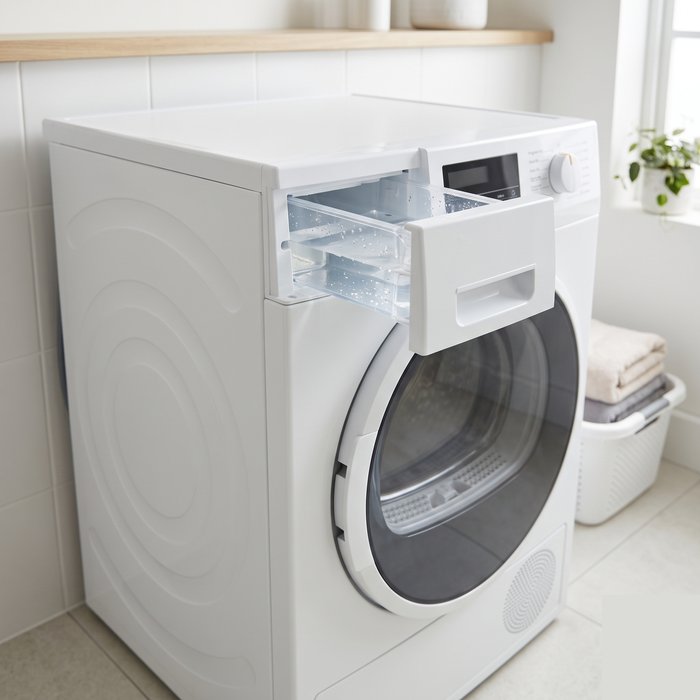
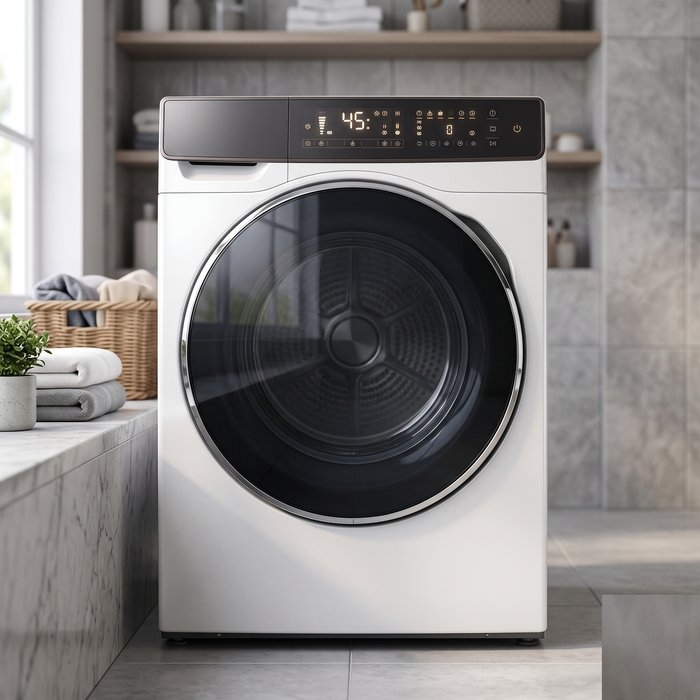
The vented one is the cheapest to buy and the hardest to sell into a flat, because the installation kills the deal. The condenser one is the entry product of the category, which opens the price up to a broad audience. The heat pump one consumes far less energy and dries at a lower temperature, sparing the fabric, and it is the one that sustains a higher price without turning into a price list fight. And the wall mounted and countertop one attacks the extreme case, the compact flat where not even the top of the washing machine is free. Choosing the right rungs of that ladder, with the right factory on each one, is what separates a range that sells from stock standing still.
Why this is an opportunity for Brazil
This is one of the appliance categories with the lowest penetration in the country, and not for lack of consumer appetite. It is a lack of suitable supply: what exists in the shop tends to be large, expensive and designed for a house most people do not have.
- The pain is already complained about out loud: laundry that will not dry in winter and in the rain is a recurring subject, and the product that solves it needs no explanation to be understood on the shelf.
- Brazilian housing works in its favour: new flats are smaller and the utility room has all but disappeared, which increases every year the number of homes where the ductless model is the only viable option.
- Low cost at source and high perceived value: the category is still seen here as a sophisticated item for a large house, which sustains a good resale for anyone entering with the right product.
- A price ladder ready made: the same line covers everything from the entry product to the one with the margin, which allows a whole range to be built with few suppliers.
- Content that sells itself: the comparison between three days on the airer and one closed cycle is an immediate visual demonstration, and it is the kind of video that circulates on its own.
- Timing: the typical lead time is 60 to 120 days. Anyone closing now receives in time for the rainy season and for the retail year end, which is when the category is most searched for.
Before importing: white goods fall into the regulated families and the exact model has to be confirmed before the order, together with the energy efficiency label, which in this category is a shelf argument rather than a technical footnote: it is worth checking the list of products that require INMETRO. There are two electrical details that decide whether the product serves or comes back: the voltage, because many factory models come out at 220V and much of the country runs on 127V, and the mains frequency, since China operates at 50 Hz and Brazil at 60 Hz, which means confirming with the factory that the motor and the compressor were specified for our grid. Heat pump models also carry refrigerant gas in a sealed circuit, and some use a flammable fluid, which changes the international transport rules and the paperwork, as the guide on freight from China to Brazil explains. This is a case where inspection before shipping pays for itself.
Put your own brand on it
Appliances are one of the categories where an own brand changes the game most, because the consumer compares similar models and decides on trust. Whoever resells generic fights over pennies; whoever builds a white goods brand builds repeat custom and after sales:
- Your brand on the product and on the packaging (private label / OEM): logo on the panel, on the door and on the box, with a consistent identity across the whole range.
- Colour, finish and panel of your choosing: white, black or stainless, glass or solid door, button or digital panel.
- Programmes and panel language in Portuguese, with the cycles that make sense in the climate here.
- Packaging and manual in Portuguese, ready for Brazilian retail and for the marketplace.
Customisation usually calls for a slightly larger minimum order, and BCVN finds the right factory, negotiates the customisation, validates the sample and makes sure the product arrives exactly as you asked for it.
It is worth understanding how this works in practice before requesting the first sample: the guide on own brand in China: private label, OEM and ODM explains the difference between the three models and what each one changes in the minimum order and the lead time.
Where to buy compact tumble dryers in China
White goods have a definite address in the October season, and it is worth combining it with whoever manufactures the electronics:
- Canton Fair, Phase 1 (electronics and appliances): from 15 to 19 October, the main aisle for white goods, where the whole ladder of models appears side by side and you can compare factory by factory in a single day.
- Hong Kong Electronics Fair: from 13 to 16 October, useful for the connected models, with an app and a digital panel, and to close that leg of the trip before heading down to Guangzhou.
- Guide to importing home appliances: voltage, certification, after sales and packaging, which is where this kind of order usually slips.
The itinerary the season draws: HK Electronics (13 to 16 October, Hong Kong) and Canton Phase 1 (15 to 19 October, Guangzhou) overlap by two days in different cities, and the connection between them is short. Anyone who plans the right itinerary sees both on the same trip. See the full 2026 trade fair calendar.
It is also worth looking at the portable clothes steamer, which serves the same customer from the finishing side, the industrial laundry equipment, which is the same pain seen from the business side, and the robot vacuum, which has already proved that Brazilians will pay for time given back inside the home.
Every absent category has an explanation that was true once and carried on being repeated after it stopped being true. For the tumble dryer, the explanation is the sun. Except that today's buyer lives higher up, in fewer square metres, and looks at the rain through the window with the week's laundry hanging in the living room. Whoever gets there first with the right model will not have to convince anyone that the problem exists.
Frequently asked questions about importing compact tumble dryers
What is the difference between a condenser dryer and a heat pump dryer?
Both do away with an air outlet to the outside, and that is what makes them installable in a flat. The condenser one heats the air with a resistance element, pulls the moisture out of the laundry and keeps the water in a tank that gets emptied after the cycle. The heat pump one does the same job by reusing the heat in a closed circuit, which consumes far less energy and dries at a lower temperature, protecting the fabric. In exchange, it costs more at source and takes longer per cycle. The condenser is the entry product; the heat pump is the one with the margin.
Does a tumble dryer imported from China need certification?
White goods fall into the regulated families and the exact model has to be confirmed before the order, together with the energy efficiency label, which in Brazil is a shelf argument rather than a technical detail. Heat pump models use refrigerant gas in a sealed circuit and some of them work with a flammable fluid, which changes the international transport rules and the shipping paperwork. The party that answers to the authorities is the company that imported, not the Chinese factory.
Does a compact dryer work in a flat with no utility room?
Yes, and that is exactly the argument of the category. Condenser and heat pump models need no duct and no hole in the wall, because the moisture goes into an internal tank instead of being pushed outside. All they need is a socket and a level surface, and there are versions that fix to the wall or stack on top of the washing machine. That is the difference between a product that demands building work, which almost nobody does in a rented flat, and a product that comes out of the box and works the same day.
Why do tumble dryers sell so little in Brazil?
For three reasons that aged together: the country is hot and there has always been a clothes airer, the available models were large and expensive, and most of them required an air outlet or a 220V socket. None of that describes today's buyer any more, someone who lives in a small flat, often with no utility room, and spends several months of the year with laundry drying indoors because of the rain. The pain has been there for a long time. What was missing until now was a product of the right size and the right price on the shelf.
Can I import a single dryer just for my own home?
BCVN is an import consultancy for retailers and companies, not a retail shop, and it does not sell single units. Importing only adds up in volume: freight and paperwork are diluted across the batch, and every factory works with a minimum order. Anyone who wants a dryer for the house buys from Brazilian retail. Anyone who is going to resell, supply a chain of shops or launch their own appliance brand imports at source, and that is where the price difference shows up.