This guide is the second in the technology line, after the robot that already works, and it is written to be redone every year. What changes from edition to edition is not the list: it is which technologies have left the future column and entered the present one.
How to read this list: the three lines
A technology reaches the shelf when it crosses three lines at once, and not before. It is a deliberately tedious criterion, because it is what stops the list turning into a novelty catalogue.
- The cost curve. The component has fallen in price to the point where the product competes with what already exists, not merely exists.
- The standard. There is now a common criterion saying what the product has to meet. Without a standard there is no honest comparison, no certification and no buyer confidence.
- Market proof. Somebody already sells it in volume, with after-sales, and does not merely demonstrate it on a stand.
Notice that the second line, the standard, is the most ignored and the most decisive for importers. It is what turns a category into something you can certify, label and sell without inventing the ruler yourself.
The mistake this list exists to prevent: buying a technology a year too early. It is the most expensive way to be right, because you pay the pioneer's price, solve the certification problem on your own and educate the market for whoever arrives later with the price already down.
The ten that crossed
01 Sodium battery
The most important on the list, because it touches the most expensive component in dozens of categories. The sodium-ion cell swaps lithium for sodium, which solves two problems at once: raw material dependence and cold-weather performance, where lithium loses capacity.
It has stopped being a promise. CATL introduced the Naxtra line in April 2025 and took it to gigawatt-hour scale, and in February 2026 the first mass-production passenger vehicle fitted with a sodium cell was unveiled with Changan. The cells also passed the Chinese national traction battery standard, GB 38031-2025.
For somebody importing consumer goods, the effect does not show up in the car first. It shows up where cold or safety weigh more than energy density: stationary storage, heavy vehicle starting, and products that sit idle in cold environments. It is the technology to watch in 2027, not necessarily to buy yet.
02 The semi-solid battery, not the solid-state one
Here is a distinction that separates whoever understood from whoever repeated a headline. The fully solid battery is still tomorrow's technology: small-scale production expected from 2027, restricted to top-end products, with mass adoption expected considerably later.
What is already real is the hybrid solid-liquid battery, formerly called semi-solid. In July 2026 China published its first standard for solid-state batteries, classifying them by liquid electrolyte content, and defined the 5% to 10% band as hybrid solid-liquid. Having a standard is exactly what the category needed to be comparable and sellable.
The commercial reading: if a supplier offers you a consumer product with a 'solid-state battery' in 2027, ask for the liquid electrolyte content in writing. It is almost certainly hybrid, which is no defect at all, but it is a different thing, and the label has to say so.
03 Service robotics
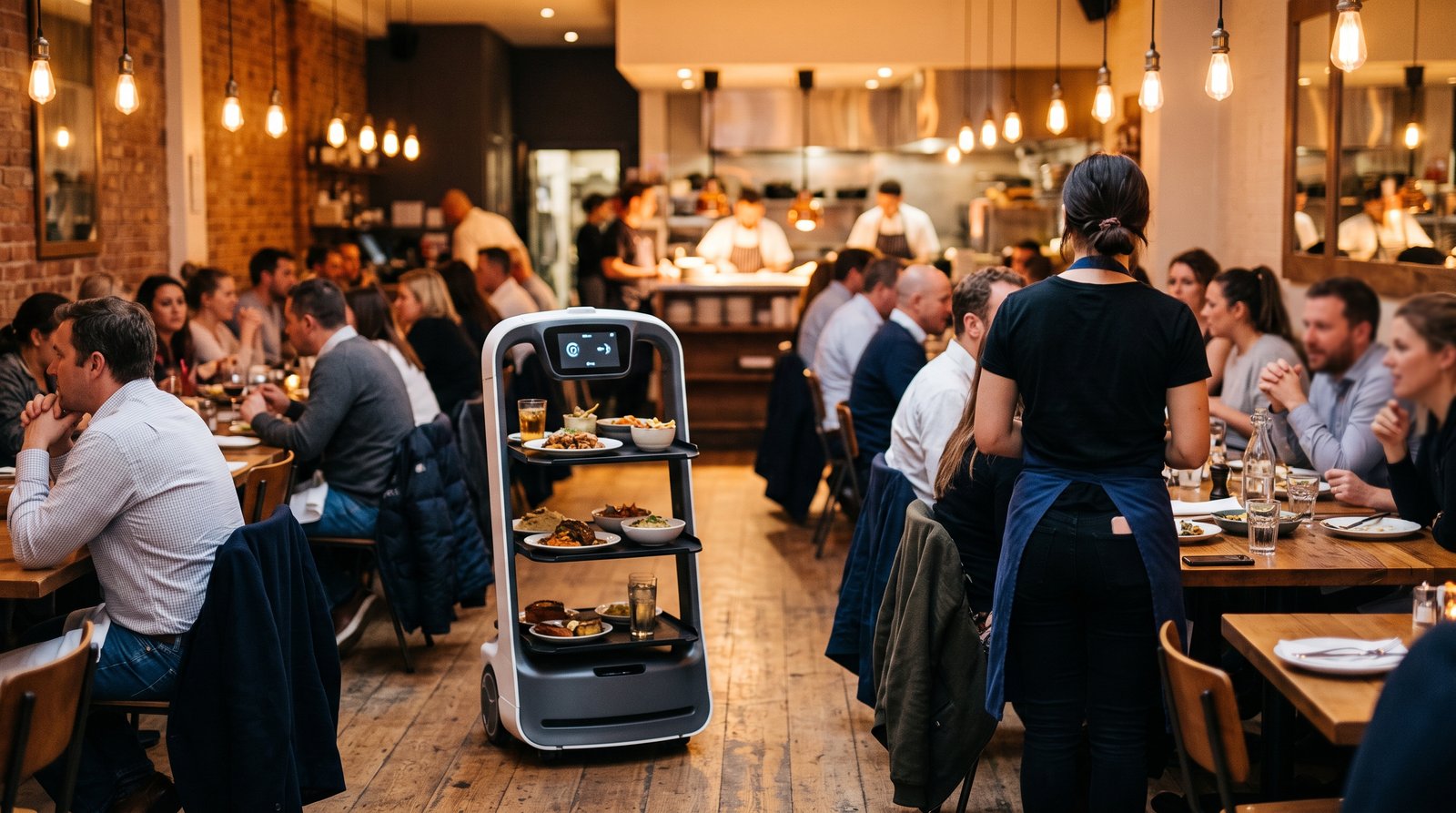
It crossed all three lines comfortably, which is why it has its own guide. The brushless motor, the battery and the laser distance sensor became cheap at the same time, and the category went from demonstration to equipment bought by whoever answers for the payroll. Where the numbers already work, what the buyer calculates and what the after-sales wall is are all in the guide on Chinese service robotics.
04 Portable laser welding and cleaning
This is the technology that replaces a whole process, not merely improves a tool. Handheld laser welding competes directly with TIG on thin sheet, with a shorter learning curve and a finish that removes much of the polishing. Laser cleaning replaces blasting in many cases, with no abrasive, no booth and no residue to dispose of.
What changed was the price of the fibre laser source, which fell to the point where the machine fits a metalwork shop's budget, not just an industrial one. It is one of the categories where the buyer runs the process substitution calculation, which is always the easiest to close.
05 Heat pumps
Less eye-catching and probably the one with the greatest economic impact on the list. A heat pump does not generate heat, it moves heat, and so delivers several units of thermal energy per unit of electrical energy consumed. In water heating, drying and climate control, that changes the running cost calculation in a way that is hard to ignore.
China is today the world's largest manufacturer of this kind of equipment, and the range available already runs from the domestic water heater to industrial drying. It is a category with a slower sales cycle, because the calculation has to be explained, and with a better margin for exactly that reason.
06 DTF and desktop UV printing
Low-volume personalisation stopped requiring industrial infrastructure. DTF printing, which transfers onto fabric via film and adhesive powder, does away with screen printing for short runs and prints full colour on dark fabric. The desktop UV printer does the equivalent for rigid surfaces: mugs, phone cases, promotional items, signs.
The two together created a new buyer, the micro-entrepreneur in personalisation, and a resale category with recurring consumables, which is what interests anybody selling equipment most.
07 Matter, and the end of one app per brand
The connected home standard stopped being a differentiator and became a condition of entry, with more than three thousand certified products. Version 1.5, from November 2025, brought the first standard model for cameras and video doorbells. 1.6, from June 2026, added NFC commissioning, which works before the device even has power, and the sharing of a single device across different ecosystems.
For the importer the effect is commercial before it is technical: a connected product without Matter now has to justify why it does not have it. And there is a calendar detail that slips by: since 1 January 2026, certification applications based on the previous version of Thread are no longer accepted.
08 Portable power
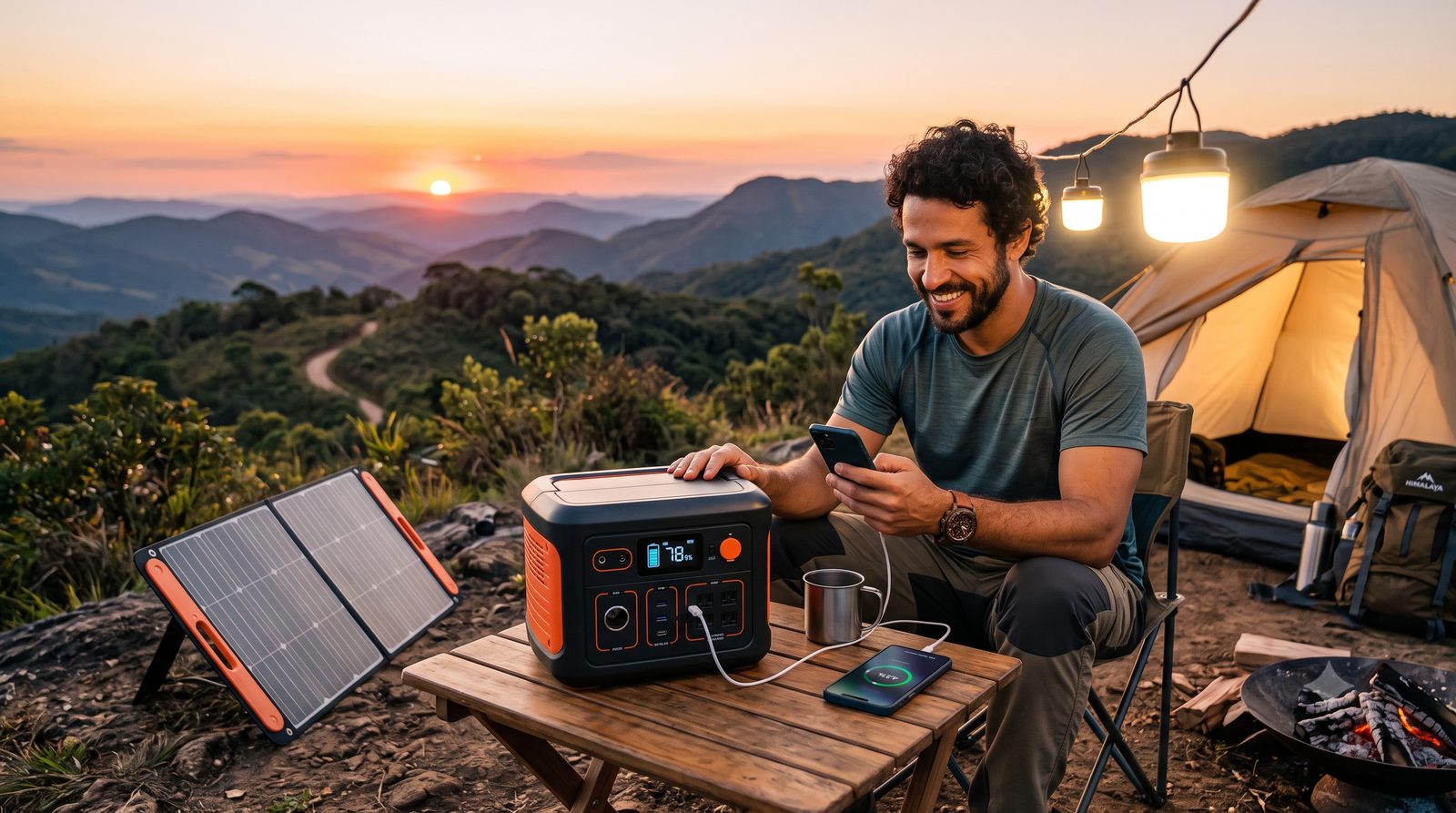
The portable power station has consolidated as a category with defined price bands and real differentiation in capacity, output power and recharge speed. It stopped being a camping product and became a contingency product, which is a far larger and less seasonal market, especially where the grid is unstable.
It is also the category where the switch to iron phosphate chemistry changed the proposition, because it multiplied the cycle count and therefore the working life you can promise. Worth seeing the Showcase entry on the portable solar power station.
09 GaN charging
Gallium nitride replaced silicon in chargers and produced an effect visible to the consumer: more power in less volume, with less heat. It is the kind of improvement that needs no explaining on the shelf, because the buyer sees the size.
Commercially it matters for another reason: it accelerated the replacement of an accessory everybody already owns, which is rare. An ordinary charger does not get replaced until it breaks; a smaller, faster one does.
10 Residential storage and microinverters
Distributed solar generation created a second market behind it: storing what was generated. The residential battery plus hybrid inverter package became a catalogue product, with standardised installation, and the microinverter made the small system, of few panels, viable where it previously did not pay for itself.
It is the category on this list with the highest regulatory wall in Brazil, because it involves grid connection on top of electrical safety, and the guide on importing solar energy from China covers that in detail.
What does not arrive in 2027, and is worth knowing beforehand
This is the part of the list that saves money, because the temptation to buy early is always stronger than it looks.
| What you see at the fair | Why it is not 2027 |
|---|---|
| Fully solid-state batteries in consumer products | Small-scale production starts from 2027 and is reserved for top-end lines. Mass adoption is expected considerably later |
| General-purpose humanoid robots | Impressive on the stand, with no defined repetitive task and no return calculation for the buyer |
| Appliances with their own voice assistant | Matter is going the other way, standardising control rather than multiplying interfaces |
| Products that need the manufacturer's cloud to work | It is not technical immaturity, it is commercial risk: the day the server goes down, the warranty is yours |
The last row deserves special attention, because it is not a question of which year. Any connected product that stops working without the manufacturer's server is an after-sales liability with an unknown expiry date, and that holds for mature technology just as much as for new technology.
How to choose which of them goes into your range
The right question is not which technology is best. It is which one answers a pain your customer already has and already puts into words.
| If your customer complains about | Look at |
|---|---|
| Running costs and the energy bill | Heat pumps, residential storage, portable power |
| Labour that is expensive or hard to retain | Service robotics, laser welding and cleaning |
| Lack of exclusivity and thin margins | DTF and UV printing, which sell the ability to personalise |
| A product that does not talk to the rest of the house | Matter in everything connected |
| Endurance and cold-weather performance | Sodium and hybrid solid-liquid, to watch through 2027 |
And one range rule that holds for all of them: new technology comes in as a second line, never as the only bet. The mature product pays for the operation while the new one educates the market. Anyone who inverts that funds an entire category's learning curve on their own.
The wall almost all of them share
Seven of the ten combine, in the same product, a lithium battery, a radio and an electrical part. That means three requirement regimes at once, and none of them is a surprise if checked before the purchase:
- The battery is class 9 dangerous goods in transport, requiring a UN 38.3 test and a safety data sheet. It changes the freight cost, the paperwork and the shipping lead time.
- The radio requires ANATEL approval, and it is the requirement that most often slips by, because the product does not look like a telecoms item. The route is in the guide on ANATEL and INMETRO approval.
- The electrical part may fall under an INMETRO programme depending on the product family, as the guide on products with INMETRO requirements sets out.
None of those steps is prohibitive. All of them consume time, and that is precisely why they enter the year's plan alongside the fairs and the production shutdowns, as the 2027 sourcing plan shows.
Where you see this before everybody else
New technology has an inconvenient trait: it appears first where it is made, and only afterwards in export catalogues. The gap between the two moments is usually a year, and that window is where the margin lives.
In practice the two places that run ahead are the first phase of the Canton Fair, which gathers electronics, machinery and energy in the same aisles, and the component markets of Shenzhen, where the part appears before the finished product that uses it. Anyone walking both watches next year's list take shape.
And it is worth stating the limit of that, which is the same as always. Seeing a technology first is no advantage at all if it arrives with certification unresolved, with no guaranteed spare parts and with nobody to chase when the batch comes out different from the sample. The advantage of arriving early only turns into money once the operation behind it is ready, and that part is not on show at any fair. The chain behind three of these technologies is the same one, and it is opened up in solar, batteries and electric cars, which shows why the price of all three moves together.
Frequently asked questions about the 2027 technologies
What makes a technology reach the shelf rather than stay at the fair?
Three lines crossed at once. The cost curve, when the price of the component falls to the point where the product competes with what already exists. The standard, when there is a common criterion saying what the product has to meet, which is what allows comparison and certification. And market proof, when somebody already sells it in volume rather than merely demonstrating it. A technology that has crossed only one or two of those lines is still fair, not shelf.
Is the sodium battery a real product yet, or still a promise?
It is real, and 2026 was the year it stopped being a promise. CATL introduced the Naxtra line in April 2025 and took production to gigawatt-hour scale, and in February 2026 the first mass-production passenger vehicle fitted with a sodium cell was unveiled with Changan. The company's sodium cells also passed the Chinese national traction battery standard GB 38031-2025. For importers, the practical effect shows up first in products that sit idle in the cold and in stationary storage.
Will I be able to buy a product with a solid-state battery in 2027?
Semi-solid yes, fully solid no. In July 2026 China published its first standard for solid-state batteries, classifying them by liquid electrolyte content and defining the 5% to 10% band as a hybrid solid-liquid battery, which used to be called semi-solid. That is the one already in series vehicles. Fully solid-state production is expected to start on a small scale from 2027, restricted to top-end products, with mass adoption expected considerably later.
What changed in Matter, and why does it matter to importers?
Matter stopped being a differentiator and became a condition of entry. Version 1.5, from November 2025, brought the first standard model for cameras and video doorbells, and 1.6, from June 2026, added NFC commissioning, which works before the device even has power, and the sharing of a single device across different ecosystems. For an importer the effect is commercial: a product without Matter now has to justify why it does not have it.
Which of these technologies has the highest regulatory wall in Brazil?
The ones combining a lithium battery, a radio and an electrical part in the same product, which is most of this list. A lithium battery is class 9 dangerous goods in transport, requiring a UN 38.3 test. A Wi-Fi or Bluetooth radio triggers ANATEL approval. And an electrical product may fall under an INMETRO conformity assessment programme depending on the family. None of those steps is prohibitive, but all of them consume time, which is why they enter the plan before the purchase.
How do I choose which of these ten goes into my range?
By the question your customer already asks, not by the technology that impresses most. If they complain about running costs, look at heat pumps and portable power. If they complain about labour, look at service robotics and laser. If they buy to resell and need turnover, look at what already has a formed category. Technology bought because it is new, with no identified pain on the other side, becomes dead stock with a handsome brochure.
BCVN — Brasil China Viagens e Negócios has connected Brazilian companies to the best suppliers in China and Asia since 2008. Find out about our services in commercial intermediation, quality inspection, factory audits and guided business trips to China's main trade fairs.
These technologies in the China Showcase
Real products from the Chinese trade fairs, each with its cost and resale logic. See more in the China Showcase.