This guide closes the technology line of the blog, alongside the ten Chinese technologies of 2027 and service robotics. And it exists for a practical reason: solar panels, batteries and electric vehicles appear in the Brazilian catalogue as three different things, sold by three types of shop, and they are not. They are one product in three packages, and whoever buys any of the three is buying exposure to the same chain.
They are not three industries, they are one supply chain
Start with the electric car, because it is the easiest to take apart in your head. Remove the battery from an electric car and what is left is a chassis, four wheels, a simple motor and a computer. The battery is between a quarter and a third of the vehicle's cost, depending on the model, and it is the battery that sets range, weight, charging time and final price. An electric car is a battery with a body on it.
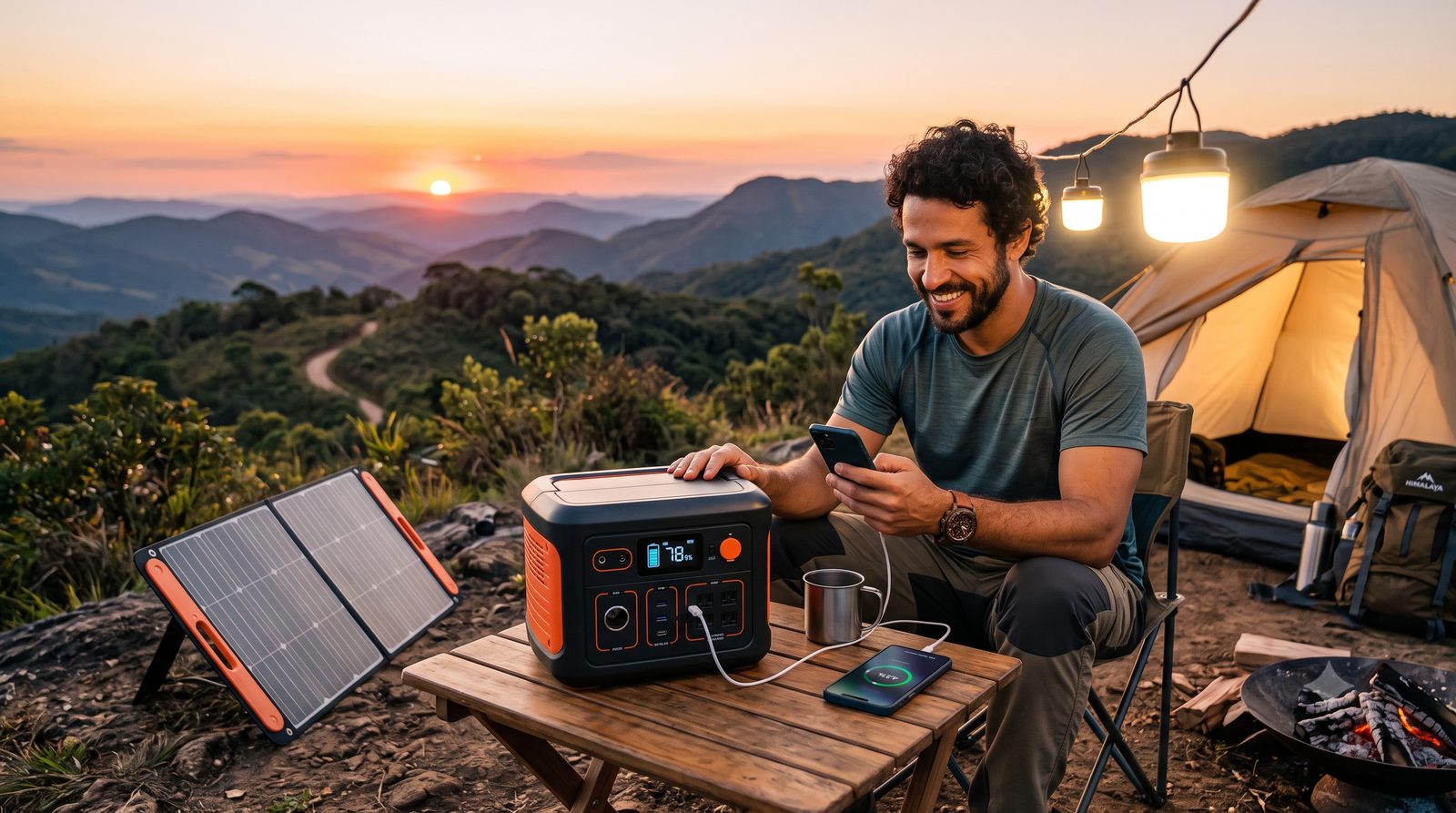
Now look at the portable power station Brazilians buy for the motorhome. Remove the battery and what is left is a plastic case, an inverter and a controller. Look at a residential solar system: panel, inverter and, increasingly, a battery to hold what the day leaves over. Look at the electric bicycle: frame, hub motor and battery.
What repeats across all four is not a coincidence of the market, it is the same list of components:
- The battery cell, which is the highest-value item in nearly all of them.
- Power electronics: inverter, converter, charger, charge controller. The same engineering, at another power rating and in another box.
- Silicon and power semiconductors, which connect the photovoltaic cell to the inverter and to the charger.
- Processed materials: lithium, iron, phosphate, graphite, copper, aluminium, rare earths in the motor.
A factory that makes battery cells for cars makes cells for power stations on the same line. A maker of solar inverters makes electric vehicle chargers with the same engineering team. That is why the same corporate group turns up across all four categories, and it is why the price of all four moves together.
The line to remember: anyone importing panels, power stations, chargers or electric scooters is not in four markets. They are in the same market four times over, exposed to the same price risk.
Where China really rules: the middle rung
The lazy explanation is cheap labour. It has been wrong for at least a decade, and going on believing it leads to bad decisions, because it suggests another country with low wages could replace China tomorrow. It cannot, and the reason appears once you open the chain rung by rung.
Take the photovoltaic chain, the most transparent of the three. It has four rungs before the finished product: polysilicon, the purified silicon; wafer, the ingot sliced into thin sheets; cell, the sheet that becomes a generator; and module, the cells mounted on glass in a frame.
| Rung | What it is | China's share of world capacity |
|---|---|---|
| Polysilicon | Purifying the silicon, an energy-intensive process | Around 80% |
| Wafer | Growing the ingot and slicing it into sheets | Around 95% |
| Cell | The treated sheet, which already generates electricity | Around 85% |
| Module | Final assembly onto glass, with frame and junction box | Around 80% |
Notice which rung is the most concentrated. It is not the final assembly, which is what people usually picture when they think of a Chinese factory: it is the wafer, the middle rung, the most invisible and the least glamorous. That is where an alternative barely exists.
This has a consequence that decides industrial policy in several countries and that almost nobody states out loud: assembling modules outside China solves nothing. The module plant that opens in South-East Asia, in India or in the United States goes on buying the Chinese wafer or cell and building on top of it. It changes the declared origin of the finished product, it does not change who controls the cost.
The battery chain has the same shape, with an equivalent middle rung: the processing of cathode and anode materials. Lithium can be mined in Australia, Chile or Argentina, and much of it travels to be refined and turned into battery material in China before becoming a cell anywhere in the world. The mine is not the bottleneck. The refining is.
The misreading that costs money: treating the Chinese price as a floor that only goes down. It goes down for as long as the middle rung has overcapacity and the factories need to keep running. When policy changes, or when capacity consolidates, the same mechanism that pushed the price down pushes it up, and just as fast.
The battery is what dictates the price of all three
If there is one number to follow in this industry, it is the price of a battery pack per kilowatt-hour. It is the thermometer for all four products at once, and it has been falling consistently for more than a decade.
The figures from the most closely watched annual survey in the sector, covering 2025 and published in December of that year, give the scale:
- World average for the pack: around US$ 108 per kWh, a fall of roughly 8% on the previous year.
- LFP pack: around US$ 81 per kWh. NMC pack: around US$ 128. The gap between the two chemistries is wide enough to decide a product's positioning on its own.
- Average in China: around US$ 84 per kWh, down roughly 13% in real terms, well ahead of the global fall.
- The projection for 2026 was another fall, to somewhere around US$ 105.
Three things explain that fall, and none of them is a spectacular technological leap. It is installed overcapacity, ferocious competition between makers who need to fill their lines, and the migration to the cheaper chemistry. That last point is worth dwelling on, because it is the one that most affects the Brazilian importer.
LFP is lithium, iron and phosphate. NMC carries nickel, manganese and cobalt, expensive metals with a politically sensitive chain. NMC stores more energy per kilo, and so it still dominates where weight is critical. LFP is cheaper, takes far more charge and discharge cycles, and is more thermally stable, which in a consumer product translates into less risk. The result: LFP has taken over everything that stands still or moves slowly, which is precisely the Brazilian list: home storage, power stations, bicycles, scooters, forklifts, UPS units.
A practical buying rule: if the product does not need to run or fly, the answer is LFP. If a supplier insists on NMC in a stationary product, either they are clearing old stock or the design is old. It is worth asking why, and the answer says a lot about the factory.
What comes after LFP is already leaving the laboratory, and the 2027 edition of Chinese technologies covers it in more detail: the sodium battery, which swaps lithium for an abundant and cheap material, and the semi-solid chemistries. For anyone importing today, the right reading is that these newcomers push the price of LFP down before they ever reach your catalogue.
What happened on 1 April 2026
Now the part nobody explains to the importer, and the clearest concrete example of what it means to say that China sets the world price.
For years, the Chinese exporter of solar panels received back part of the value added tax paid along the domestic chain, in the form of an export rebate. That money did not stay in their pocket: in an industry with overcapacity and brutal competition, it was passed through to the price to win the order. In other words, the FOB price the foreign buyer saw already had that benefit baked in.
On 1 April 2026, the 9% export tax rebate on photovoltaic modules ceased to exist. The effect on the buyer was immediate and had nothing to do with their supplier.
To get a sense of the movement, without turning this into a price sheet that ages in weeks: tier-one TOPCon modules were leaving the factory in the range of US$ 0.085 to 0.095 per watt in the first quarter of 2026, and by mid-year the benchmark was already around US$ 0.11 to 0.12 per watt. To gauge the scale of the earlier fall, the post-pandemic peak, in 2022, had been about US$ 0.30 per watt.
These figures expire, and fast. Module prices move by the week, and the Chinese tax framework changes by decree. Use the values above as an order of magnitude and to understand the mechanism, never as the basis of a commercial proposal. Before closing an order, get a quote on the day.
The lesson is not the number, it is the mechanism. Your import cost in this industry has a component that is not negotiated with the supplier and over which they have no control at all. Anyone treating a Chinese quote as if it were only raw material plus margin will be caught out from time to time, always in the same direction: on the day the policy changes.
What this changes for an importer
A handful of practical decisions come out of it, and they hold for all four products.
Idle stock loses value on its own. This is the harshest point. On a product whose replacement price falls every quarter, the container that sits six months in the warehouse is worth less at the end than it was at the start, and the competitor who bought later sells cheaper without having done anything cleverer. The defence is not calling the bottom of the price, which nobody manages: it is shortening the cycle, buying smaller lots more often, and accepting a slightly higher unit price in exchange for not carrying price risk.
The margin has to come from somewhere that does not depreciate. If the box falls in price every quarter, the margin cannot live in the box. It lives in the warranty you can actually stand behind, the installation you deliver with it, the spare part you hold in stock and the report your customer needs to produce. None of that shows up on the price list of the competitor who only imports.
A factory that survives a price war is a choice, not luck. In an industry with overcapacity, factories close. If yours closes, your ten-year panel warranty and five-year battery warranty are worth the paper they are written on. That changes what you check before buying: years in operation, real installed capacity, financial health, presence at the fairs year after year. It is the subject of the guide on how to check whether a Chinese supplier is reliable, and in this category it matters more than average.
When to buy is a calendar decision. End of quarter, end of the Chinese fiscal year and the eve of a regulatory change are different windows, and planning your import for 2027 shows in which months it makes sense to open a new production order in this and the other categories.
The four products that reach Brazil
In practice, the whole chain reaches the Brazilian importer in four formats, and each has a different buyer.
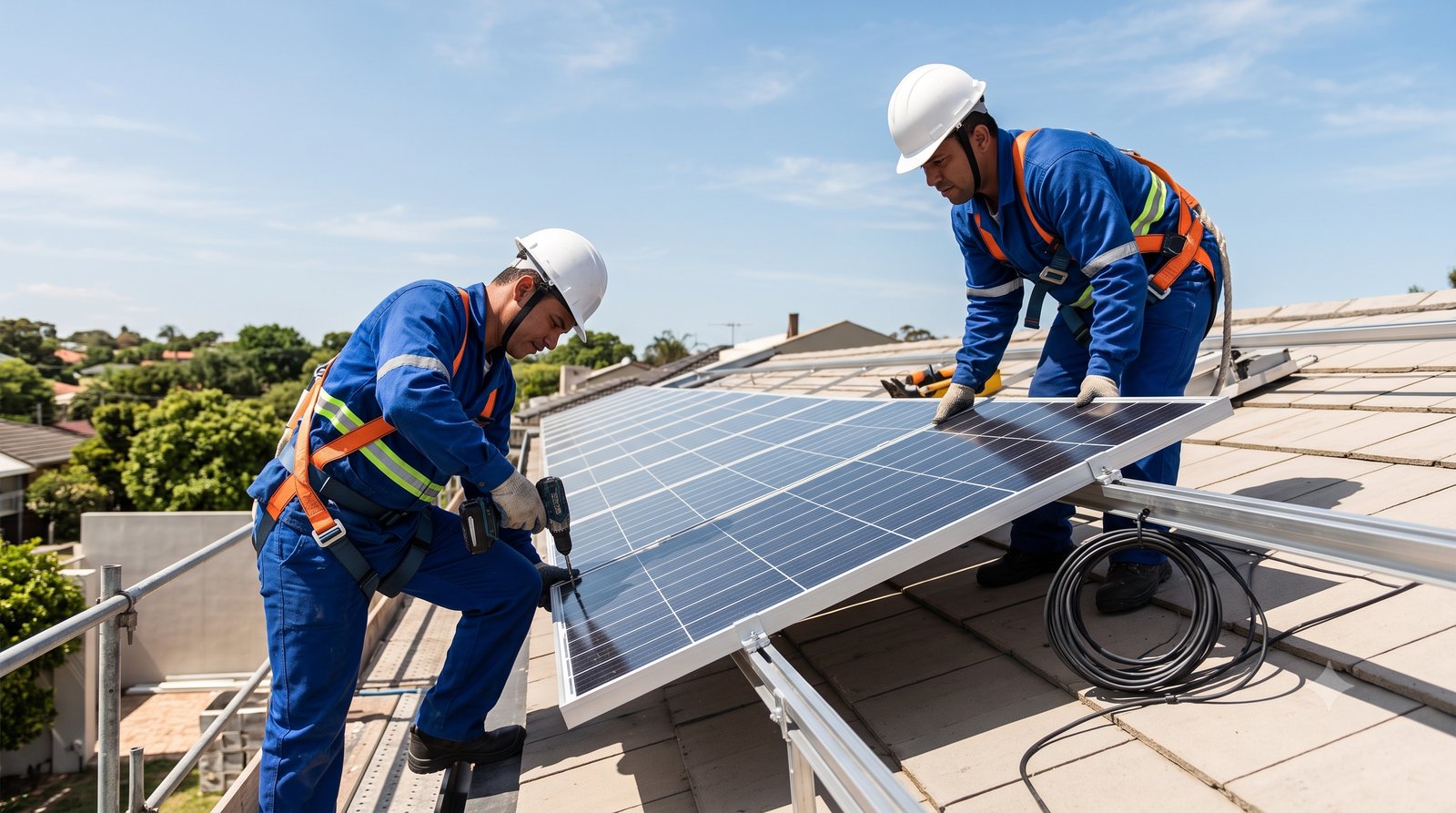
The solar kit. Panel, inverter and mounting, sold to the installer who closes the project with the end customer. It is the highest-volume and lowest-unit-margin product on the list, and the most exposed to the price movement described above. It has its own guide in how to import solar energy from China, and the matching find is in the Showcase.
The portable power station. The same battery cell, in a consumer product with an impulse price, sold through marketplaces and camping shops. It is where the migration to LFP has changed the product most in recent years: more cycles, more safety, a lower price.
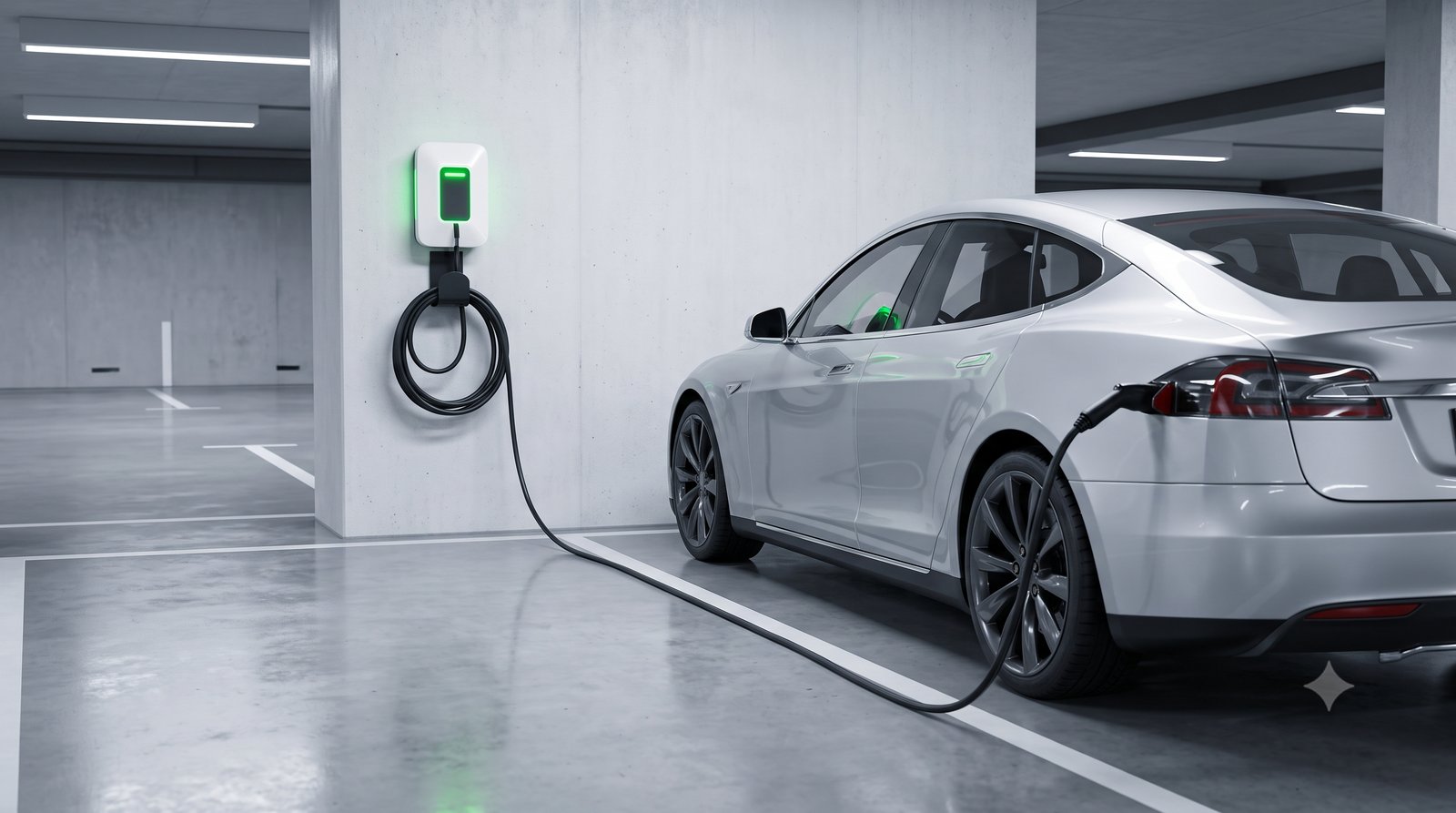
The charging station. Pure power electronics, sold to residential buildings, filling stations, shopping centres and fleets. A buyer who decides on return and on standards, not on impulse, and a market still chasing the fleet already on the road.
Light mobility. Electric bicycles, cargo bikes, kick scooters and mopeds. It is the category where a fall in battery prices most quickly becomes a new product on the shelf, because the pack is small and the design cycle is short.
All four carry the same exposure, and that is why it makes sense to treat them as a single portfolio rather than four independent decisions. If the cell price falls, all four get cheaper at once, including your stock.
The wall: batteries are dangerous goods and carry standards
This is the part that separates whoever imports this category from whoever tries and gives up. It is not one requirement, it is layers.
- Transport. Lithium batteries are class 9 dangerous goods. The supplier has to provide the UN 38.3 test report, the safety data sheet and the correct packaging and marking. Air freight is far more restricted than sea, including on the battery's state of charge, which changes lead time, cost and choice of carrier. The guide to freight from China to Brazil covers the rest of the equation.
- Certification in Brazil. A good share of these products falls under a compulsory regime, and the list changes. Confirm the scope for the exact model before ordering, and not from the supplier's catalogue: the guide to products that need INMETRO certification is the starting point.
- Radio. Almost everything on this list has become connected: power stations with an app, chargers with remote management, scooters with a Bluetooth display. The radio part requires ANATEL type approval, and that is separate from electrical safety certification.
- Tariff classification. A kit with panel, inverter, mounting and cable is an order with several different classifications, and a tariff classification error is one of the commonest causes of cargo held at customs.
None of these layers is impossible. All of them are expensive to discover after the factory has produced, and that is why a pre-shipment inspection in this category checks documents as much as it checks product.
What stays in China
It is worth closing on the side that is almost never written about, because it is the one that tells you where your business is.
China exports the panel, the battery, the charger and the vehicle. It does not export the certified installer who goes onto your customer's roof, the technical support with parts in stock in the same city, the ten-year financing that makes the project viable, the approval process with the local electricity utility, nor the trust that makes somebody put an expensive system on their own roof.
That list is your margin. It also explains why the importer who only brings in boxes ends up fighting on price with whoever brought in the same box, while the one who builds the structure around the box builds a business that is not copied the following quarter.
And there is the part that is only settled on the ground. Telling apart the factory that makes the cell from the one that buys cells and assembles packs, working out whether the line you saw on video is the line that will produce your order, confirming that a ten-year warranty is backed by a company that has existed for more than ten, negotiating with whoever decides and following production: none of that is done from a distance, and it is what our team does at source. If you are putting the trip together, the map of the industrial clusters shows in which region each of these products is made.
Frequently asked questions
Why is the Chinese solar panel so much cheaper than anybody else's?
It is not labour, it is the concentration of one stage. China accounts for over 80% of world capacity at every rung of the photovoltaic chain, and at the wafer rung, which is the slicing of the silicon ingot into thin sheets, its share reaches around 95%. Anyone assembling modules in any other country buys the Chinese wafer or the Chinese cell and builds on top of it. Add to that an installed overcapacity that does not drain quickly, and the result is a price that is not set by cost, it is set by the fight between factories that need to keep their lines running.
Why did panel prices rise in 2026 if demand did not change?
Because China moved a tax. On 1 April 2026 the 9% value added tax rebate that the Chinese exporter used to receive came to an end, and that benefit was baked into the FOB price they quoted. No supplier had to raise their margin for your cost to go up. It is the clearest demonstration of what it means to say China sets the world price: the decision is not the market's, it is administrative, and it arrives with no warning to the foreign buyer.
What is the difference between an LFP and an NMC battery, and which should I buy?
LFP is lithium, iron and phosphate; NMC carries nickel, manganese and cobalt. NMC stores more energy per kilo, which matters when weight is the problem. LFP is far cheaper, lasts many more cycles and is more thermally stable, and so it has taken over everything that stands still or moves slowly: storage, power stations, bicycles, scooters, forklifts. For nearly everything a Brazilian importer brings in, the answer is LFP, and the price gap between the two chemistries is not small.
Is buying solar panels or batteries on a falling price a good thing or a trap?
It is a trap for anyone who buys stock and is slow to turn it. On a product whose replacement price falls every quarter, idle stock loses value on its own, and the competitor who bought later sells cheaper with no effort at all. The defence is not guessing the bottom of the price, it is shortening the cycle: smaller lots, faster turnover, and margin built on warranty, installation and service, which do not depreciate with the price list.
Can lithium batteries be shipped in a container like anything else?
No, they are class 9 dangerous goods and have rules of their own. The supplier has to provide the UN 38.3 test report, the safety data sheet and the correct packaging and marking, and air freight is far more restricted than sea, including on the battery's state of charge. That changes lead time, freight cost and the choice of carrier. Discovering the requirement after the factory has produced is the commonest way for cargo to sit in Shanghai waiting for a document.
What does China still not export in these three industries?
Essentially the network around the product. It exports the panel, the battery and the vehicle, and it does not export the certified installer, the technical support with parts in stock, the long-term financing or the local type approval. That is exactly where an importer's margin sits, and it is why the importer who only brings in boxes fights on price, while the one who builds the structure around the box builds a business that is not copied the following quarter.
BCVN — Brasil China Viagens e Negócios has connected Brazilian companies to the best suppliers in China and Asia since 2008. Find out about our services in commercial intermediation, quality inspection, factory audits and guided business trips to China's main trade fairs.
The energy chain in the Showcase
The four formats in which this chain reaches the Brazilian importer, with the cost and resale logic of each. See more in the China Showcase.