
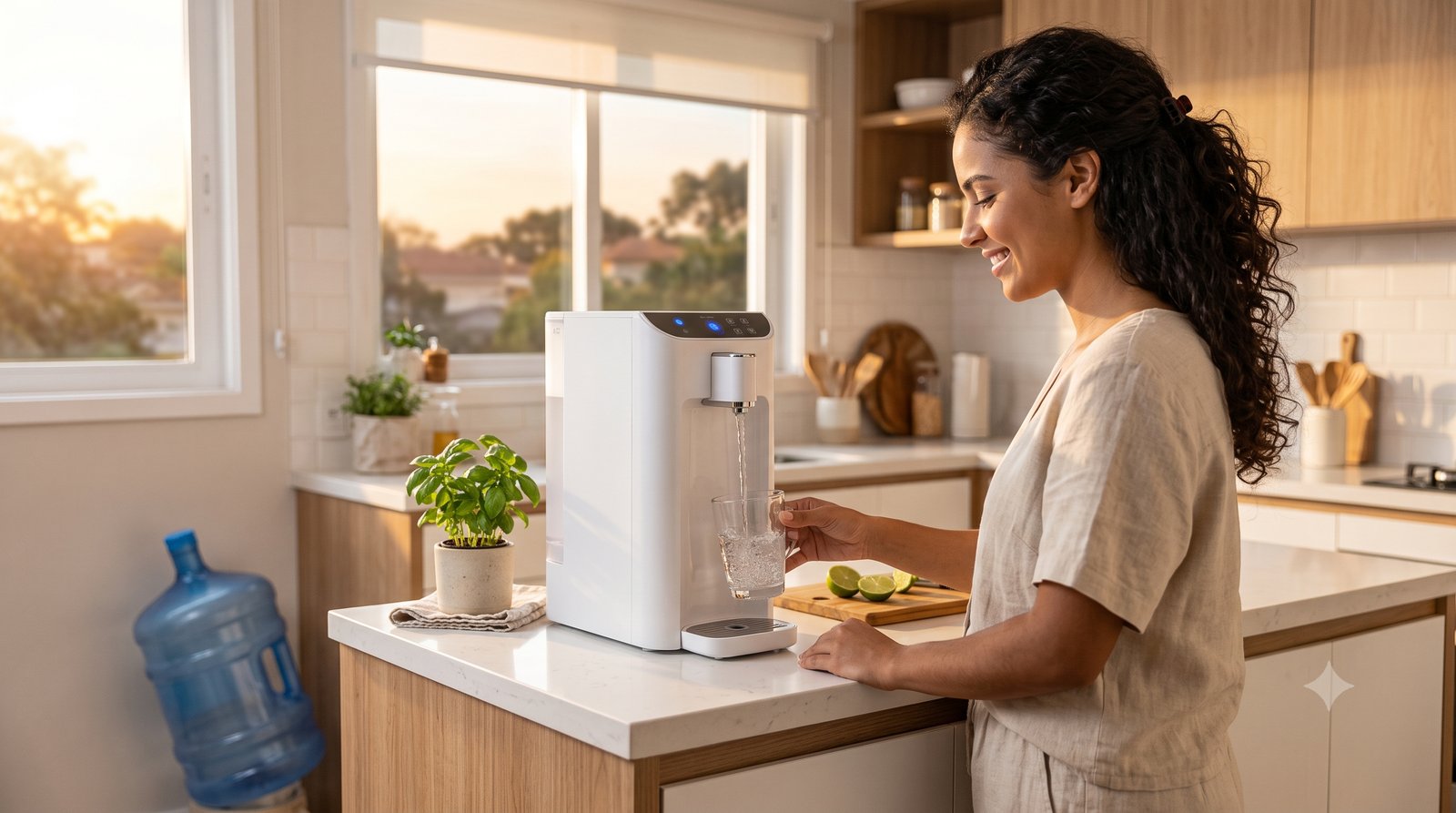
Sunday afternoon, the twenty-litre bottle runs out, the supplier is not answering and someone in the house lifts the empty container to check whether there is still enough for a glass. It is such a common scene in Brazil that it has become part of the scenery: the water people drink at home depends on delivery, on weight, on floor space in the kitchen and on remembering to order before it runs out. That discomfort is what sustains an entire product category, and it is why it sells all year round. For the retailer, though, what matters is not the bottle. It is what happens six months after the sale.
What a water purifier is
It is the appliance that passes mains water through one or more filter cartridges, almost always activated carbon based, which reduce chlorine, sediment, taste and odour. From there the category opens up: there are versions with chilling, gravity-fed versions that work without a socket, and reverse osmosis systems, which force water through a membrane and also reduce dissolved solids, for anyone with brackish or well water. Each format solves a different problem, and confusing one with another in an advert is the classic mistake of whoever enters the category without studying it.
The detail that changes the business is in the filter cartridge: it has a service life, counted in litres and in months, and after that it has to be replaced. In other words, every appliance placed in a home is a customer who comes back once or twice a year to buy a small item, with a comfortable margin, that takes up almost no shelf space. Selling the appliance opens the account; the cartridge is what keeps it open.
Models and variations
A water purifier is not a product, it is an entire trade fair hall. The same factory usually covers everything from the twenty-real jug to the reverse osmosis system, which makes it possible to build the complete line with a single supplier:
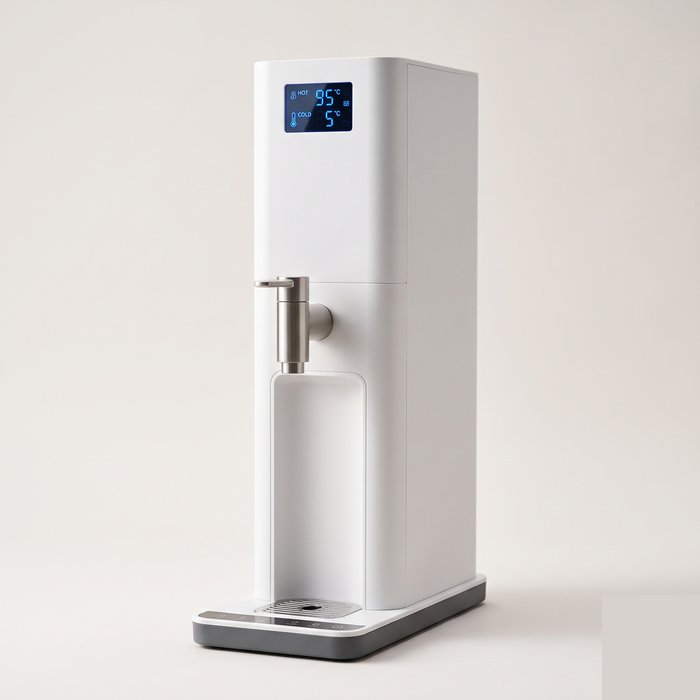
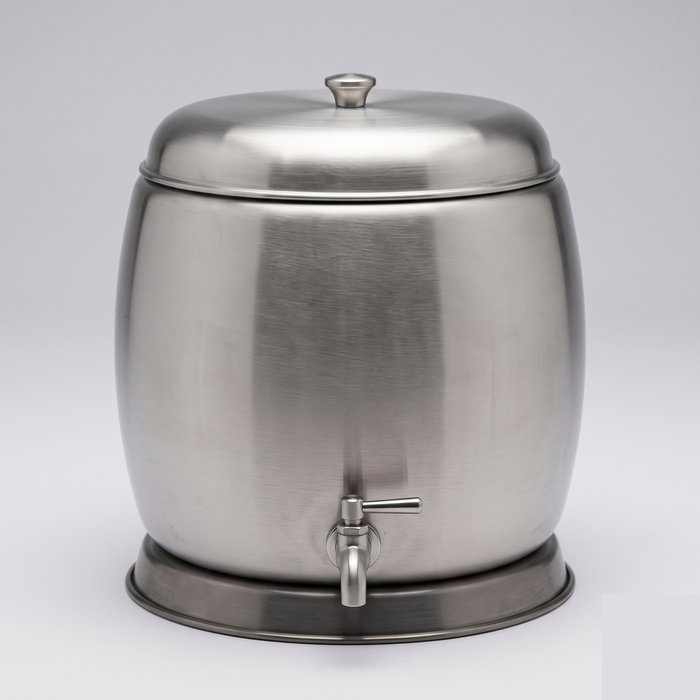
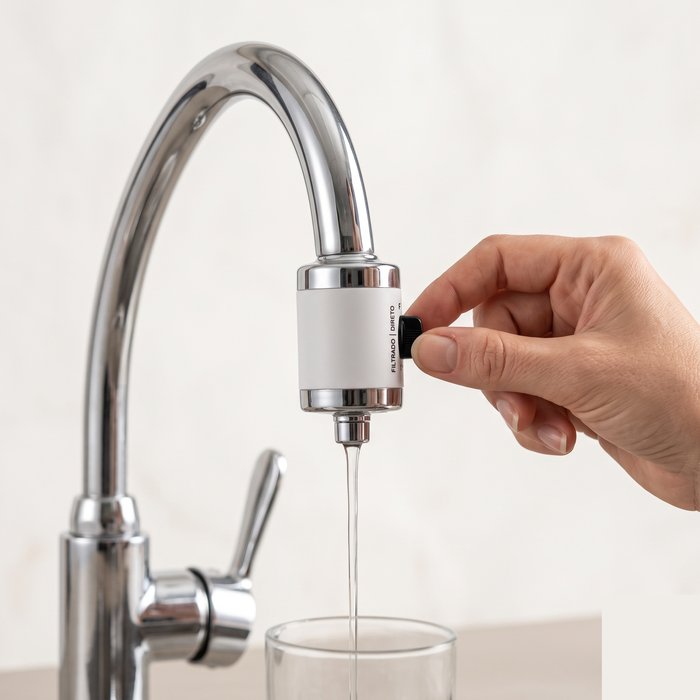
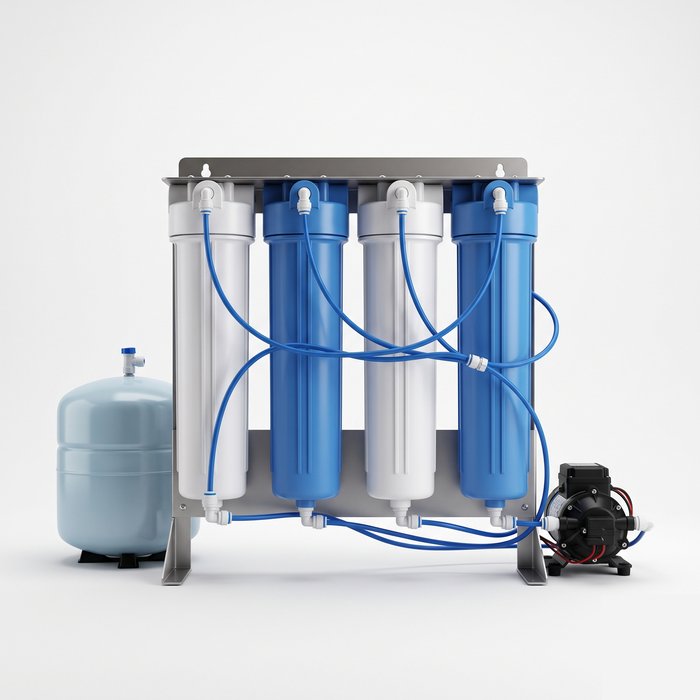
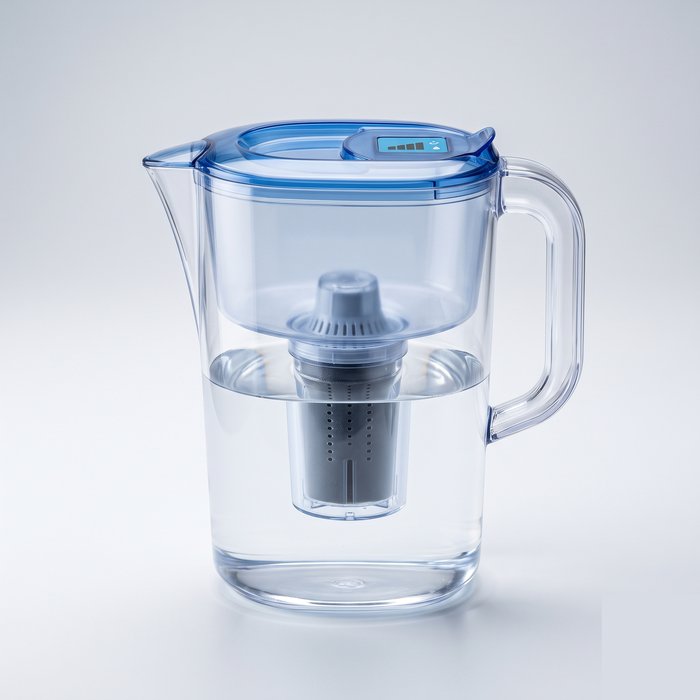
The jug and the tap-mounted filter are impulse purchases and play the role of bringing the customer in for the first time. The countertop purifier is the flagship, the one that replaces the bottle for good and sustains the category in the shop. The gravity-fed model opens a market nobody really competes for, that of people who do not want or cannot use a socket. And reverse osmosis is the high ticket, with installation and service built in. The good news for anyone building a line is that they all use the same replacement logic, so the cartridge becomes a product in its own right within the shop.
Why this is an opportunity for Brazil
Water is daily and compulsory consumption, so the category does not depend on a trend or a fashion. What it offers that others do not is the shape of the revenue.
- Repeat purchase with no marketing effort: it is rare for a household product to bring the customer back on its own, on the date the manufacturer itself set. Replacing the filter cartridge does that twice a year.
- The competitor is a nuisance: the twenty-litre bottle is heavy, takes up floor space, depends on delivery and always runs out at the worst moment. Selling against it means selling against an irritation the customer already has.
- A wide price range: you can build a line from the jug to the reverse osmosis system, serving everything from impulse to mid ticket, without changing supplier.
- Summer in your favour: water consumption rises with the heat, and the season when the category turns over most in Brazil runs from December to March.
- Timing: the typical lead time is 60 to 120 days. Whoever closes now is buying summer; whoever waits for demand to appear will be buying winter.
Before importing: water treatment appliances for human consumption are among the products with compulsory INMETRO certification, and the filter cartridge falls into the same conversation. The certification is issued in the importer's name, costs money and takes time, so it has to enter the calculation before the order: it is worth seeing the list of products that require INMETRO to be imported from China and confirming the classification of the exact model, because the jug, the tap-mounted filter, the chilled purifier and reverse osmosis do not follow the same route. The second precaution is commercial and worth just as much: secure continuous supply of the compatible cartridge, because without it the repeat purchase turns into a complaint and the whole business model collapses. And it is worth inspecting before shipment, testing for leaks and the fit of the cartridge, which is where the category usually fails.
Put your own brand on it
Importing is not just reselling generics. In this category own branding is worth even more than average, because whoever controls the brand of the appliance also controls the replacement part the customer will look for throughout its service life:
- Your brand on the product and the packaging (private label / OEM): logo printed or engraved on the body of the appliance and on the box.
- Your cartridge, with your brand: the item that sustains repeat purchase should not be a generic. It is what brings the customer back to your shop and not to any other.
- Colour, finish and tap shape to your choice, to set the line apart from what is already on the market.
- Packaging and manual in Portuguese, with the cartridge life prominently stated, ready for Brazilian retail.
Customisation usually calls for a slightly larger minimum order, and BCVN finds the right factory, negotiates the customisation, validates the sample and makes sure the product arrives exactly as you asked for it.
It is worth understanding how this works in practice before requesting the first sample: the guide on own brand in China: private label, OEM and ODM explains the difference between the three models and what each one changes in the minimum order and the lead time.
Where to buy water purifiers in China
The category is spread across three different addresses, and each serves a part of the line:
- Canton Fair, Phase 1 (Electronics and Home Appliances): from 15 to 19 October, where the electric purifiers, the chilled models and the reverse osmosis systems are.
- Canton Fair, Phase 2 (Home and Housewares): from 23 to 27 October, the hall for gravity-fed models, jugs and kitchen housewares.
- Yiwu Trade Fair: from 21 to 24 October, the place for the tap-mounted filter and the fast-turnover jug, with low minimum orders for testing the market.
The itinerary the season sets out: all three fall in the same October window, across two cities, and Yiwu (21 to 24) sits precisely in the gap between Canton's Phase 1 (15 to 19) and Phase 2 (23 to 27). The whole line can be seen on a single trip, but the itinerary has to be planned in advance, or one of the three is left out. See the full 2026 trade fair calendar.
It is also worth looking at the air purifier and cooker hood, which serve the same healthy-home customer, and the smart insulated bottle, which takes out onto the street the water the purifier treated at home.
Most of retail spends its life looking for the next product to sell to the same customer. This category inverts the problem: it already brings the customer back, on the appointed date, for an item they cannot replace without changing the whole appliance. Whoever builds the line under their own brand and secures the cartridge is not selling an appliance, they are building a customer base that renews itself. And the summer in which that base starts to grow is bought now.
Frequently asked questions about importing water purifiers
Does a water purifier imported from China need INMETRO certification?
Yes. Water treatment appliances for human consumption are among the products with compulsory certification, and the filter cartridge falls into the same conversation. The certification is issued in the importer's name, costs money and takes time, so it has to be in the calculation before the order and not after the cargo has arrived. Confirm the exact classification of the chosen model, because a filter jug, a tap-mounted filter, a chilled purifier and reverse osmosis do not follow the same route.
What is the difference between a filter, a purifier and reverse osmosis?
The ordinary activated carbon filter reduces chlorine, sediment, taste and odour. The purifier usually adds further stages to that, and sometimes chilling and a cartridge with bacteriostatic action, depending on the model. Reverse osmosis is another level: it forces water through a membrane and also reduces dissolved solids, making it the choice for anyone with brackish or well water. Each one solves a different problem, and advertising one as the other is the most common mistake in the category.
How often does a purifier cartridge need replacing?
It depends on the model and the volume treated. The manufacturer states the cartridge life in litres and in months, and in practice replacement usually falls somewhere between six months and a year of domestic use. It is precisely that interval that makes the category a recurring sale: every appliance placed in a customer's home is a replacement item sold once or twice a year, with a good margin and very little shelf space.
Why does importing water purifiers from China pay off?
Because China manufactures the whole category, from the low-cost filter jug to the reverse osmosis system, which makes it possible to build a complete line with the same supplier and the same brand. The appliance opens the account and the cartridge keeps it open, with repeat purchases that do not depend on a new campaign. Add to that the real nuisance of the twenty-litre bottle in Brazil and the water consumption that rises in summer, and the category sells out of necessity, not fashion.
Can I import just one water purifier for my home?
BCVN is an import consultancy for retailers and companies, not a retail shop, and does not sell single units. Import maths only works on volume: freight and paperwork are diluted across the batch, and every factory works to a minimum order quantity (MOQ). Anyone who wants an appliance for their own use should buy from a retailer in Brazil; anyone who is going to resell, supply a chain or launch an own brand imports at source, and that is where the savings show up.