
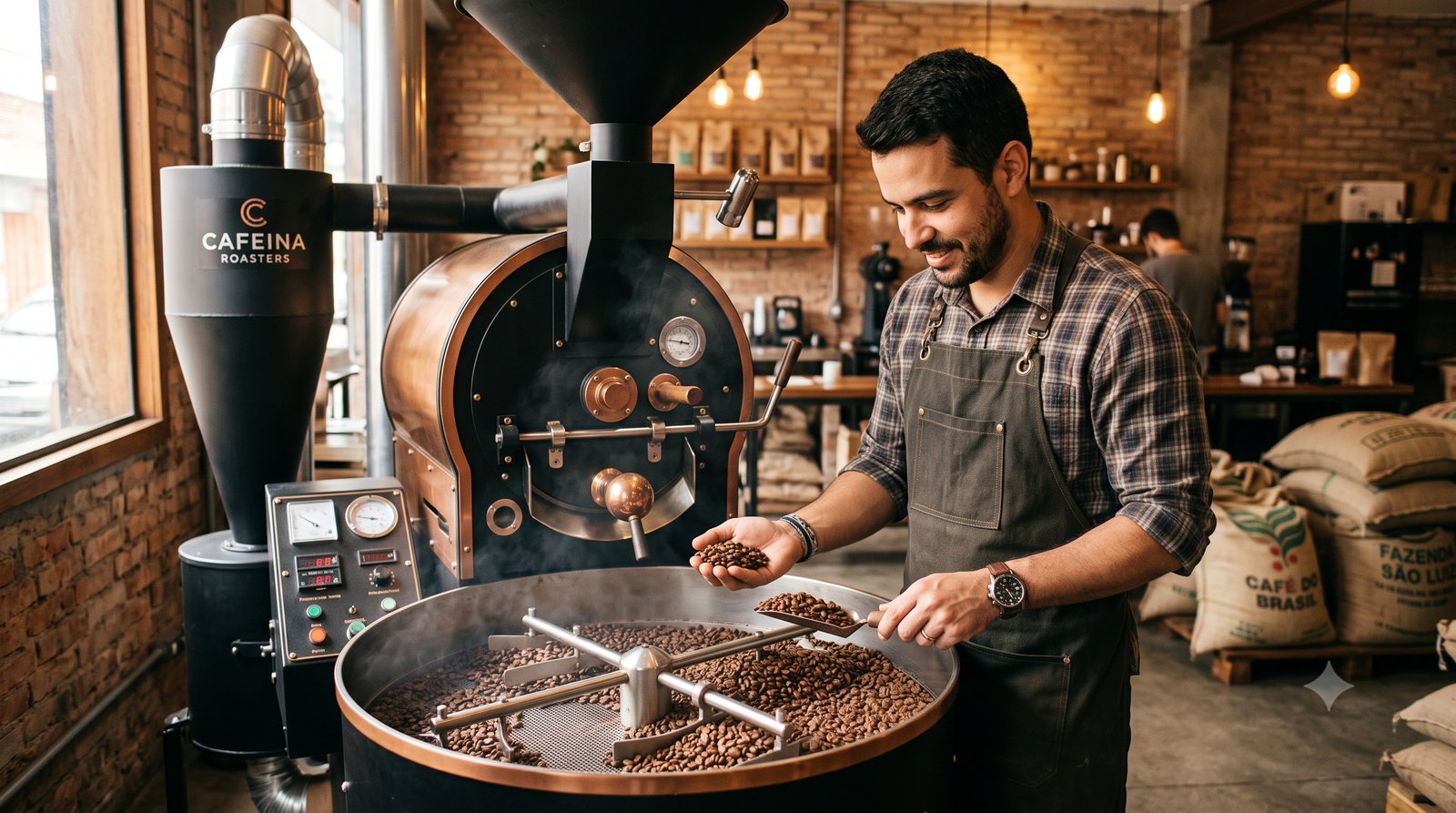
The scene repeats itself in every good coffee shop in a medium-sized town: the owner knows the grower, can talk about altitude and variety, has customers who come back, and still buys coffee already roasted and packed by somebody else. When the supplier raises prices, they absorb it. When the roast level changes, they explain it to the customer. When somebody asks whether they can take a bag home, they sell a third party's brand inside their own place. For an equipment seller, that is a comfortable buyer to serve, because they do not need convincing that a step is missing from their operation. They already know. What is missing is somebody to size the right machine and explain what comes with it.
What a coffee roaster is
It is the machine that turns green beans into roasted coffee. In the most common format, a rotating drum heated by gas or by an electric element turns the batch while the temperature rises under control, generally over about ten to fifteen minutes per batch. The operator follows the curve on the thermometer or the panel, decides when to stop and drops the beans into the cooling tray, a bed with paddles that brings the temperature down quickly so the coffee does not carry on roasting by itself. The cyclone separates the chaff that comes loose in the process. It is in that short interval that coffee gains aroma, body and the flavour the customer pays more for.
It is also where the money changes sides. Whoever roasts chooses the blend, defines the identity of the product and sells bags under their own brand, on top of the cup. Whoever buys it roasted accepts the price, the lead time and the standard of whoever roasted it for them.
Models and variations
A roaster is not one single machine. Batch capacity, the type of heating and the level of control completely change the customer who buys and the price they pay:
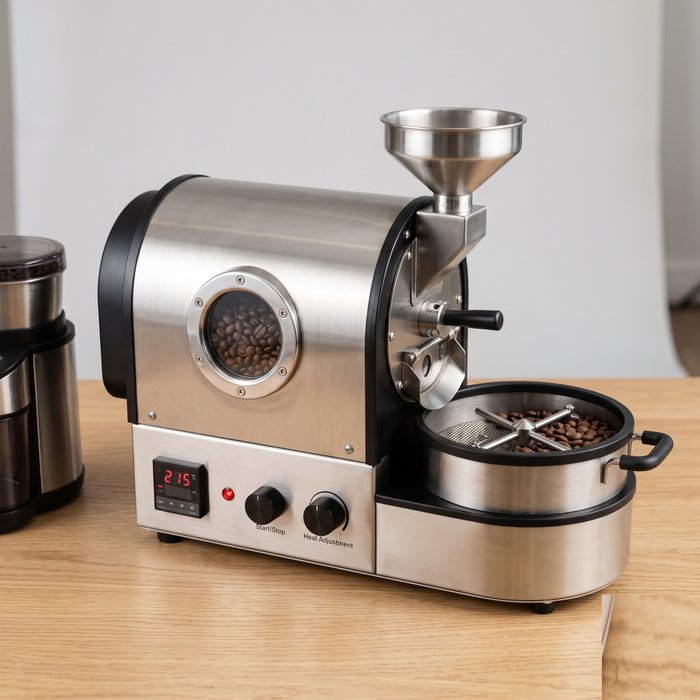
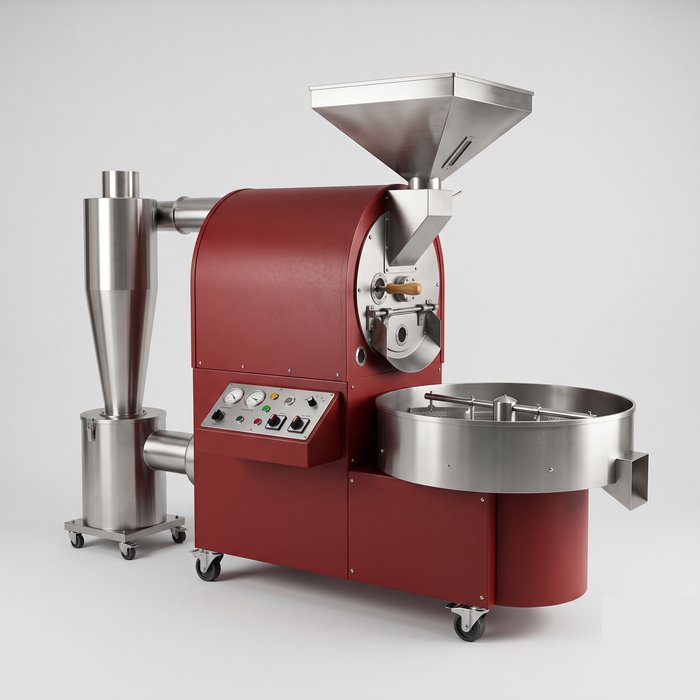
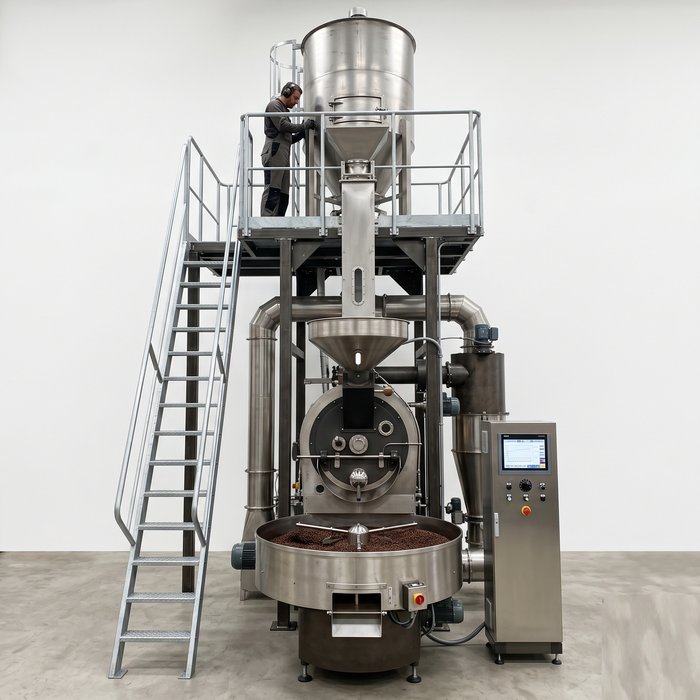
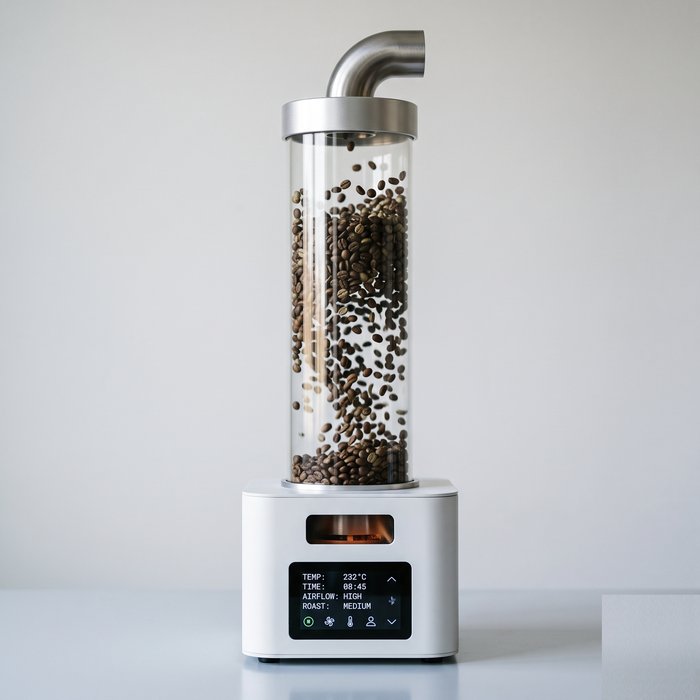
The tabletop roaster is usually the first purchase, because it fits the budget of a coffee shop that wants to test its own blend without stopping buying from outside. The commercial drum is the machine that moves the business onto another level: it is the one with which the place starts supplying its own counter and selling bags. The industrial version serves those already delivering to other coffee shops and shops, and it brings a hopper, bean conveying and faster cooling with it. The hot air roaster handles volume with uniformity, with a shorter roast and a cup profile different from the drum. Anyone selling equipment soon notices that the customer rarely buys a machine: they buy the next stage of their own business.
Why this is an opportunity for Brazil
Brazil is the world's largest coffee producer, which means the raw material is already on the customer's doorstep. What is expensive here is precisely the equipment that adds value to it, and that is why the numbers work for anyone bringing it from source.
- The buyer has already identified the pain: they need no convincing about roasting their own coffee, they need somebody to size the right capacity and settle the installation, the extraction and the after-sales.
- Buying in sequence, not one-off: whoever buys the roaster comes back for the grinder, the sealer and the valve packaging. A well served customer yields years of revenue.
- Recurring business after the machine: packaging, sacks, thermocouples, heating elements and spare parts carry on selling long after delivery.
- High ticket with a technical defence: it is a sale that requires explaining batch capacity, type of heating and curve control. Whoever only sends a price by message loses to whoever knows how to size the machine.
- Timing: the typical lead time is 60 to 120 days. Whoever closes during the October and November trade fair season receives in time to install and train before the first half of the following year, when the food sector resumes investment.
Before importing: a roaster has a turning drum, a transmission and hot surfaces, so NR-12 enters the conversation from the design stage: guards on moving parts, an emergency stop, interlocking and technical documentation. The electrical side follows INMETRO, and the gas version depends on an installation design and fire brigade approval. Roasting smoke usually requires an environmental licence from the municipality, sometimes with an afterburner, and that is the point which most delays an urban operation. The end customer's business, in turn, answers to MAPA, with establishment registration, quality standards and labelling: it is worth understanding how MAPA approval works. Before shipment, inspect with the machine actually roasting coffee, not merely switched on.
Customise the specification (OEM)
A roaster is not bought by catalogue model, it is sized by the volume the end customer needs to deliver each week and by the place the machine will stand. This is where having someone at source separates whoever delivers capacity from whoever delivers a machine sitting idle waiting to be brought into compliance:
- Batch capacity: calculated from real consumption and cycle time, with room to grow. Undersizing turns the margin gain into a double shift.
- Type of heating and voltage: gas (LPG or natural) or electric, at 220V or 380V three-phase, defined together with the customer's installation point.
- Roast profile control: from a simple panel with a thermometer to a system with curve logging and software, which is what the specialty coffee market has come to require in order to repeat a batch.
- Extraction, cyclone and afterburner: sized for the municipality's environmental requirements, and not discovered after the machine has arrived.
- Cooling tray, destoner and bean conveying: the accessories that determine whether the operation flows or jams between one batch and the next.
- Parts, panel and manual in Portuguese: plus the supply agreement for thermocouples, heating elements and spare components, negotiated before the order.
This calls for direct negotiation with the manufacturer and validation before production. BCVN finds the right factory, sizes the equipment for the end customer's operation, handles compliance and validates technical support.
Where to buy coffee roasters in China
Coffee equipment appears at the universal trade fair and, with far more depth, at the fair dedicated to food and hospitality:
- FHC Shanghai (food, drink and hospitality): from 10 to 12 November, the address for the coffee chain, from the roaster to valve packaging, with the manufacturers who serve roasteries.
- Canton Fair, Phase 1 (Machinery and Equipment): from 15 to 19 October, where the roaster appears in the machinery hall, alongside the rest of the food processing equipment.
- Guide to industrial equipment: where machinery investment goes astray, and what has to be settled before shipment.
The itinerary the season sets out: Canton Phase 1 (15 to 19 October, Guangzhou) and FHC (10 to 12 November, Shanghai) are in different months and different cities, and they complement each other: Canton shows the range of machine manufacturers, FHC shows the food sector that buys those machines. Anyone going after both puts together a single trip with the full 2026 trade fair calendar in hand.
It is also worth looking at the professional coffee machine and grinder, which sit on the other side of the counter, the sealer and vacuum packer, which closes the bag under the customer's brand, and the industrial bakery line, which usually shares the same buyer.
Green coffee is a commodity, and nobody builds a brand selling a commodity. The brand is born in the twelve minutes the beans spend turning inside the drum while somebody decides where to stop. For the equipment reseller, this is a sale where the customer has already worked out the problem on their own and is simply waiting for somebody to size the right machine, settle gas, extraction and standards, and stay close by when a thermocouple gives out. Buying at source is what makes that package possible at the price a Brazilian roastery can afford.
Frequently asked questions about importing coffee roasters
Does a coffee roaster imported from China have to meet NR-12?
Yes. The roaster has a rotating drum, a transmission and hot parts, and NR-12 requires guards on moving parts, an emergency stop, interlocking and technical documentation. The electrical side follows INMETRO. If the heating is by gas, the installation also depends on a design and on fire brigade approval, and the extraction usually requires an environmental licence from the municipality. Whoever answers for all of this before the authorities is the Brazilian importer, not the Chinese factory, and settling it at source costs far less than adapting afterwards.
Does a business that roasts and packs coffee need MAPA registration?
Yes. Roasting and packing coffee is a plant-origin food activity, and the establishment answers to the Ministry of Agriculture, with registration, quality standards and labelling rules, on top of the local health authority. That does not fall on the imported machine, it falls on the end customer's business, but it is the information that separates the equipment seller who understands the sector from the one who just passes on a price.
What is the difference between a drum roaster and a hot air roaster?
In a drum roaster the beans turn inside a heated cylinder and receive heat by conduction and convection, with a longer roast and more control over body and sweetness. It is the dominant format in artisan roasting. In a hot air, or fluid bed, roaster the beans are suspended in a stream of hot air, the roast is faster and cleaner and the result tends to be brighter and more acidic. The drum is the standard for anyone selling own-brand coffee; hot air serves volume and uniformity.
Why does importing coffee roasters from China pay off?
Because Brazil is the world's largest coffee producer and the green bean is already on the customer's doorstep, but the equipment that adds value to it is expensive here. The price at source is a fraction of what the domestic market charges, the buyer purchases in sequence (roaster, then grinder, then sealer and packaging) and there is also recurring business in valve packaging, parts and thermocouples. It is a high-ticket technical sale, to a buyer who decides on return rather than on fashion.
Can I import just one roaster for my coffee shop?
BCVN is an import consultancy for companies and resellers, not a retail shop, and does not sell single units. Import maths only works on volume: freight and paperwork are diluted across the batch, and every factory works to a minimum order quantity (MOQ). Anyone who needs a single machine should buy from a distributor in Brazil; anyone who is going to resell, represent the brand or equip several sites imports at source, and that is where the savings really show up.